Buy Diamond Mesh Security Fence Panels
Diamond mesh security fence panels are welded wire barriers constructed from high-tensile steel wires arranged in a rhomboid (diamond) pattern. The interlocking geometry provides inherent rigidity
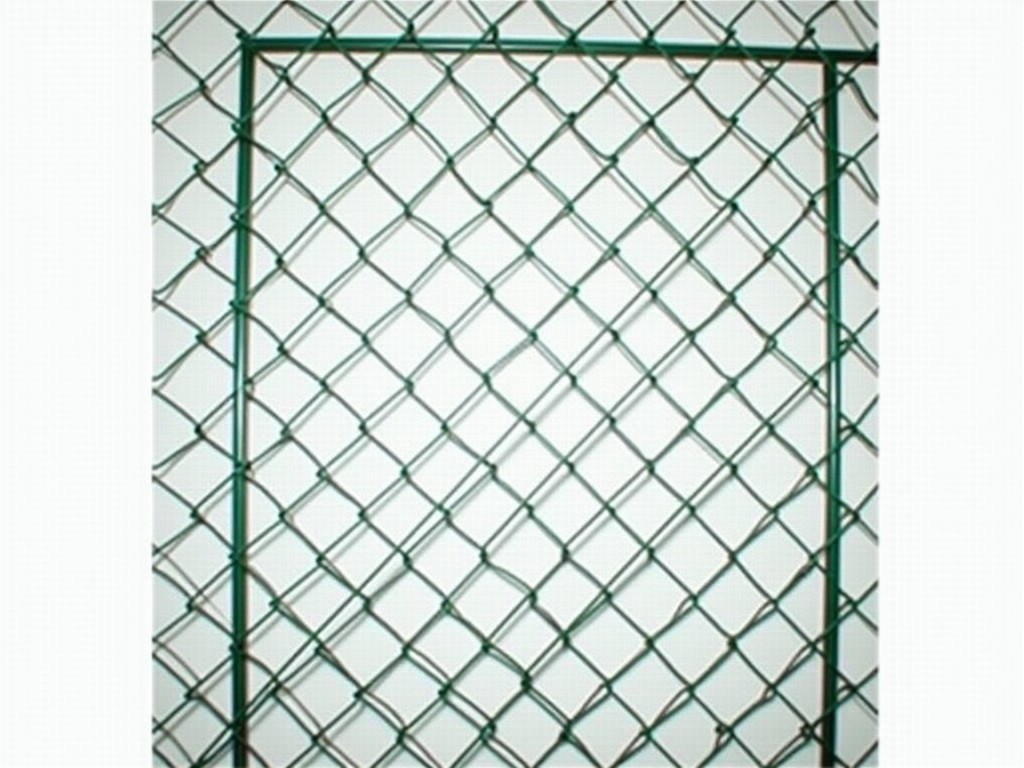
Diamond Mesh Security Fence Panels
Diamond mesh security fence panels are welded wire barriers constructed from high-tensile steel wires arranged in a rhomboid (diamond) pattern. The interlocking geometry provides inherent rigidity without requiring additional bracing in many applications. Panel dimensions, wire gauge, and aperture size are selected based on load requirements, intrusion resistance goals, and environmental exposure.
Manufacturing involves precision welding at each wire intersection to create a monolithic sheet that resists deformation under impact or climbing attempts. Surface treatments such as hot-dip galvanizing or powder coating are applied to prevent corrosion in outdoor installations. These panels serve as a primary physical deterrent in perimeter security systems where visibility and airflow must be maintained.
Technical Specifications
| Parameter | Typical Range | Notes |
|---|---|---|
| Wire Diameter | 3.0 mm – 5.0 mm | Selected based on required tensile strength and impact resistance |
| Mesh Aperture | 50 mm × 50 mm – 100 mm × 100 mm | Smaller apertures increase climb resistance; larger apertures improve visibility and wind load performance |
| Panel Height | 1.0 m – 3.0 m | Standard heights; custom lengths available upon request |
| Panel Width | 2.0 m – 3.0 m | Determined by post spacing and handling constraints |
| Coating Type | Hot-dip galvanized (min. 60 µm Zn) or powder coated (min. 80 µm) | Galvanizing for corrosion resistance; powder coating for color and UV stability |
| Tensile Strength (Wire) | 450 MPa – 650 MPa | High-tensile steel grade; affects resistance to cutting and deformation |
Material Selection and Corrosion Protection
The base wire is typically low-carbon steel with controlled manganese and silicon content to ensure weldability and ductility. Higher carbon content increases hardness but reduces formability and weld toughness, making it unsuitable for diamond mesh production. The selected grade balances tensile strength with the ability to withstand repeated welding cycles without embrittlement.
Hot-dip galvanizing applies a zinc-iron alloy coating through metallurgical bonding, providing sacrificial protection that continues even if the coating is scratched. Powder coating, applied after galvanizing, adds a polymer layer that blocks UV degradation and allows for color coding (e.g., green for camouflage, white for high visibility). In aggressive environments (coastal, industrial), duplex systems (galvanized + powder coated) are recommended to extend service life beyond 25 years.
Alternative materials such as stainless steel (Grade 304 or 316) are available for applications requiring non-magnetic properties or extreme chemical resistance, though cost increases significantly. Aluminum mesh is not used for security panels due to insufficient tensile strength and ease of deformation under load.
Structural Performance and Installation
The diamond geometry creates a triangulated load path that distributes impact forces across multiple wires, reducing localized stress. Unlike square mesh, which can deform into a parallelogram under shear load, the rhombic pattern resists shear through inherent geometric stability. This allows panels to maintain shape under dynamic loads such as attempted breaches or wind pressure without permanent deformation.
Panels are typically mounted to steel or concrete posts using brackets, clamps, or threaded fasteners. The attachment method must allow for thermal expansion and contraction while maintaining panel tension. Over-tightening fasteners can induce stress concentrations at the weld points, potentially leading to fatigue cracking over time. Installation guidelines recommend a deflection limit of L/150 under wind load to prevent visual distortion and maintain aesthetic integrity.
For high-security sites, panels may be integrated with anti-climb toppings (e.g., angled arms, razor wire) or buried foundations to prevent undermining. The open mesh design facilitates integration with surveillance systems, as cameras and sensors maintain clear lines of sight through the barrier. This visibility also aids in psychological deterrence, as intruders perceive the area as monitored.
Applications in Industrial and Critical Infrastructure
In power generation facilities, diamond mesh panels secure substations and transformer yards where electromagnetic interference must be minimized. The non-ferromagnetic options (when using stainless steel) prevent distortion of nearby sensor readings, while the open structure allows for infrared monitoring of equipment hotspots. Unlike solid barriers, mesh does not create wind tunnels that could destabilize cooling systems or accumulate debris near critical components.
Water treatment plants use these panels to restrict access to reservoirs and chemical storage zones. The corrosion-resistant coating withstands constant humidity and occasional chemical splashes, while the mesh design prevents ponding of water on the barrier surface during rain. This reduces slip hazards and eliminates standing water that could attract pests or promote microbial growth near intake zones.
Transportation hubs such as rail yards and airports deploy diamond mesh along perimeter fences to deter trespassing while maintaining clear sightlines for security patrols and CCTV. The panels’ resistance to vandalism (e.g., graffiti adhesion is low due to smooth, coated surfaces) reduces long-term maintenance costs. In temperate climates, the open mesh allows snow to pass through, preventing accumulation that could create climbing aids or obscure ground-level surveillance.
Customization Options
- Wire diameter: 3.0 mm to 5.0 mm in 0.5 mm increments
- Aperture size: 50 mm to 100 mm square or diamond
- Panel dimensions: Height up to 3.0 m, width up to 3.0 m (custom lengths available)
- Coating: Hot-dip galvanized, powder coated (RAL colors), or duplex system
- Edge finishing: Flushed, folded, or framed with steel border for added rigidity
- Mounting provisions: Pre-drilled holes, welded tabs, or clamp-ready configurations
Customization is driven by site-specific risk assessments, local climate data, and integration requirements with existing security infrastructure. Engineering teams can provide finite element analysis (FEA) reports upon request to validate panel performance under anticipated loads, including dynamic impact and sustained wind pressure. Dimensional tolerances are typically maintained within ±3 mm for width and height, and ±0.1 mm for wire diameter, ensuring consistent fit during installation.
Quality Control and Testing
Each production batch undergoes dimensional verification using calibrated gauges to confirm wire diameter, aperture size, and panel squareness. Weld integrity is assessed through visual inspection and periodic tensile shear tests on sample coupons, ensuring weld strength meets or exceeds 90% of the base wire tensile strength. Coating thickness is measured via magnetic induction or ultrasonic methods to verify compliance with ISO 1461 (galvanizing) or ASTM D1186 (powder coating).
Panels are subjected to standardized impact tests using a pendulum or drop weight to simulate forced entry attempts. Resistance to cutting is evaluated using manual and power tools common in intrusion scenarios, with performance classified based on time required to create a penetrable opening. Accelerated weathering tests (UV exposure, salt spray) are conducted on coated samples to predict long-term degradation rates, particularly for installations in marine or industrial zones.
Final inspection includes a visual audit for surface defects, coating uniformity, and packaging integrity before shipment. Documentation including material certificates, test reports, and installation guidelines is provided with each order. Traceability is maintained via batch numbers linked to raw material suppliers and production parameters, enabling rapid response in the event of a field concern.
For technical inquiries, custom specifications, or project consultations, contact our engineering team to discuss your perimeter security requirements.
Request a Quote or Technical Consultation
Product Categories


Send Inquiry
If you are interested in our products, leave your information here and we will be in touch shortly.