Buy White Vinyl Ranch Fence Rail
White vinyl ranch fence rails are extruded profiles designed for perimeter containment in agricultural, equestrian, and rural residential settings. Unlike wood or metal alternatives, they resist rot,
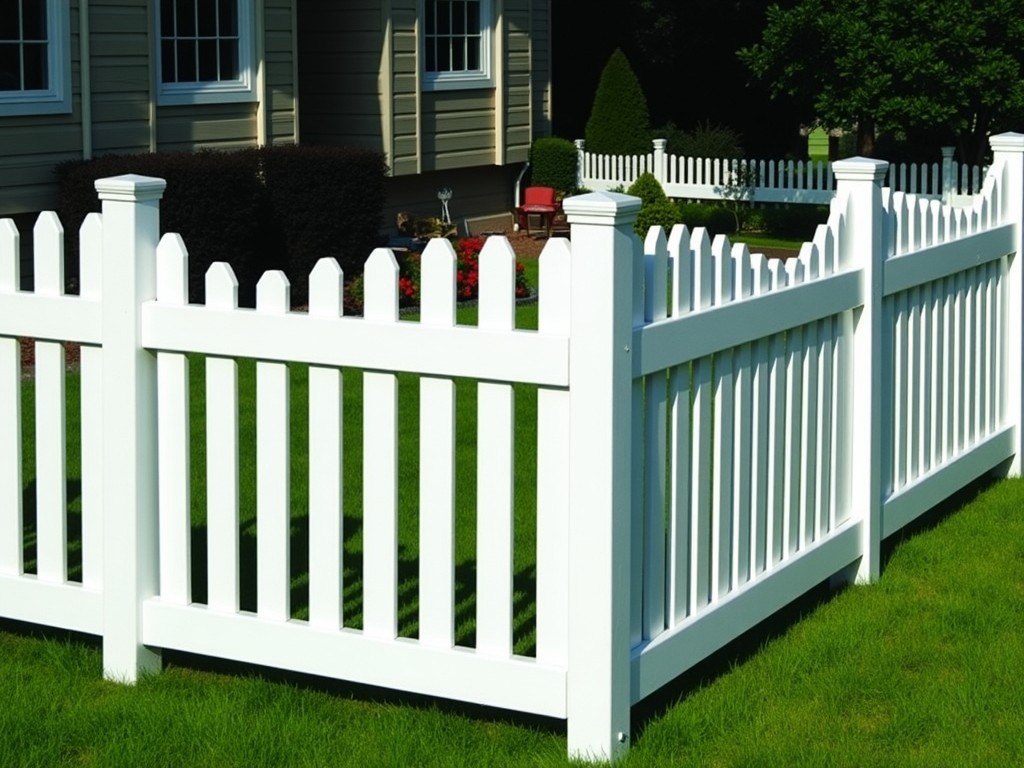
White Vinyl Ranch Fence Rail: Technical Specifications and Applications
White vinyl ranch fence rails are extruded profiles designed for perimeter containment in agricultural, equestrian, and rural residential settings. Unlike wood or metal alternatives, they resist rot, corrosion, and insect damage while maintaining dimensional stability across temperature ranges from -20°F to 140°F. The material formulation typically includes UV stabilizers and impact modifiers to prevent chalking and brittleness over extended outdoor exposure.
Material Composition and Performance Characteristics
The base polymer is virgin PVC resin compounded with titanium dioxide for opacity and whiteness retention, calcium-zinc stabilizers for heat resistance during processing, and lubricants to ensure smooth extrusion. Typical tensile strength ranges from 5,500 to 6,500 psi, with flexural modulus between 300,000 and 400,000 psi. These values ensure the rail can withstand lateral loads from livestock pressure and wind without permanent deformation.
Coefficient of thermal expansion is approximately 3.0 × 10⁻⁵ in/in/°F, requiring expansion gaps of 1/4 inch per 10 feet of rail length during installation. Surface hardness measures 75-85 Shore D, providing resistance to scratching from hoof contact and brush. Colorfastness is validated per ASTM D2244, with Delta E values typically under 5 units after 2,000 hours of accelerated UV exposure.
Dimensional Standards and Structural Design
Standard ranch rail profiles feature a nominal 2-inch by 6-inch cross-section with a hollow core to reduce weight while maintaining bending stiffness. Wall thickness typically ranges from 0.125 to 0.1875 inches, depending on load requirements. The top and bottom edges are radiused (usually 1/8 inch radius) to prevent stress concentration and improve handling safety.
Moment of inertia about the strong axis averages 0.8 in⁴, translating to a maximum recommended span of 8 feet between posts for livestock containment under uniform load. Deflection under a 50 lb/ft load remains under 0.5 inches at midspan, well within acceptable limits for visual and functional integrity. Posts are typically set at 8-foot intervals, requiring rails to be cut to 96 inches or specified lengths with square ends.
Installation Considerations and Fastening Methods
Rails are secured to posts using either stainless steel brackets or through-bolting with corrosion-resistant fasteners. Bracket systems allow for thermal movement and reduce localized stress concentrations. Through-bolting requires oversized holes (typically 1/4 inch diameter for a 3/16 inch bolt) to accommodate expansion and contraction.
Installation temperature should ideally be between 40°F and 90°F to minimize initial stress. Rails must be supported continuously along their length or at intervals not exceeding 24 inches to prevent sagging during service life. No painting or sealing is required; surface cleaning with mild detergent and water is sufficient for maintenance.
Applications in Agricultural and Rural Infrastructure
These rails are commonly used in horse ranches where smooth surfaces reduce injury risk compared to splinter-prone wood or sharp-edged metal. The flexibility of vinyl absorbs impact from accidental contact, reducing harm to animals and minimizing rail damage. In cattle operations, the rails withstand rubbing and leaning without degradation, unlike wood which can splinter or metal which may bend permanently.
Beyond livestock containment, white vinyl ranch rails serve as visual boundary markers in rural residential properties, offering a clean aesthetic that contrasts with green foliage. Their non-conductive nature makes them suitable near electric fencing systems, eliminating grounding concerns. In vineyards and orchards, they provide low-maintenance perimeter definition without contaminating soil with leachates.
Quality Control and Manufacturing Consistency
Extrusion processes are monitored for melt temperature, pressure, and die alignment to ensure uniform wall thickness and dimensional accuracy. In-line gauges check critical dimensions every 5 minutes during production. Samples are pulled hourly for impact resistance testing per ASTM D256 (Izod) and tensile strength verification.
Color consistency is verified using spectrophotometry against master batches, with lot-to-lot Delta E kept under 2 units. Each production run includes accelerated weathering coupons to validate long-term performance. Finished rails are inspected for surface defects, warping, and end squareness before packaging.
Comparison with Alternative Fencing Materials
| Property | White Vinyl Rail | Pressure-Treated Wood | Galvanized Steel |
|---|---|---|---|
| Service Life (Years) | 20-30 | 7-12 | 15-25 |
| Maintenance Required | None (cleaning only) | Staining/sealing every 2-3 years | Inspect for rust, touch-up coating |
| Thermal Expansion (in/in/°F) | 3.0 × 10⁻⁵ | 0.5 × 10⁻⁵ | 0.65 × 10⁻⁵ |
| Weight (lbs/ft) | 0.8-1.2 | 1.5-2.0 | 1.8-2.5 |
| Impact Resistance | High (flexible recovery) | Medium (can splinter) | Low (permanent dent) |
Customization and Ordering Information
Standard rail lengths are 8 feet (96 inches), but custom lengths from 4 to 16 feet are available upon request, subject to manufacturing constraints. Wall thickness can be adjusted between 0.125 and 0.25 inches for higher load applications. While white is standard for visibility and UV reflection, custom colors (tan, gray, black) are achievable with different pigment packages, though darker colors may increase heat absorption and expansion.
End configurations include square, rounded, or routed for post insertion. Pre-drilled holes for brackets or bolts can be added at specified intervals. Rail profiles can also be modified to include reinforcing ribs or internal aluminum stiffeners for extreme load conditions. All customizations require engineering review to ensure structural adequacy.
For technical inquiries, custom quotes, or sample requests regarding white vinyl ranch fence rail specifications, contact our engineering team to discuss your project requirements.
Request Technical Consultation

Product Categories


Send Inquiry
If you are interested in our products, leave your information here and we will be in touch shortly.