Buy Temporary White Picket Fence
Temporary white picket fencing provides a non-permanent boundary solution for construction sites, event venues, landscaping projects, and property delineation where rapid installation, visual
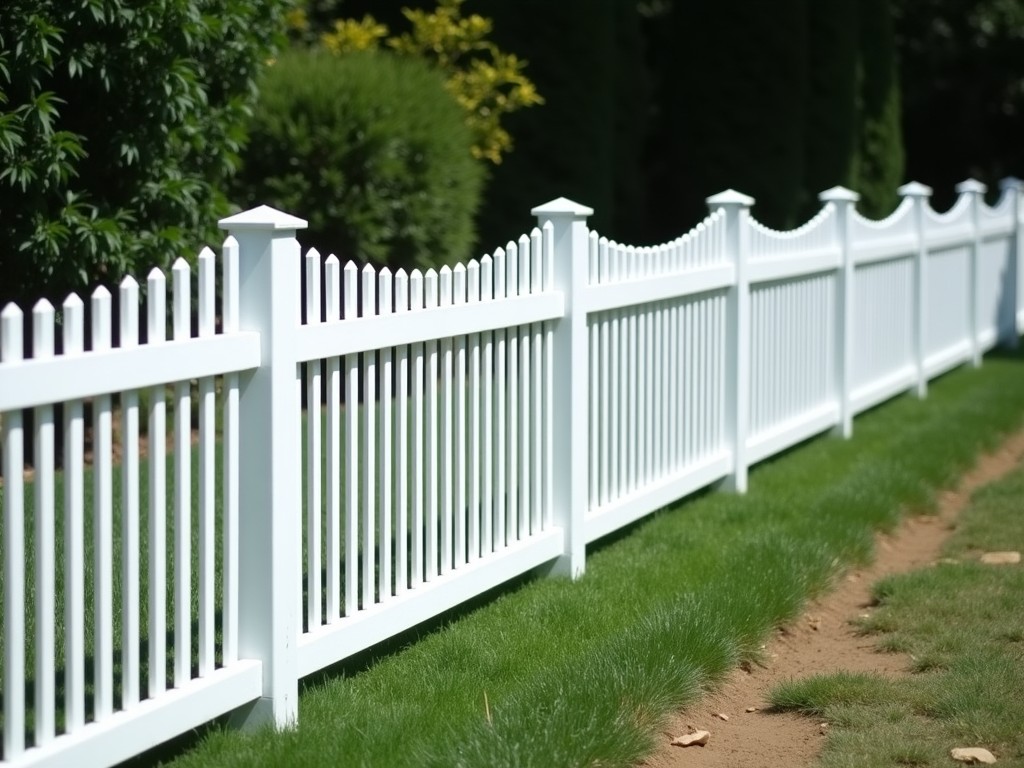
Temporary White Picket Fence: Rapid Deployment Solution for Site Management
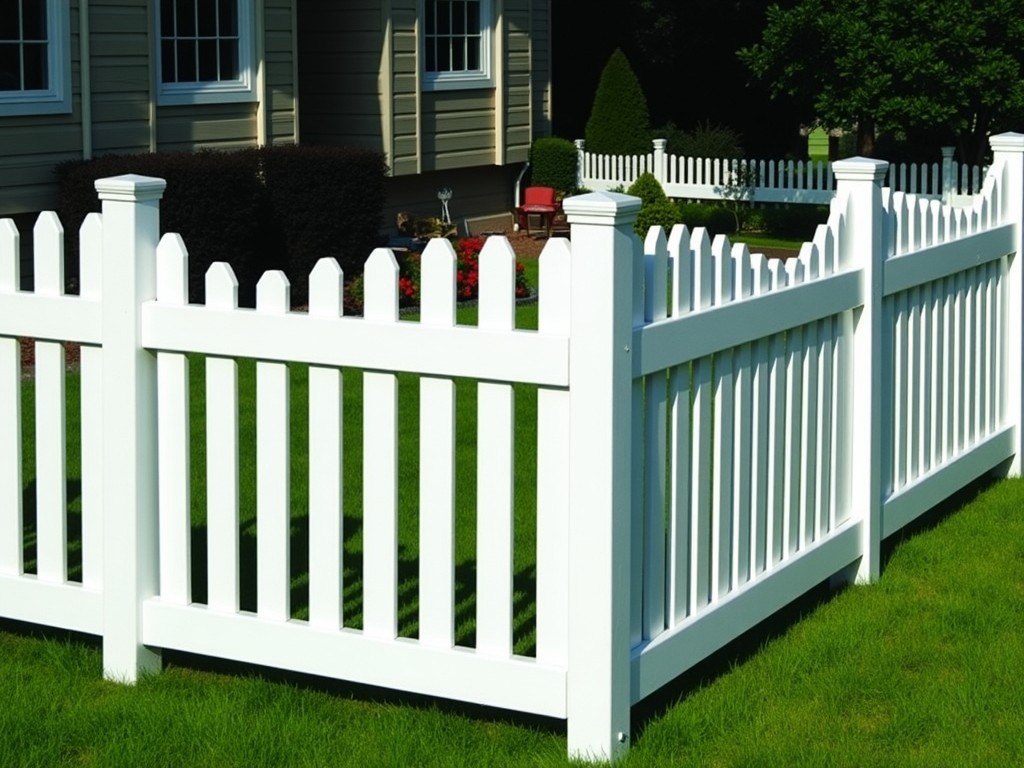
Temporary white picket fencing provides a non-permanent boundary solution for construction sites, event venues, landscaping projects, and property delineation where rapid installation, visual clarity, and reusability are required. Unlike permanent fencing, these systems are engineered for tool-free assembly, weather resistance, and repeated use across multiple job sites without degradation in appearance or structural integrity. The design prioritizes visibility, safety compliance, and ease of logistics, making it suitable for short-term access control and aesthetic screening in regulated environments.
Material Composition and Durability Characteristics
The fence panels are constructed from UV-stabilized high-density polyethylene (HDPE) with a minimum density of 0.94 g/cm³, selected for its resistance to cracking, fading, and moisture absorption under prolonged sun exposure. Each vertical picket measures 38 mm in width and 18 mm in thickness, spaced 76 mm apart to maintain visual continuity while allowing wind passage. Horizontal rails feature a reinforced I-beam profile with a moment of inertia of 1.2 cm⁴ to resist lateral deflection under wind loads up to 110 km/h. All components are molded in a single white pigment batch (RAL 9010) to ensure color consistency across production runs and prevent streaking or staining from environmental exposure.
Modular Assembly System and Installation Efficiency
Each standard panel is 2.4 meters wide and 1.0 meter high, designed to interlock via a tongue-and-groove mechanism with a positive lock feature that requires no tools, fasteners, or adhesives. Connection points incorporate elastomeric seals to prevent rattling and maintain alignment during thermal cycling. Installation crews can erect 50 linear meters per hour with two workers using only hand pressure to engage the joints. Disassembly follows the reverse sequence, with panels stacking flat in nests of 10 units occupying less than 0.3 cubic meters per stack—critical for transport and storage efficiency between deployments.
Load Performance and Environmental Resistance
The system is rated for a uniform distributed load of 150 N/m applied at the top rail, sufficient to withstand incidental impact from equipment or crowd pressure without permanent deformation. HDPE retains 95% of its tensile strength after 1,000 hours of ASTM G154 UV exposure testing, equivalent to approximately 24 months of outdoor use in temperate climates. Thermal expansion is accommodated through the sliding joint design, allowing ±3 mm movement per meter of panel length between -20°C and +50°C without joint binding or gaps. The material is inert to common construction site chemicals, including concrete washout, mild acids, and alkalis, preventing surface degradation.
Comparison: Temporary vs. Permanent Picket Fencing
| Parameter | Temporary HDPE Picket Fence | Permanent Wood Picket Fence |
|---|---|---|
| Installation Time (per 10m) | 8 minutes | 4 hours |
| Reusability Cycles | 50+ | Not applicable |
| Weight (per linear meter) | 1.8 kg | 6.5 kg |
| Wind Load Resistance | 110 km/h | 90 km/h (dependent on post depth) |
| End-of-Life Recyclability | 100% HDPE, recyclable | Treated wood, landfill or incineration |
Customization Options for Project-Specific Requirements
While the standard white finish (RAL 9010) is optimized for visibility and neutrality, alternative colors are available upon request, including safety yellow (RAL 1023) for high-visibility zones and dark green (RAL 6005) for landscape integration. Panel height can be adjusted between 0.8 m and 1.2 m in 100 mm increments to match site-specific sightline or barrier requirements. Rail profiles can be modified to increase moment of inertia for high-wind locales, though this affects nesting efficiency. All customizations require minimum order quantities and lead time adjustments, which are provided upon receipt of project specifications including wind zone, exposure duration, and handling constraints.
Quality Control and Traceability
Each production batch undergoes incoming material verification via melt flow index (MFI) testing to confirm HDPE grade consistency, with acceptable range of 0.2–0.4 g/10 min. Dimensional accuracy is validated using coordinate measuring machines (CMM) on 5% of panels per lot, checking picket spacing, rail straightness, and joint tolerance within ±0.5 mm. Color uniformity is assessed under D65 lighting using a spectrophotometer, with Delta E < 2.0 required for approval. Every pallet includes a unique batch QR code linking to material certificates, test reports, and production date—enabling traceability for rental fleets or multi-site contractors managing asset lifecycles.
Product Categories


Send Inquiry
If you are interested in our products, leave your information here and we will be in touch shortly.