Cheap Chain Link Fence Price Factory Direct
Chain link fence pricing varies significantly based on material specifications, wire gauge, coating type, mesh size, and height. Factory direct sourcing eliminates intermediary markups, allowing
Cheap Chain Link Fence Price Factory Direct
Chain link fence pricing varies significantly based on material specifications, wire gauge, coating type, mesh size, and height. Factory direct sourcing eliminates intermediary markups, allowing buyers to access base material and manufacturing costs. Understanding the technical factors that influence price helps procurement teams evaluate true value rather than relying solely on advertised low costs.
Key Factors Affecting Chain Link Fence Cost
The primary cost drivers in chain link fence production are wire diameter (galvanized or coated), zinc or polymer coating weight, mesh opening size, and fence height. For example, a 9-gauge wire (3.8mm) costs more than 11-gauge (3.0mm) due to higher steel content. Similarly, a heavier zinc coating (e.g., 275g/m² vs. 180g/m²) increases material cost but extends service life in corrosive environments. Mesh size also impacts price—smaller openings (e.g., 50mm vs. 75mm) require more wire per square meter.
Height directly affects material usage: a 2.4m fence uses nearly double the wire of a 1.2m version. Post size and spacing, top rail specifications, and gate complexity further influence total project cost. Buyers should request detailed breakdowns separating fabric, posts, rails, fittings, and labor to compare quotes accurately.
Material Options and Their Cost Implications
- Galvanized steel (GB/T 13912): Most economical option; zinc coating protects against rust; typical coating weights range from 180g/m² to 275g/m²; suitable for general indoor or low-moisture outdoor use.
- Galvanized and PVC-coated: Adds polymer layer over zinc layer; improves aesthetics and chemical resistance; increases cost by 20-40% depending on coating thickness (typically 0.4mm PVC); common colors: green, black, brown.
- Aluminum-coated (Galfan): Zinc-aluminum alloy coating (5% Al, 95% Zn); offers superior corrosion resistance in humid or coastal environments; cost premium of 30-50% over standard galvanized; longer service life reduces lifecycle cost.
Typical Price Ranges (Factory Direct, Ex-Works)
| Specification | Mesh Size | Height | Price Range (USD/m²) |
|---|---|---|---|
| Galvanized, 9-gauge | 50mm | 1.2m | $4.50 - $6.00 |
| Galvanized, 11-gauge | 75mm | 1.8m | $3.20 - $4.50 |
| Galvanized + PVC (green) | 50mm | 2.4m | $7.00 - $9.50 |
| Galfan-coated, 9-gauge | 50mm | 2.0m | $6.50 - $8.80 |
Prices are factory direct (EXW) and based on standard roll lengths (typically 15m or 30m). Actual costs vary with order volume, raw material fluctuations (steel, zinc, PVC), and destination logistics. Larger orders (e.g., >5000m²) often receive volume discounts. Always confirm whether pricing includes posts, rails, tension bars, bands, and gates—these components can add 30-60% to the fabric-only cost.
Applications Where Cost-Effective Chain Link Fence Is Specified
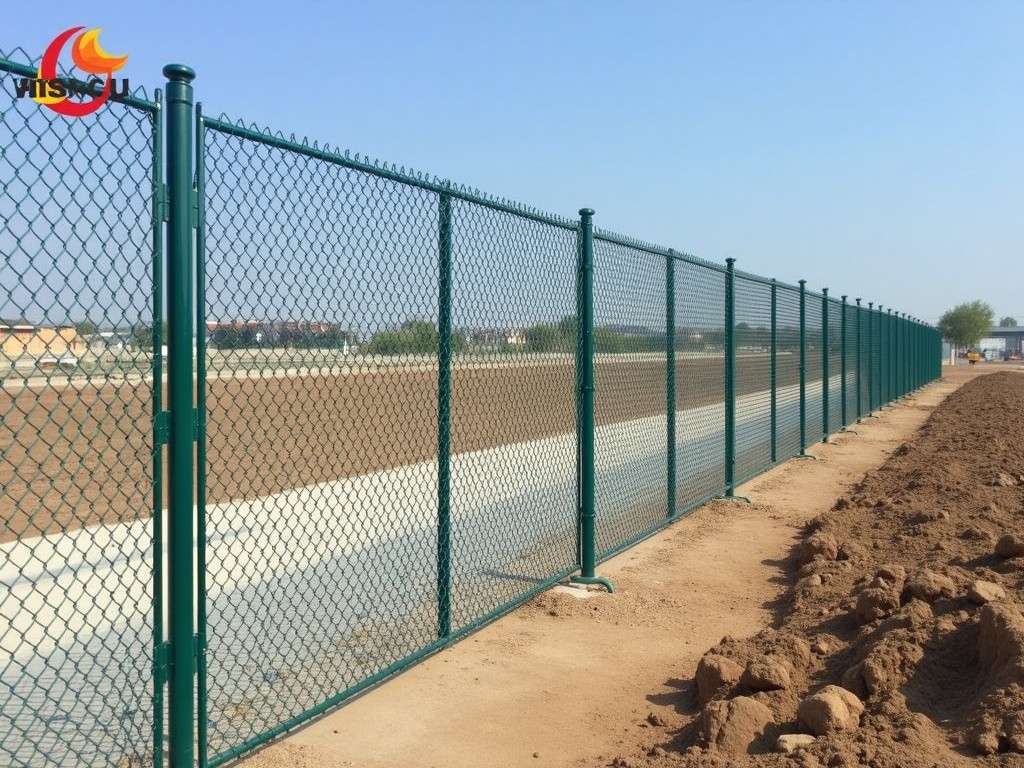
Industrial facilities use chain link fence for perimeter security where visibility and airflow are required—such as around substations, water treatment plants, or storage yards. The open mesh allows surveillance cameras and motion sensors to function effectively without visual obstruction. In agricultural settings, it contains livestock while permitting ventilation and sunlight penetration, reducing condensation and mold risk in enclosed pens.
Sports fields and recreational areas specify chain link for ball containment and spectator separation due to its high tensile strength and low maintenance. Unlike solid barriers, it does not create wind loading issues, making it suitable for exposed locations. Temporary construction sites use it for site demarcation because it is rapidly installable, reusable, and recyclable at end-of-life—aligning with circular economy principles in green building certifications.
Quality Control Considerations for Buyers
When evaluating low-cost offers, verify tensile strength of the wire (minimum 350 MPa for galvanized steel per ASTM A392), coating adhesion (ASTM D3359 for PVC), and mesh uniformity. Irregular weaving or inconsistent wire tension leads to sagging and reduced lifespan. Reputable manufacturers provide mill test reports for raw materials and perform in-line coating thickness checks using XRF or magnetic gauges.
Request sample sections for independent testing—particularly for coating weight and corrosion resistance (salt spray test per ASTM B117). A significantly lower price may indicate thinner wire, reduced coating weight, or recycled steel with impurities. Factory direct does not guarantee quality; due diligence on manufacturing processes and inspection protocols is essential to avoid premature failure and replacement costs.
Customization and Logistics
Factory direct suppliers typically offer customization in height (0.9m to 3.6m), mesh size (25mm to 100mm), wire gauge (6-gauge to 11-gauge), and coating type. Custom colors require minimum order quantities (often 1 ton of PVC compound) due to extrusion setup costs. Roll width can be adjusted to reduce on-site cutting—standard is 3.05m or 3.66m wide, but narrow rolls (e.g., 1.2m) are available for vertical applications like balcony guards.
Packaging options include waterproof paper wrap with plastic outer layer or palletized rolls with corner protection. For export, fumigated wooden pallets and container bracing prevent shifting. Lead times vary: standard galvanized rolls ship in 7-14 days; custom-coated or non-standard gauges take 21-30 days. Always clarify Incoterms—FOB port is common for factory direct, meaning buyer arranges and pays for international freight and insurance.

Product Categories


Send Inquiry
If you are interested in our products, leave your information here and we will be in touch shortly.