Cheap Temporary Construction Site Fencing Panels
Temporary construction site fencing panels serve as a critical safety and security barrier during short-term projects, providing controlled access while protecting workers, pedestrians, and adjacent
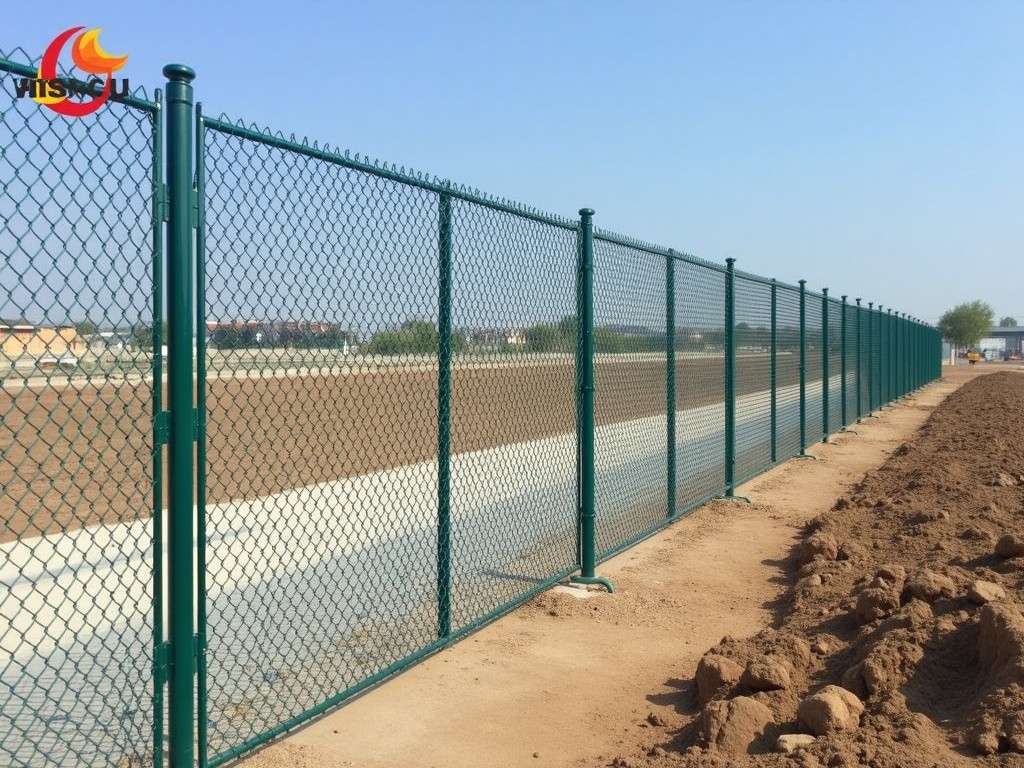
Cheap Temporary Construction Site Fencing Panels
Temporary construction site fencing panels serve as a critical safety and security barrier during short-term projects, providing controlled access while protecting workers, pedestrians, and adjacent property. These systems are engineered for rapid deployment and removal, minimizing site disruption without compromising structural integrity under typical wind and impact loads encountered in urban and rural environments.
The term "cheap" in this context refers to cost-effective solutions that balance material efficiency, reusability, and lifecycle value—not compromising on essential safety standards or functional performance. Industrial buyers prioritize total cost of ownership, including transport, labor for installation/removal, storage footprint, and potential for multiple reuse cycles across different projects.
This page outlines the technical characteristics, material options, and application considerations for temporary fencing systems designed to meet the demands of fast-paced construction schedules while adhering to local safety regulations and site-specific risk assessments.
Core Design Parameters
Temporary fencing panels are typically constructed as modular units ranging from 2.0 to 2.5 meters in width and 2.0 to 2.4 meters in height, enabling manual handling by two workers while maintaining sufficient rigidity to resist lateral deflection. Panel frames are commonly formed from galvanized steel tubing with outer diameters between 32mm and 48mm and wall thicknesses of 1.2mm to 2.0mm, selected based on expected service life and environmental exposure.
Infill materials vary according to project requirements: welded wire mesh with 50mm x 50mm or 75mm x 50mm apertures provides visibility and wind permeability; solid steel sheet or perforated metal options offer increased privacy and debris containment; polyethylene mesh is used where lightweight construction and UV resistance are priorities. Connection systems employ gravity-coupled pins, spring-loaded latches, or bolt-through brackets designed for tool-free assembly and disassembly.
Base stability is achieved through weighted stands—typically cast iron or recycled rubber blocks weighing 15kg to 25kg per panel—or ground spikes for soft soil applications. Wind load resistance is calculated using regional basic wind speed maps, with panel systems designed to withstand gusts up to 110 km/hour return period without permanent deformation or anchorage failure.
Material Selection and Durability
Hot-dip galvanization (minimum 60μm zinc coating per ISO 1461) is the standard corrosion protection method for steel components, providing adequate resistance for 2–5 years of outdoor service in moderate climates. In coastal or industrial environments with higher chloride or sulfur dioxide exposure, zinc-aluminum alloy coatings or powder-coated finishes over galvanized substrates may be specified to extend service life.
Frame tubing undergoes tensile testing to confirm minimum yield strength of 250 MPa, ensuring resistance to permanent bending under impact from equipment or wind-driven debris. Wire mesh infill is typically manufactured from low-carbon steel wire (ISO 9001-grade) with tensile strength between 350–450 MPa, welded at intersections to prevent unraveling under tension.
Polyethylene mesh options utilize UV-stabilized HDPE with tensile strength of 20–25 MPa and elongation at break exceeding 300%, suitable for applications requiring flexibility and resistance to cracking under cyclic thermal stress. All materials are selected to avoid brittle fracture at low temperatures and maintain dimensional stability across seasonal temperature ranges.
Typical Configurations and Customization
While standard dimensions simplify logistics and interchangeability, temporary fencing systems are frequently adapted to site-specific constraints. Panel width may be reduced to 1.2m or 1.5m for narrow access points or indoor use, while height can be increased to 3.0m for high-security zones or fall protection requirements. Custom infill patterns—such as tighter mesh spacing or anti-climb profiles—are available upon request.
Color coding is commonly applied for functional identification: yellow and black for hazard zones, green for perimeter delineation, orange for pedestrian walkways. Reflective strips or high-visibility coatings enhance low-light detectability without relying on external power. Gate integration is standard, with single or double-leaf options matching panel height and incorporating self-closing hinges and padlock hasps.
Modular design allows for straight runs, 90-degree corners, and curved configurations using adjustable coupling brackets. Ground adaptation feet accommodate slopes up to 15 degrees, eliminating the need for extensive site grading. All customizations maintain compatibility with standard connection hardware to preserve system interoperability.
Applications in Construction Environments
Temporary fencing is mandated in most jurisdictions to secure construction perimeters, preventing unauthorized access by the public and reducing liability risks associated with site hazards such as open excavations, stored materials, and active machinery zones. Panels are deployed around foundation work, structural erection phases, and finishing operations where delineation of work zones improves workflow efficiency and reduces interference between trades.
In urban redevelopment projects, fencing systems protect adjacent buildings from falling debris and contain dust and noise emissions, supporting compliance with local environmental ordinances. For infrastructure projects like roadworks or utility installations, lane closure fencing guides traffic safely around work areas while maintaining clear sightlines for drivers and pedestrians.
Events and public gatherings also utilize temporary fencing for crowd control, ticketed access management, and vendor area separation. The reusability of these systems across disparate applications—from building sites to festivals—enhances their economic justification, particularly when storage and transport logistics are optimized through stackable designs and standardized footprints.
Quality Control and Manufacturing Considerations
Manufacturing tolerances for panel squareness are held to ±5mm per meter to ensure consistent coupling alignment during assembly. Weld joints on frames and mesh infill undergo visual inspection per ISO 5817 Level B, with destructive testing performed on sample coupons to verify penetration and fusion quality. Galvan coating thickness is verified using magnetic induction gauges at multiple points per component.
Pre-assembly checks confirm smooth operation of coupling mechanisms and absence of sharp edges or burrs that could pose handling hazards. Finished panels are bundled in groups of 10–20 units with protective edge guards and secured with plastic or steel strapping for transport. Storage recommendations include dry, ventilated conditions to prevent white rust formation on galvanized surfaces during extended idle periods.
Lifecycle assessment shows that a single panel can endure 10–20 reuse cycles under proper handling, significantly reducing per-use cost compared to single-use alternatives. End-of-life recycling pathways exist for steel components (melting and re-refining) and polyethylene mesh (regranulation), supporting circular economy principles in temporary works.
| Parameter | Typical Range | Notes |
|---|---|---|
| Panel Width | 1.2m – 2.5m | Custom widths available for constrained spaces |
| Panel Height | 2.0m – 3.0m | Increased height for security or fall protection |
| Frame Tubing OD | 32mm – 48mm | Wall thickness 1.2mm–2.0mm based on load |
| Mesh Aperture | 50mm x 50mm or 75mm x 50mm | Smaller apertures for debris containment |
| Base Weight (per panel) | 15kg – 25kg | Cast iron or recycled rubber; ground spikes for soil |
| Wind Load Resistance | Up to 110 km/h gust | Dependent on height, width, and anchorage |
| Galvan Coating | Minimum 60μm (ISO 1461) | Higher coatings available for harsh environments |
| Reuse Cycles | 10–20 cycles | With proper handling and storage |
Cost-Effectiveness and Lifecycle Value
The economic advantage of temporary fencing stems not from low initial material cost alone, but from optimized design for reuse, minimal labor during erection and dismantling, and reduced storage and transport volume. Panels that nest or stack efficiently lower freight costs per unit, while standardized coupling mechanisms decrease on-site assembly time by 30–50% compared to custom-fabricated barriers.
A lifecycle cost analysis comparing purchase versus rental reveals that for projects exceeding three months duration or with anticipated reuse across multiple sites, ownership typically reduces total expenditure by 40–60% after accounting for maintenance, storage, and depreciation. This threshold varies based on local rental rates, transport distances, and project frequency.
Damage rates during use—primarily from vehicle impact or improper handling—are mitigated through user training and the use of sacrificial components such as replaceable base stands or mesh panels. Designing for easy part replacement rather than whole-unit disposal extends service life and improves long-term value perception among procurement teams evaluating total cost of ownership.
Environmental and Regulatory Compliance
Temporary fencing systems support compliance with occupational safety standards such as OSHA 1926.200 (general safety provisions) and local equivalents by providing defined barriers that separate work zones from public spaces. Environmental regulations concerning sediment control may require integration with silt fencing or straw wattles at the base of panels in erosion-prone areas.
Noise barrier regulations in urban zones can be addressed through the addition of acoustic absorptive blankets attached to the panel framework, though this increases wind load and must be accounted for in structural design. Recycled content in base stands (e.g., crumb rubber from tires) and the recyclability of steel components contribute to LEED and BREEAM credit considerations for sustainable construction practices.
Manufacturers adhere to REACH and RoHS restrictions on hazardous substances in coatings and plastics, ensuring that materials do not pose environmental risks during use, storage, or end-of-life processing. Documentation of material safety data sheets (MSDS) and conformity declarations is available upon request for due diligence purposes.
Product Categories


Send Inquiry
If you are interested in our products, leave your information here and we will be in touch shortly.