Chicken Wire Fencing For Garden Factory Direct
Chicken wire fencing, also known as poultry netting or hexagonal mesh, is a lightweight yet effective barrier solution commonly used in garden enclosures, pest control, and temporary livestock
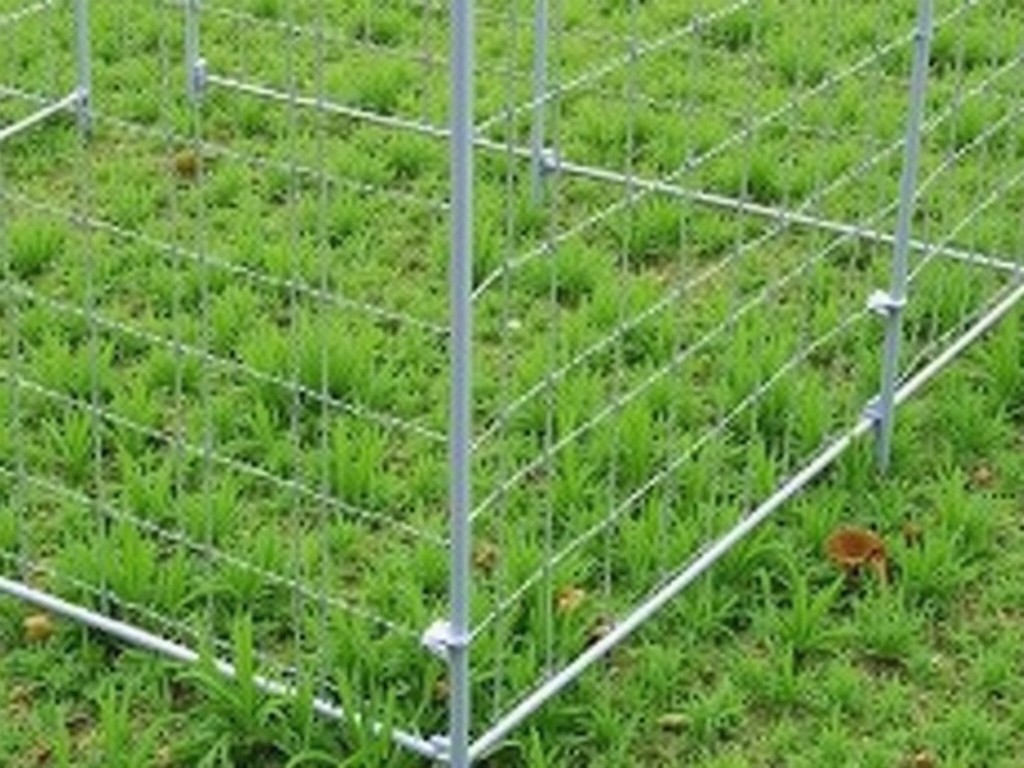
Chicken Wire Fencing for Garden – Factory Direct Supply
Chicken wire fencing, also known as poultry netting or hexagonal mesh, is a lightweight yet effective barrier solution commonly used in garden enclosures, pest control, and temporary livestock containment. Manufactured from galvanized steel wire woven into a uniform hexagonal pattern, it provides a cost-efficient method to exclude small animals such as rabbits, squirrels, and birds while allowing airflow, sunlight, and pollinator access. Factory direct sourcing eliminates intermediary markups, enabling consistent quality control from raw material selection through final packaging, which is critical for maintaining dimensional accuracy and corrosion resistance across large-volume orders.
The structural integrity of chicken wire depends on three key engineering parameters: wire gauge (diameter), hexagonal opening size, and zinc coating weight. Standard industrial grades typically use 20-gauge (0.88 mm) to 22-gauge (0.71 mm) low-carbon steel wire, with hexagonal apertures ranging from 12.7 mm (½ inch) to 50.8 mm (2 inches). Zinc coating is applied via hot-dip galvanization, with minimum coating weights of 60 g/m² (per side) to meet ASTM A641 Class 3 standards for outdoor exposure. These specifications ensure a service life of 5–10 years in moderate climates before significant oxidation occurs, with performance directly correlated to coating uniformity and wire tensile strength (typically 350–550 MPa).
Material Selection and Corrosion Resistance
The base wire material is selected for its balance of formability and tensile strength. Low-carbon steel (C1008/C1010 equivalent) is preferred over higher-carbon alloys because it undergoes cold drawing and weaving without cracking, maintaining ductility during installation. Alternative materials such as stainless steel (Grade 304) are available for coastal or high-humidity environments where chloride-induced corrosion is a concern, though they increase material cost by 40–60%. Aluminum wire is rarely used due to its low tensile strength (<150 MPa) and susceptibility to creep under sustained tension, making it unsuitable for permanent fencing applications despite its corrosion resistance.
Galvanization quality is verified through standardized testing methods. Coating adhesion is assessed via ASTM A90/A90M (weight measurement) and ASTM B117 (salt spray resistance), with typical red rust appearance delayed beyond 200 hours for Class 3 coatings. Factory direct production allows real-time monitoring of zinc bath temperature (440–460°C), immersion time, and withdrawal speed to ensure consistent coating thickness. Post-weaving passivation treatments (e.g., chromate-free sealers) may be applied to further inhibit white rust formation during storage and transit, particularly in humid climates.
Manufacturing Process and Dimensional Control
Production begins with wire drawing to precise tolerances (±0.02 mm diameter), followed by annealing to relieve internal stresses before weaving. The hexagonal mesh is formed on high-speed looms where two wires are twisted around a central wire to create each cell, ensuring uniform tension and preventing unraveling. Edge wires are typically doubled or reinforced with a heavier gauge (e.g., 18-gauge) to resist deformation during handling and installation. Roll widths are standardized at 0.9 m, 1.2 m, and 1.8 m, with lengths ranging from 15 m to 50 m per roll, though custom lengths are available upon request to minimize field splicing.
Dimensional accuracy is critical for both functionality and installation efficiency. Opening size variation is maintained within ±10% of nominal via precision loom calibration and real-time vision inspection. Roll tightness is controlled to prevent telescoping or bird-caging during unwinding, with inner cores made of recycled plastic or cardboard (Ø50 mm) to ensure smooth payout. Each roll is weighed and measured post-production to verify length tolerance (±2%) and linear density (typically 200–400 g/m for 20-gauge 25mm mesh), enabling accurate material estimation for large-scale projects.
Applications in Garden and Agricultural Settings
In garden environments, chicken wire fencing is primarily used to exclude vertebrate pests that damage crops through browsing or burrowing. Rabbits, for example, can squeeze through openings larger than 75 mm, making 25 mm or 50 mm hexagonal mesh effective when installed with a 150–200 mm underground flange bent outward at 90° to deter digging. The lightweight nature (approx. 1.5–2.5 kg/m²) allows for easy handling and temporary installation using plastic zip ties, U-staples, or lightweight wooden stakes, making it ideal for seasonal crop rotation or raised bed protection.
Beyond pest exclusion, chicken wire serves as a trellis support for climbing plants such as peas, cucumbers, and flowering vines when stretched horizontally or vertically. Its open structure provides ample surface area for tendril attachment while minimizing wind load compared to solid barriers. In poultry enclosures, it prevents bird escape and predator ingress when combined with a buried apron and overhead netting, though it is not recommended as the sole barrier against determined predators like raccoons or foxes without additional reinforcement (e.g., electric fencing or solid panels).
Comparison of Standard Specifications
| Parameter | Standard Option | Heavy-Duty Option | Stainless Steel Option |
|---|---|---|---|
| Wire Gauge | 20-gauge (0.88 mm) | 18-gauge (1.02 mm) | 20-gauge (0.88 mm) SS 304 |
| Opening Size | 25 mm (1 inch) | 25 mm (1 inch) | 25 mm (1 inch) |
| Zinc Coating | 60 g/m² (ASTM A641 Class 3) | 90 g/m² (ASTM A641 Class 4) | None (inherent corrosion resistance) |
| Tensile Strength (Wire) | 400 MPa | 450 MPa | 520 MPa |
| Estimated Outdoor Life | 5–8 years | 8–12 years | 15+ years |
| Weight (per m²) | 220 g/m² | 280 g/m² | 220 g/m² |
The table above outlines three common configurations tailored to different environmental and operational demands. The standard option provides adequate protection for most temperate-climate gardens where aesthetic longevity is secondary to functionality. The heavy-duty variant increases wire diameter and coating weight to extend service life in areas with higher abrasion (e.g., sandy soils) or prolonged UV exposure. Stainless steel eliminates corrosion concerns entirely, making it suitable for organic farming operations where zinc leaching is a concern or in coastal regions with salt fog exposure, though the higher initial cost must be weighed against lifecycle savings.
Customization and Ordering Considerations
Factory direct procurement enables specification adjustments beyond standard catalog items. Wire gauge can be modified from 19-gauge to 24-gauge depending on required flexibility versus rigidity. Opening sizes are adjustable from 12.7 mm (for insect exclusion) to 50.8 mm (for larger animal deterrence), though smaller apertures increase material usage and roll weight proportionally. Roll dimensions can be customized in width (0.6 m to 2.4 m) and length (5 m to 100 m) to reduce field seams and labor during installation, particularly for large perimeter applications or greenhouse partitioning.
Surface treatments are also adaptable. In addition to standard hot-dip galvanization, options include Galfan (zinc-aluminum alloy) coating for improved edge protection in cut areas, or black PVC extrusion over galvanized wire for reduced visual impact in landscape settings. PVC coating adds approximately 0.2–0.3 mm to wire diameter and increases roll weight by 25–35%, but provides a maintenance-free finish with UV-stabilized pigments that resist fading for 5–7 years. All customizations require technical consultation to ensure compatibility with weaving equipment and tensile performance targets.
Minimum order quantities typically start at 500 kg (approximately 2–3 pallets) for custom specifications, though stock items may be available in smaller lot sizes. Lead times range from 10–20 business days for standard galvanized products to 25–35 days for specialty coatings or stainless steel variants, depending on raw material availability and production scheduling. Documentation including mill test reports (MTR), coating weight certificates, and ISO 9001 compliance declarations is provided upon request to support procurement validation and quality assurance audits.
Quality Assurance and Testing Protocols
Quality control is integrated at multiple stages of production. Incoming wire is inspected for diameter, tensile strength, and coating continuity using eddy current and micrometer sampling. During weaving, tension sensors monitor loom performance to prevent irregular cell formation or wire breakage. Post-production, each roll undergoes dimensional verification (width, length, opening size) and a pull-test on a sample splice to confirm seam integrity exceeds 80% of base wire strength. Visual inspection under standardized lighting checks for missed zones, double wires, or foreign material inclusion.
Environmental resistance is validated through accelerated aging tests. Salt spray exposure (ASTM B117) is conducted on coated samples to assess corrosion initiation time, with results used to validate coating weight specifications. UV resistance of PVC-coated variants is tested per ASTM G154 (QUV) to evaluate color retention and embrittlement risk. Batch-to-batch consistency is tracked via statistical process control (SPC) charts on key parameters such as wire diameter, coating weight, and roll density, ensuring that outgoing products meet defined acceptance criteria with a Cpk >1.33.
Packaging, Handling, and Logistics
Finished rolls are packaged to prevent damage during transit and storage. Each roll is wrapped in UV-stabilized polyethylene film to guard against moisture and surface abrasion, then secured with biodegradable or polypropylene strapping. Rolls are stacked horizontally on pallets (max height: 1.2 m) with corner protectors and stretch-wrapped for unit stability. Labeling includes product code, specifications, batch number, and QR code linking to digital documentation. Palletized units are designed for forklift handling from all four sides, with standard pallet dimensions (1.1 m × 1.1 m) optimizing container utilization.
For export shipments, additional protection measures are applied. Corner boards and edge guards prevent crushing during containerization, and desiccant packs are included in high-humidity routes to mitigate condensation-induced white rust. Each pallet is marked with handling instructions (e.g., “Keep Dry,” “Do Not Stack Beyond 2 Layers”) and country-of-origin labeling. Gross weight per pallet typically ranges from 400–800 kg depending on roll specifications, allowing 16–20 pallets per 40-foot container for standard 20-gauge 25mm mesh. All packaging materials are recyclable where facilities exist, supporting sustainable supply chain initiatives.
To inquire about chicken wire fencing for garden applications, request a quotation, or discuss custom specifications such as wire gauge, opening size, coating type, or roll dimensions, please contact our technical sales team. Provide your project requirements including intended use, environmental exposure, installation method, and desired quantity to receive accurate pricing, lead time, and documentation. We offer factory direct pricing with full traceability from raw material to finished roll, ensuring consistent performance and compliance with industrial standards.
Contact for Technical Inquiry
Request Quotation & Specifications
Product Categories


Send Inquiry
If you are interested in our products, leave your information here and we will be in touch shortly.