China Wire Mesh Chain Link Fence
Wire mesh chain link fences manufactured in China are widely specified for perimeter security, industrial enclosures, and agricultural boundaries due to their combination of tensile strength,
China Wire Mesh Chain Link Fence
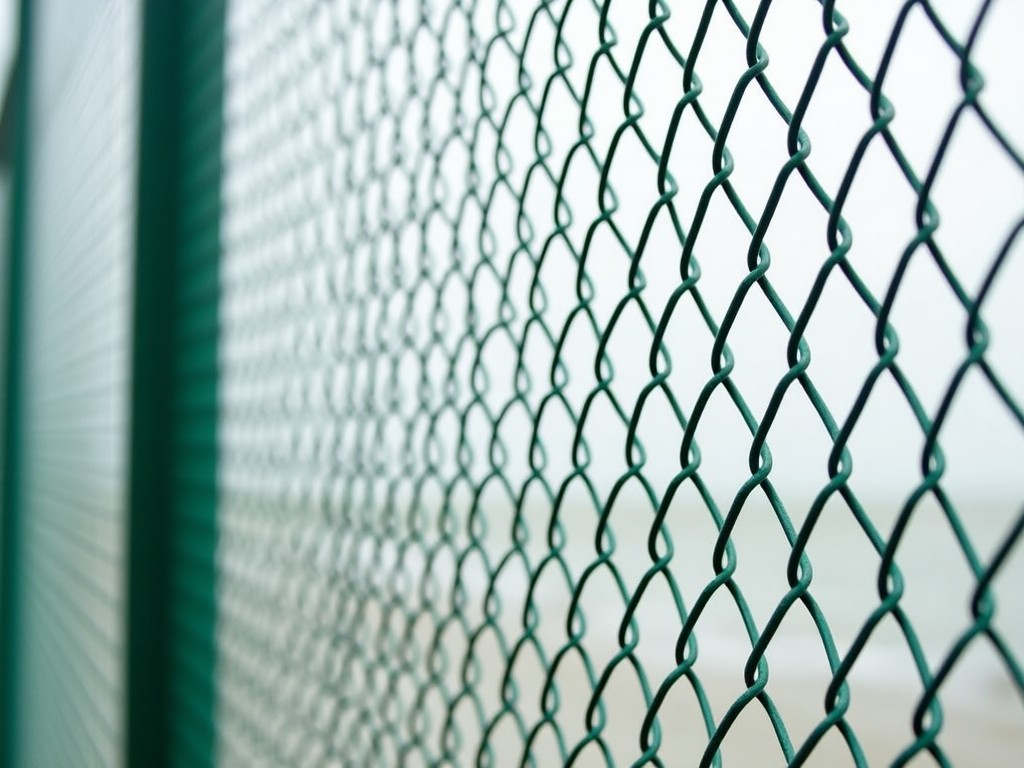
Wire mesh chain link fences manufactured in China are widely specified for perimeter security, industrial enclosures, and agricultural boundaries due to their combination of tensile strength, corrosion resistance, and modular installation. These fences are produced using galvanized or PVC-coated steel wires woven into a uniform diamond mesh pattern, then tensioned between terminal posts and secured with tension bands and tie wires. The manufacturing process adheres to international standards such as ASTM A392 and EN 10223-3, ensuring dimensional accuracy and mechanical performance suitable for long-term outdoor exposure.
Key technical parameters include wire diameter (typically 2.0mm to 4.0mm), mesh opening size (commonly 50mm × 50mm or 60mm × 60mm), and coating weight (minimum 200g/m² for hot-dip galvanization). PVC-coated variants feature a 0.4mm to 0.6mm polymer layer over galvanized steel, enhancing chemical resistance and aesthetic integration in sensitive environments. Posts are generally made from galvanized steel pipe with diameters ranging from 48mm to 76mm and wall thicknesses of 2.0mm to 3.2mm, designed to resist bending under wind load and impact forces.
Material Selection and Corrosion Protection
The base steel wire used in chain link fence production is typically low-carbon steel (Q195 or equivalent), chosen for its balance of ductility and tensile strength (minimum 350MPa). Hot-dip galvanization applies a zinc coating through immersion in molten zinc at approximately 450°C, forming a metallurgical bond that provides sacrificial protection. Coating thickness is measured in grams per square meter (g/m²), with 200g/m² equivalent to approximately 28μm of zinc per side, meeting ASTM A123 Class B requirements for moderate to severe environments.
For enhanced durability in coastal or industrial atmospheres, PVC coating is applied over galvanized wire using extrusion or dip-coating methods. The PVC layer acts as a barrier against moisture, chlorides, and UV radiation, significantly extending service life beyond bare galvanized systems. Common PVC colors include green, black, and brown, selected to minimize visual impact in residential or landscape settings. The coating undergoes adhesion testing (ASTM D4541) to ensure bonding strength exceeds 1.5MPa, preventing delamination under thermal cycling.
Alternative coatings such as aluminized steel (Al-Zn alloy) or polymer-modified bitumen are available upon request for specialized applications requiring higher temperature resistance or chemical inertness. Material selection is guided by environmental exposure classifications (ISO 9223), with corrosion rate predictions informing coating specification to achieve target service life of 15–25 years under normal conditions.
Structural Design and Installation Considerations
Chain link fence systems rely on post embedding depth and tension distribution to maintain structural integrity under lateral loads such as wind pressure or attempted climbing. Terminal posts (corners, gates, ends) are typically set in concrete foundations with a minimum depth of 600mm and diameter 3–4 times the post diameter to resist overturning moments. Line posts are spaced at 2.5m to 3.0m intervals and driven or concrete-set to a depth of 500mm, providing adequate resistance to deflection under uniform load.
Tension wires are installed at the top and bottom of the fence fabric to prevent sagging and maintain mesh alignment. These wires, usually 3.0mm diameter galvanized steel, are secured to terminal posts via strainers and fastened to the fabric using hog rings or tie wires at 450mm intervals. The bottom tension wire is critical for preventing vertical lift and deterring animal intrusion, often buried 50–100mm below grade or secured to a ground rail.
Gate assemblies incorporate heavier posts (minimum 76mm diameter, 3.2mm wall) and reinforced hinges to support dynamic loads during operation. Latch mechanisms are designed for padlock compatibility and include drop bolts or gravity locks for automated closing. Proper grounding is recommended for installations near electrical infrastructure to mitigate step and touch potential risks, following IEC 60364-5-54 guidelines.
Customization Options and Technical Specifications
Chain link fences are highly adaptable to project-specific requirements through variations in wire gauge, mesh size, coating type, and height. Standard roll widths range from 0.9m to 3.0m, with lengths typically 15m or 30m per roll to minimize joints during installation. Custom heights up to 6.0m are achievable by splicing rolls with overlap clips and additional tension wires, maintaining structural continuity.
Mesh opening size directly influences climb resistance and small animal exclusion. Smaller openings (e.g., 38mm × 38mm) increase rigidity and deter hand/foothold formation, while larger openings (100mm × 100mm) reduce material cost and wind load but may compromise security. Wire diameter affects both tensile strength and flexibility; thicker wires (4.0mm+) are used in high-security or industrial zones, whereas lighter gauges (2.0–2.5mm) suffice for temporary or agricultural fencing.
| Parameter | Typical Range | Notes |
|---|---|---|
| Wire Diameter | 2.0 – 4.0 mm | Affects tensile strength and flexibility |
| Mesh Opening | 38mm – 100mm square | Smaller = higher climb resistance |
| Coating Type | Galvanized, PVC-coated, Aluminized | Selected per environmental exposure |
| Fence Height | 0.9m – 6.0m | >3.0m may require intermediate supports |
| Post Spacing | 2.5m – 3.0m | Closer spacing for high wind or load |
All specifications are subject to confirmation based on project location, wind speed zone (per ASCE 7), and required service life. Technical datasheets and load calculations are available upon request to support engineering review and approval processes.
Quality Control and Testing Protocols
Manufacturing quality is verified through in-line and final inspection procedures aligned with ISO 9001 principles. Wire diameter is monitored via laser gauging during drawing, with tolerances held to ±0.05mm. Coating weight is tested using the strip-weigh method (ASTM A90) on random samples from each production batch, ensuring minimum zinc adhesion before weaving. PVC coating thickness is measured with micrometers or magnetic gauges, and adhesion strength is validated via pull-off tests per ASTM D4541.
Tensile strength of the finished wire is confirmed using universal testing machines, with elongation at break recorded to assess ductility. Mesh uniformity is checked by measuring opening dimensions across multiple points in a roll; deviation exceeding 10% from nominal triggers investigation. Roll tension is controlled during winding to prevent telescoping or loosening, which could cause installation issues.
Packaging includes waterproof wrapping and corner protection to prevent damage during transit. Each roll is labeled with product code, dimensions, coating type, and batch number for traceability. Third-party inspection reports (e.g., SGS, Bureau Veritas) can be arranged for critical projects requiring independent validation of compliance with ASTM, EN, or ISO standards.
Applications Across Industrial Sectors
In industrial facilities, chain link fences serve as inner perimeter buffers around substations, water treatment plants, and manufacturing zones where clear visibility and low maintenance are priorities. The open mesh design allows for unimpeded CCTV monitoring and facilitates rapid inspection of vegetation growth or debris accumulation that could compromise security. Grounding lugs welded to posts enable integration with lightning protection systems, reducing induced voltage risks during storms.
Transportation infrastructure applications include highway right-of-way delineation, railway track isolation, and airport perimeter security. The fence’s flexibility accommodates ground settlement without cracking, unlike rigid barriers, and its lightweight nature reduces foundation costs on soft soils. For high-speed rail corridors, anti-climb variants with 38mm mesh and 3.0mm wire are specified to prevent trespassing while maintaining aerodynamic permeability.
Agricultural uses focus on livestock containment and crop protection, where PVC-coated green fences blend with natural surroundings and resist damage from animal chewing. In correctional facilities, high-security configurations incorporate overhangs, barbed tape, or sensor integration, with posts embedded deeper and concrete-encased to resist forced entry. Temporary installations for construction sites or event venues use modular, relocatable systems with surface-mounted bases and quick-connect couplers for rapid deployment and removal.
For technical inquiries, custom specifications, or project consultation, contact our engineering team to discuss material selection, load requirements, or installation guidance tailored to your site conditions.
Request Technical Consultation
Product Categories


Send Inquiry
If you are interested in our products, leave your information here and we will be in touch shortly.