High Security Window Security Screens For House
Window security screens are engineered barriers designed to resist forced entry while maintaining ventilation, visibility, and compliance with residential building codes. Unlike standard insect
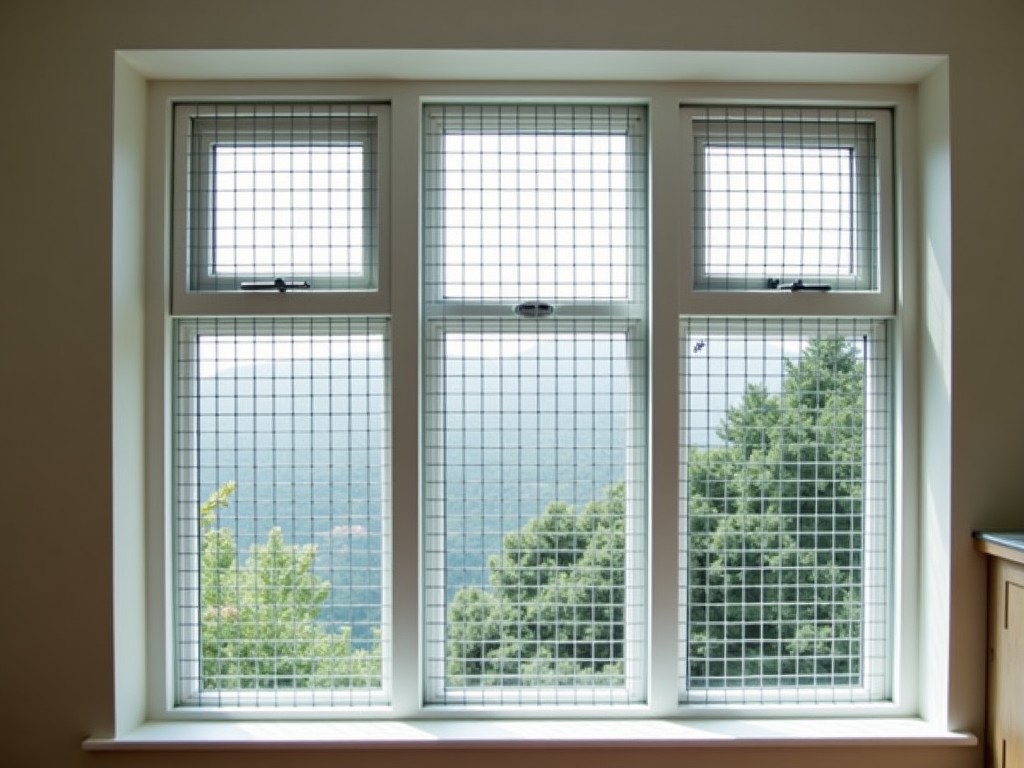
High Security Window Security Screens for House
Window security screens are engineered barriers designed to resist forced entry while maintaining ventilation, visibility, and compliance with residential building codes. Unlike standard insect screens, high-security variants incorporate reinforced framing, tamper-resistant fastening, and mesh materials tested against common intrusion tools. This page details the technical specifications, performance criteria, and application considerations for such systems in single-family and multi-unit residential settings.
Core Structural Design Principles
The primary function of a security screen is to delay or prevent unauthorized access through windows. Effective designs distribute impact loads across the frame and anchoring system rather than concentrating stress at single points. Frames are typically constructed from extruded aluminum alloys (6063-T5 or equivalent) with minimum wall thickness of 1.2mm to resist bending under prying forces. Corner joints use mechanical fasteners or welds rather than adhesives alone to ensure long-term integrity under cyclic loading.
Mesh attachment is critical: the screen must remain intact even if individual strands are cut. High-performance systems use a spline groove system where the mesh is locked into a continuous channel in the frame, preventing pull-out. Alternative methods like stapling or adhesive bonding are unsuitable for security applications due to progressive failure under sustained force. The frame-to-wall interface employs concealed or tamper-resistant fasteners (e.g., shear screws, breakaway nuts) anchored into structural framing, not just window trim or drywall.
Mesh Material Performance Characteristics
The mesh itself must resist cutting, tearing, and deformation under attack. Stainless steel wire (typically 304 or 316 grade) is the most common material due to its tensile strength, corrosion resistance, and difficulty to cut with standard tools. Wire diameters range from 0.8mm to 1.2mm, with aperture sizes constrained to prevent tool insertion—commonly 1.5mm x 1.5mm or smaller. This geometry blocks screwdrivers, knives, and similar implements while allowing airflow and light transmission.
Alternative materials like coated polyester or fiberglass lack sufficient shear resistance for security applications and are generally restricted to insect screening only. Some manufacturers offer hybrid meshes with stainless steel strands woven into a polymer core, but these require validation against cut resistance standards. The mesh tensile strength should exceed 1500 N/cm in both warp and weft directions to withstand sustained pulling or cutting attempts without progressive failure.
Testing Standards and Performance Validation
Security screens are evaluated against recognized standards that simulate real-world attack methods. The most relevant include AS 5039 (Australia/New Zealand), PAS 24:2016 (UK), and ASTM F588 (US). These tests assess resistance to manual tools (screwdrivers, crowbars), impact from weighted objects, and prolonged force application. A passing rating indicates the screen maintains integrity for a specified duration (e.g., 30 seconds to 3 minutes) under defined attack sequences.
Manufacturers should provide test reports from accredited laboratories showing compliance with at least one of these standards. Claims of "high security" without referenced test data lack verifiable basis. Buyers should verify whether testing was conducted on the complete assembly (frame, mesh, fasteners, anchors) or only on mesh samples, as system performance depends on all components working together.
Installation and Integration Considerations
Proper installation is as critical as the product design. Security screens must be mounted to the building’s structural substrate—typically the window frame’s head, jamb, and sill—using fasteners that penetrate into load-bearing elements. Mounting only to the window sash or trim creates a weak point that can be disengaged with minimal force. Clearance between the screen and window glass (usually 10–20mm) prevents direct tool access to the glazing while allowing for window operation.
For retrofits, installers must verify that the existing window frame can withstand the additional load and fastener spacing. In new construction, coordination with window manufacturers ensures compatible profiles and anchoring points. Screens should be designed for easy removal from the interior for emergency egress or cleaning, but resistant to external tampering. This often involves interior-release mechanisms (e.g., push latches, slide bolts) that are inaccessible or obscured from the outside.
Customization and Project-Specific Adaptation
Residential windows vary significantly in size, shape, and operating type (casement, sliding, awning, fixed). Security screens must be fabricated to match the exact opening dimensions, with tolerances typically held within ±1mm to ensure proper fit and function. Custom shapes (arches, angles, polygons) are feasible but require precise templating and may increase lead time. The frame profile can be adapted to match existing window aesthetics—square, beveled, or contoured—while maintaining structural minimums.
Finish options include powder coating (standard colors: white, black, bronze, custom RAL) or anodizing for enhanced corrosion resistance in coastal or industrial environments. Mesh color (typically black or charcoal) affects visibility and glare reduction; darker meshes reduce outward visibility while preserving inward sightlines. Integration with insect screening is possible via dual-track systems, but this adds complexity and may compromise security if not engineered as a unified unit.
Comparison of Common Security Screen Types
| Feature | Standard Insect Screen | High-Security Screen |
|---|---|---|
| Frame Material | Roll-formed aluminum (0.6–0.8mm) | Extruded aluminum (1.2mm+) |
| Mesh Type | Fiberglass or polyester | Stainless steel wire (0.8–1.2mm) |
| Mesh Attachment | Spline or adhesive | Locked spline groove |
| Fasteners to Wall | Exposed screws or clips | Concealed, tamper-resistant |
| Tested Standard | None (insect only) | AS 5039, PAS 24, or ASTM F588 |
| Typical Use Case | Ventilation, pest control | Forced entry resistance |
Applications in Residential Security Systems
High-security window screens are most effective when integrated into a layered defense strategy. They address a common vulnerability: windows are frequently targeted in residential break-ins due to perceived ease of access compared to doors. By reinforcing the weakest glazing points—especially ground-floor and accessible upper-floor windows—these screens increase the time and noise required for entry, deterring opportunistic attackers and improving the likelihood of detection.
They are particularly valuable in homes where occupants wish to keep windows open for ventilation at night or in warm climates without compromising security. Unlike bars or grilles, security screens maintain visual openness and do not trigger negative perceptions associated with prison-like aesthetics. In multi-unit buildings, they can be applied to individual unit windows while complying with fire egress codes when designed with interior-release mechanisms that meet local regulations.
Insurance providers may recognize approved security screens as risk-mitigating features, potentially influencing premiums or coverage terms. However, acceptance varies by jurisdiction and provider, so documentation of compliance with recognized testing standards is essential for any such claims. These screens are not a substitute for alarms, locks, or monitoring systems but serve as a physical delay mechanism that complements electronic security layers.
Quality Control and Manufacturing Consistency
Consistent performance depends on tight control over raw materials and fabrication processes. Aluminum extrusion must meet specified temper and dimensional tolerances; variations in wall thickness or alloy composition directly impact strength. Mesh weaving requires precise tension control to ensure uniform aperture size and prevent weak spots. Each batch of stainless steel wire should be accompanied by mill certification verifying grade, diameter, and tensile properties.
Final assembly inspection includes verifying frame squareness, mesh tension, fastener placement, and coating adhesion. Functional testing may involve simulating prying attempts on sample units to confirm expected resistance. Documentation of these checks—such as inspection records or test summaries—should be available upon request. Traceability from raw material to finished unit supports accountability and facilitates warranty claims or field investigations if performance is ever questioned.

Product Categories


Send Inquiry
If you are interested in our products, leave your information here and we will be in touch shortly.