Heavy Duty Temporary Construction Fence Panels
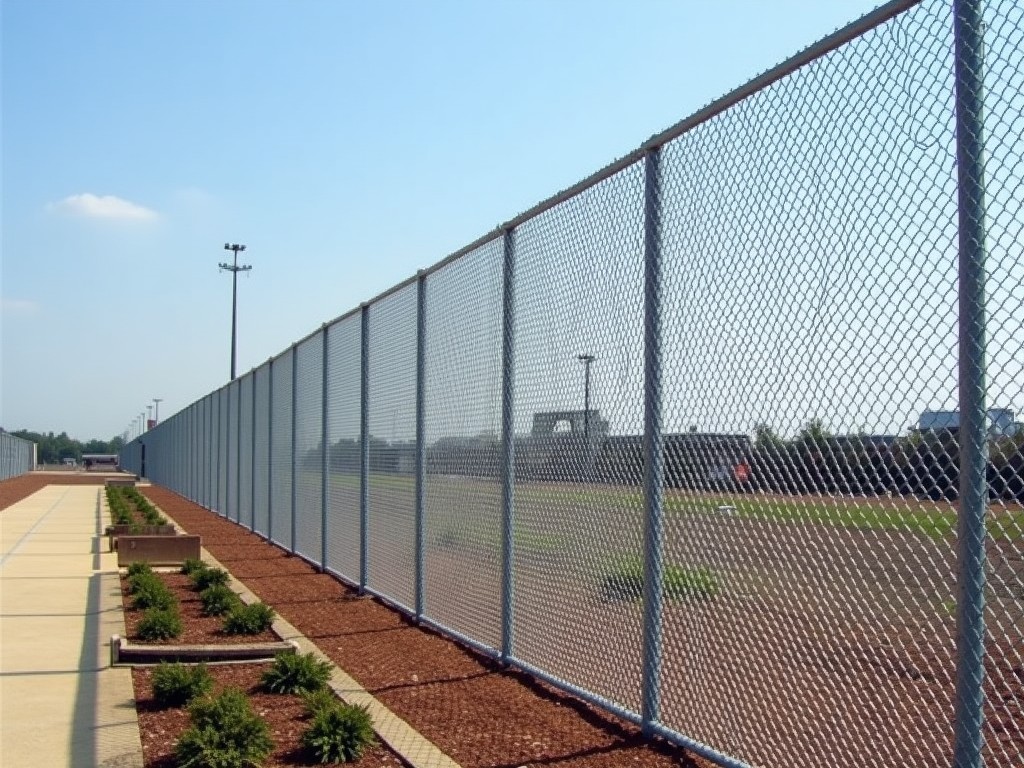
Temporary construction fence panels serve as critical perimeter control systems on active job sites, providing immediate delineation of work zones while meeting safety regulations and site access
Heavy Duty Temporary Construction Fence Panels
Temporary construction fence panels serve as critical perimeter control systems on active job sites, providing immediate delineation of work zones while meeting safety regulations and site access requirements. Unlike permanent fencing solutions, these panels are engineered for rapid deployment, repeated handling, and storage efficiency without compromising structural integrity under typical site conditions. Selection criteria focus on material composition, connection mechanics, wind load resistance, and reusability cycles—factors that directly impact lifecycle cost and site safety compliance.
Structural Design and Material Specifications
Panel frames typically utilize hot-dip galvanized steel tubing with minimum wall thickness of 1.2mm for vertical posts and 1.0mm for horizontal rails, providing corrosion resistance suitable for 2–3 years of outdoor exposure in moderate climates. Infill options include welded wire mesh (commonly 50mm x 50mm x 3.0mm gauge) or vertical steel pickets spaced at 110mm intervals to prevent climbing while maintaining visibility. The galvanized coating weight averages 275g/m², meeting ASTM A123 standards for zinc adhesion and durability.
Frame assembly employs socket-and-spigot connections with self-locking pins, eliminating the need for tools during erection or dismantling. Each connection point is designed to withstand lateral loads of up to 1.5kN without permanent deformation, based on typical wind pressure calculations for 110 km/h gusts in exposed terrains. Panel weight ranges from 18–25kg depending on height and infill type, balancing portability with resistance to accidental displacement.
Standard Dimensions and Configurations
Common panel heights are 2.1m and 2.4m, selected to deter unauthorized access while accommodating standard crane and equipment clearances on most construction sites. Widths are modular at 2.4m or 3.0m per panel, allowing efficient coverage of straight runs and reducing the number of connection points required per linear meter. Custom lengths are achievable through intermediate posts or overlapping joints, though standard modules optimize handling and storage logistics.
| Parameter | Typical Value | Notes |
|---|---|---|
| Height | 2.1m or 2.4m | Custom heights available upon request |
| Width | 2.4m or 3.0m | Modular for efficient site layout |
| Frame Tubing (Vertical) | 32mm OD x 1.2mm wall | Hot-dip galvanized steel |
| Frame Tubing (Horizontal) | 25mm OD x 1.0mm wall | Hot-dip galvanized steel |
| Infill Mesh | 50mm x 50mm x 3.0mm | Welded wire, galvanized finish |
| Panel Weight | 18–25kg | Depends on height and infill type |
| Wind Load Resistance | Up to 1.5kN per connection | Based on 110 km/h gust exposure |
Connection Systems and Site Adaptability
The primary connection method uses hardened steel pins inserted through aligned lugs on adjacent panel frames, creating a shear-resistant joint that accommodates minor ground unevenness without inducing stress concentrations. Alternative systems include overlapping flanges with bolt-through brackets for high-wind zones or integrated foot plates for soft soil conditions, each designed to maintain panel alignment while allowing rapid reconfiguration.
For uneven terrain, adjustable feet or screw-in ground anchors can be attached to the base of vertical posts, providing up to 150mm of vertical adjustment to maintain panel plumbness. This adaptability reduces the need for extensive site grading prior to installation and minimizes tripping hazards caused by misaligned panels. All connection hardware is captive or tethered to prevent loss during repeated use cycles.
Surface Treatment and Longevity Factors
Hot-dip galvanization provides uniform zinc coverage on all tubular surfaces, including interior sections, offering sacrificial protection that extends service life in environments with intermittent moisture exposure. The coating’s metallurgical bond resists cracking during bending or impact, unlike painted finishes that may chip and expose substrate steel to corrosion. Visual inspection of the zinc spangle pattern can indicate coating consistency without requiring destructive testing.
In coastal or industrial environments with elevated chloride or sulfur levels, alternative coatings such as zinc-aluminum alloy galvanizing or duplex systems (galvanized + powder coat) may be specified to extend lifespan beyond 5 years. These options involve trade-offs in cost and recoatability but are justified when panel reuse cycles exceed 20 deployments or when storage conditions promote condensation retention.
Typical Applications Across Construction Phases
During early site work, these panels establish secure boundaries around excavation zones, material storage areas, and equipment laydown yards, preventing unauthorized entry and reducing liability risks associated with open trenches or stored hazards. Their visibility and modularity allow rapid reconfiguration as site logistics evolve, such as when shifting from demolition to foundation pouring phases.
In later stages, panels control pedestrian and vehicular traffic flow around active work fronts, separating walkways from crane swings or concrete pump zones. They also support temporary signage mounting for safety notices, directional guidance, or project branding, with integrated mounting points or clip-on brackets designed to avoid compromising panel structural integrity.
Reusability, Storage, and Lifecycle Considerations
Panels are designed for minimum 50 erection/dismantling cycles under normal handling conditions, with connection points showing no measurable wear after 30 cycles in field studies. Nesting efficiency allows up to 10 panels to be stacked vertically within a 2.4m footprint when stored flat, reducing warehouse space requirements and simplifying inventory management for rental fleets or long-term contractors.
Storage recommendations include keeping panels off wet surfaces and avoiding prolonged exposure to acidic or alkaline substances that could accelerate zinc depletion. Routine inspection should focus on pin holes for elongation, lugs for cracking, and mesh for broken welds—defects that compromise load capacity more significantly than surface coating wear. Damaged units are typically segregated for repair rather than immediate disposal, supporting circular use principles.
Customization Options for Project-Specific Needs
Beyond standard dimensions, panels can be adapted for specialized requirements such as increased height (up to 3.0m) for high-security zones, reduced mesh aperture (25mm x 25mm) to prevent small object passage, or integrated privacy slats for visual screening in urban environments. These modifications affect wind loading and weight, necessitating recalculation of foundation anchorage or connection strength.
Color coding is achievable through powder-coated finishes over galvanized substrates, enabling site-specific zone identification (e.g., red for hot work areas, blue for pedestrian routes) without hiding corrosion indicators. Custom branding via laser etching or adhesive labels is also feasible on rail surfaces, provided application avoids crevices where moisture retention could accelerate localized corrosion.
For projects requiring frequent relocation, quick-release pin systems or spring-loaded latches can replace standard pins, reducing dismantling time by approximately 40% compared to manual pin removal. These options are particularly valuable in urban renovation projects with strict noise and time constraints, where minimizing on-site labor duration directly impacts project schedules and community relations.
Product Categories


Send Inquiry
If you are interested in our products, leave your information here and we will be in touch shortly.