Green Plastic Coated Chain Link Fencing
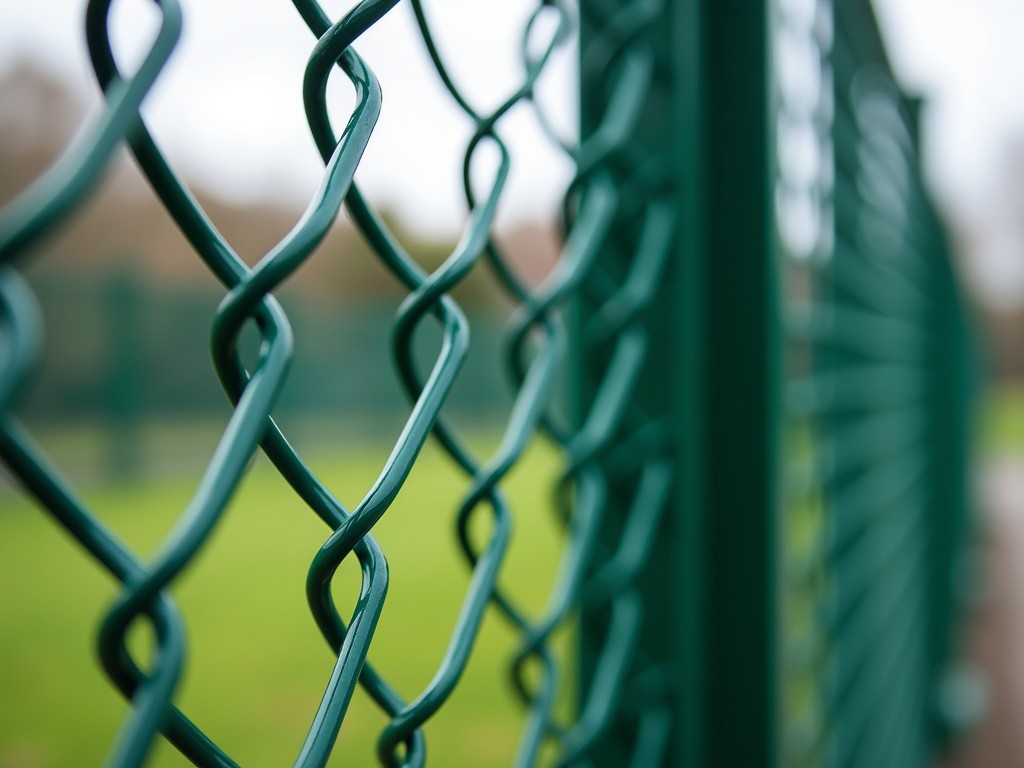
Green plastic coated chain link fencing combines galvanized steel core wire with a fused polyethylene or PVC coating to provide corrosion resistance and visual integration with landscaped
Green Plastic Coated Chain Link Fencing
Green plastic coated chain link fencing combines galvanized steel core wire with a fused polyethylene or PVC coating to provide corrosion resistance and visual integration with landscaped environments. The coating adds a protective barrier that significantly extends service life in humid, coastal, or chemically exposed settings while maintaining the structural integrity of standard chain link.
The coating process involves extruding molten polymer over cleaned and phosphated galvanized wire, creating a uniform layer that bonds mechanically and chemically to the substrate. This dual-layer protection—galvanization for sacrificial anode protection and polymer for environmental isolation—reduces maintenance frequency compared to bare or paint-only systems.
Color stability is achieved through UV stabilizers and pigments compounded into the coating, minimizing fading or chalking over extended sun exposure. Typical coating thicknesses range from 0.3 to 0.5 mm, providing impact resistance while preserving mesh flexibility for installation on uneven terrain.
Technical Specifications
Core wire is typically low-carbon steel, galvanized to Z275 or Z350 standards (275 or 350 g/m² zinc coating weight), providing baseline corrosion resistance before polymer application. The plastic coating adds a non-conductive, abrasion-resistant surface that eliminates direct contact between steel and environmental agents.
Mesh openings follow standard chain link dimensions: 50 mm, 55 mm, or 60 mm square, with wire diameters ranging from 2.0 mm to 4.0 mm after coating. The coating adds approximately 0.2–0.3 mm to each wire diameter, so nominal core sizes are selected to achieve final coated dimensions.
Tensile strength of the coated wire typically exceeds 350 MPa, maintaining load-bearing capacity for security and containment applications. Elongation at break remains above 10%, ensuring the mesh can absorb impact without brittle failure.
Performance Characteristics
Corrosion resistance is validated through salt spray testing (ASTM B117), where coated samples typically show no red rust after 1,000+ hours, compared to bare galvanized wire which may show degradation after 200–400 hours under identical conditions. The polymer layer acts as a physical barrier to chloride and moisture ingress.
Impact resistance is measured via falling ball test (ASTM D2444), with coated wire absorbing 2–3 joules of energy without cracking or delamination. This makes it suitable for areas prone to vandalism, sports impacts, or debris strike.
Thermal stability allows continuous operation from -30°C to +60°C without coating embrittlement or softening. The polyethylene or PVC formulation includes plasticizers and stabilizers to maintain flexibility across seasonal temperature cycles.
Applications
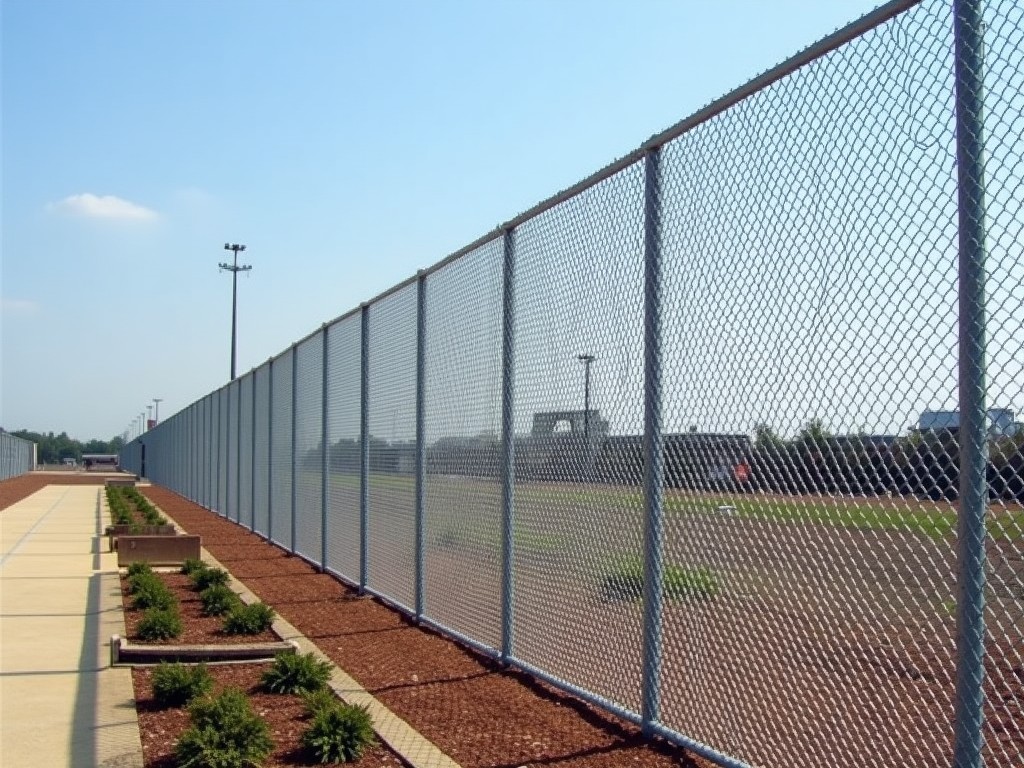
In municipal parks and recreational facilities, the green color reduces visual intrusion against foliage and grass, improving aesthetic compliance with urban design guidelines while maintaining security functionality for playgrounds, sports fields, and pedestrian pathways.
Residential developments use this fencing for boundary demarcation where homeowners associations enforce color or material restrictions. The coating prevents staining of adjacent surfaces (e.g., stucco, siding) that can occur with bare or oxidized metal over time.
Industrial facilities install coated fencing around substations, water treatment plants, or storage yards where chemical exposure or high humidity would accelerate corrosion of uncoated systems. The inert coating resists mild acids, alkalis, and saline environments common in coastal or processing zones.
Agricultural applications include livestock enclosures and crop protection barriers where the coating prevents wire-to-hide abrasion and reduces injury risk to animals. The smooth surface also minimizes snagging of feed bags, ropes, or protective gear during routine operations.
Comparison Table: Coating Types
| Property | Galvanized Only | Green Plastic Coated |
|---|---|---|
| Expected Service Life (rural) | 10–15 years | 20–25+ years |
| Expected Service Life (coastal) | 3–5 years | 8–12 years |
| UV Resistance (coating) | Not applicable | Stabilized for 5,000+ hours UV exposure |
| Surface Texture | Slightly rough, zinc spangle | Smooth, uniform polymer finish |
| Color Fading (5 years) | Not applicable | < 5% ΔE (CIELAB) under ASTM G154 |
Customization Options
Coating color can be adjusted to match specific RAL or Pantone standards beyond standard green (e.g., RAL 6005, 6009, 6029) for architectural or branding consistency. Custom pigments are available upon request, though minimum order quantities may apply.
Wire diameter and mesh opening can be tailored to load requirements—for example, 3.0 mm core wire with 50 mm opening for high-security zones, or 2.0 mm core with 60 mm opening for livestock containment where flexibility and cost are priorities.
Roll height and length are customizable to reduce field splicing; standard rolls are 1.2 m, 1.5 m, 1.8 m, 2.1 m, and 2.4 m high, with lengths up to 25 m per roll to minimize handling on-site. Post and accessory compatibility (e.g., tension bands, barbed wire arms) is maintained across all configurations.
Quality Control
Incoming wire is tested for zinc coating weight (ASTM A90) and tensile strength before coating. Each batch undergoes adhesion testing (ASTM D4541) to ensure minimum bond strength of 1.5 MPa between coating and galvanized substrate, preventing delamination under flex or impact.
Coating thickness is measured via micrometer or magnetic induction at multiple points per roll, with acceptable tolerance of ±0.05 mm from target. Visual inspection checks for pinholes, bubbles, or uneven coverage under 500 lux lighting.
Finished rolls are subjected to accelerated weathering (ASTM G154, UV-A 340 nm) for 1,000 hours to verify color stability and coating integrity. Only batches passing all tests are released for shipment, with test reports available upon request.
For technical datasheets, sample requests, or project-specific quotations, contact our engineering team to discuss coating specifications, roll dimensions, or installation requirements for your site conditions.
Request Technical Consultation
Product Categories


Send Inquiry
If you are interested in our products, leave your information here and we will be in touch shortly.