Modern Wire Mesh Fence Factory Direct
Wire mesh fences serve as critical perimeter and security solutions across industrial, agricultural, and infrastructure sectors. Their effectiveness depends on precise engineering of mesh geometry,
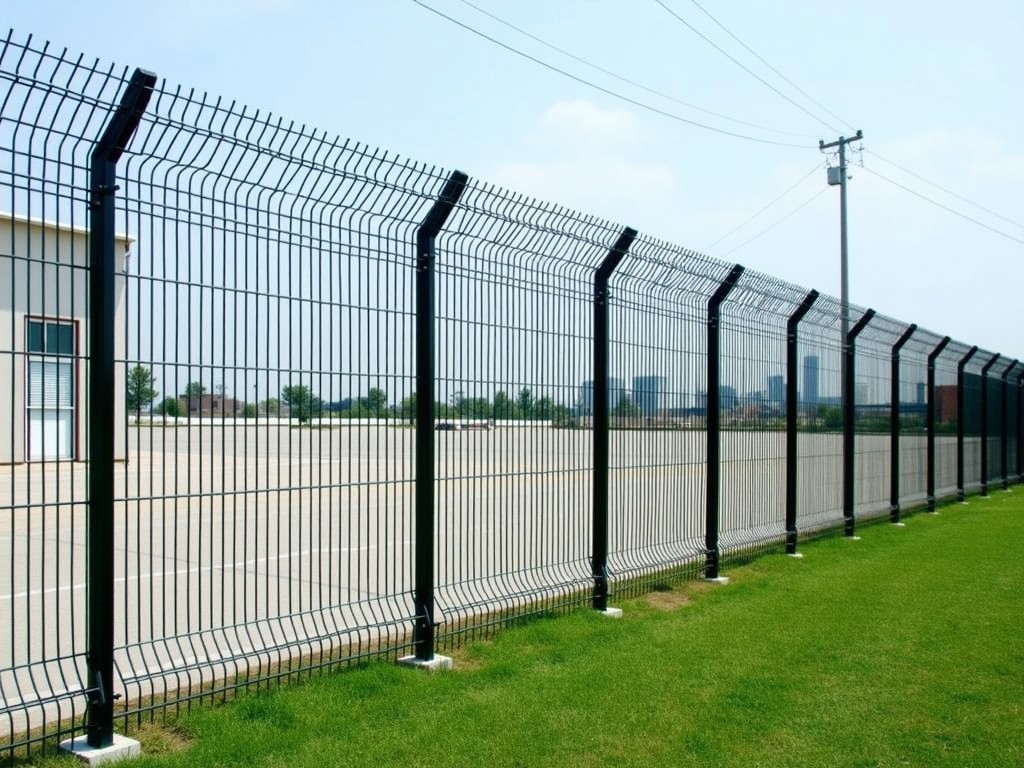
Modern Wire Mesh Fence Factory Direct
Wire mesh fences serve as critical perimeter and security solutions across industrial, agricultural, and infrastructure sectors. Their effectiveness depends on precise engineering of mesh geometry, wire diameter, tensile strength, and corrosion protection. This page details the technical specifications, manufacturing considerations, and application logic behind modern wire mesh fences supplied factory direct, enabling informed procurement decisions.
Purchasing factory direct eliminates intermediary markups while ensuring traceability to production processes. Buyers gain access to customizable specifications, direct engineering support, and verifiable quality control documentation. Understanding the relationship between material selection, fabrication methods, and environmental exposure is essential for specifying a fence that delivers long-term value with minimal lifecycle cost.
The following sections break down key technical attributes, customization options, and quality assurance practices. Each element is explained to reduce uncertainty in specification and installation. Industrial buyers should evaluate these factors against site-specific demands such as load expectations, corrosion risk, and service life requirements.
Core Technical Specifications
Modern wire mesh fences are defined by four interdependent parameters: mesh opening size, wire diameter, tensile strength of the base wire, and coating type. These factors collectively determine structural integrity, impact resistance, and service life. Altering one parameter necessitates adjustment in others to maintain performance targets.
Mesh opening sizes typically range from 25mm x 25mm for small animal containment to 100mm x 100mm or larger for perimeter security and wind load reduction. Wire diameters vary from 1.2mm for light-duty agricultural use to 4.0mm or higher for high-security installations. Tensile strength of the base wire—usually low-carbon steel—falls between 350 MPa and 550 MPa after cold drawing, directly affecting resistance to sagging and deformation under load.
Coating selection is driven by environmental exposure. Galvanization (zinc coating) provides baseline protection, with coating weights measured in grams per square meter (g/m²). Standard hot-dip galvanizing delivers 60–120 g/m², while heavier coatings (up to 275 g/m²) are available for harsh conditions. Alternative coatings include PVC overlay for chemical resistance or aluminum-zinc alloys for extended lifespan in coastal or industrial atmospheres.
Manufacturing Process and Quality Control
Factory production begins with wire drawing to precise diameter and tensile specifications. The wire is then woven or welded into mesh panels using automated looms or resistance welders. Welded mesh offers superior rigidity and impact resistance compared to woven variants, particularly in high-traffic or impact-prone zones. Tolerances in wire spacing and weld integrity are critical to long-term performance.
Post-fabrication, panels undergo coating application. Hot-dip galvanizing involves immersion in molten zinc at approximately 450°C, forming a metallurgical bond. Coating thickness is verified via magnetic induction or gravimetric testing. For PVC-coated systems, extrusion thickness and adhesion strength are measured to ensure durability against cracking or delamination under thermal cycling.
Quality control includes dimensional checks (mesh opening, wire diameter, panel squareness), tensile testing of base wire, coating weight verification, and visual inspection for defects such as missed welds, uneven coating, or wire damage. Batch traceability is maintained through production logs linking raw material certificates to finished goods. Third-party certification (e.g., ISO 9001, ASTM standards) is available upon request.
Customization Options
Factory direct supply enables customization beyond standard catalog dimensions. Buyers can specify panel height, width, wire diameter, mesh opening, coating type, and edge finishing to match exact project requirements. This reduces field modifications and ensures compatibility with posts, gates, and access control systems.
Common customizations include:
- Panel heights from 0.8m to 3.0m in 100mm increments
- Widths up to 2.5m per panel (limited by handling and transport constraints)
- Wire diameters: 1.2mm, 1.6mm, 2.0mm, 2.5mm, 3.0mm, 4.0mm
- Mesh openings: 25x25mm, 50x50mm, 75x75mm, 100x100mm, 50x100mm (rectangular)
- Coatings: hot-dip galvanized (60–275 g/m²), PVC-coated (0.3–0.5mm overlay), aluminum-zinc alloy
- Edge finishes: knuckled (smooth), twisted, or barbed for security applications
Additional options include pre-punched mounting holes for post attachment, integrated privacy slats, or anti-climb features such as angled top extensions. All customizations are subject to manufacturability reviews—extreme aspect ratios or very small openings may require process adjustments. Engineering consultation is recommended for non-standard specifications to validate feasibility and performance.
Applications and Engineering Considerations
Wire mesh fences are selected based on functional requirements rather than industry labels. In high-security facilities, small mesh openings (25x25mm) combined with 3.0–4.0mm wire deter climbing and prevent tool insertion. For agricultural livestock containment, larger openings (50x50mm or 75x75mm) with 1.6–2.0mm wire provide adequate strength while reducing material cost and wind resistance.
In infrastructure projects such as highway medians or railway rights-of-way, wind load becomes a critical design factor. Open mesh designs (e.g., 100x100mm) reduce wind pressure on posts and foundations, minimizing deflection and fatigue. Conversely, in areas requiring dust or debris containment—such as mining sites or recycling facilities—tighter meshes with PVC coating prevent particle migration while resisting chemical exposure from runoff or airborne particulates.
Corrosion environment dictates coating selection. Industrial zones with sulfur dioxide or chloride exposure benefit from aluminum-zinc coatings or dual-layer systems (galvanized base with PVC overlay). Marine environments require minimum 200 g/m² zinc equivalent or stainless steel wire (grades 304 or 316) for prolonged service life. Buyers should request salt spray test data (ASTM B117) when specifying for corrosive conditions.
Comparison: Welded vs. Woven Mesh
| Property | Welded Mesh | Woven Mesh |
|---|---|---|
| Structural Rigidity | High resistance to deformation; maintains shape under impact | Flexible; can distort under point loads but returns to shape |
| Installation Efficiency | Panels retain shape during handling; easier to align and fasten | Requires careful tensioning during installation to avoid sagging |
| Repairability | Damaged sections often require full panel replacement | Individual wires can be re-woven or replaced in situ |
| Typical Use Cases | High-security perimeters, machine guarding, sports facilities | Agricultural fencing, temporary barriers, erosion control |
| Cost Factor | Higher due to welding process and precision tooling | Lower material and processing cost for standard specifications |
Note: Values represent typical ranges. Actual performance depends on wire diameter, coating, and post spacing. Selection should align with load expectations, maintenance access, and lifecycle goals.
Quality Assurance and Testing
Factory direct procurement allows buyers to specify quality verification protocols beyond standard offerings. Common test methods include tensile strength verification of base wire (ASTM A370), coating weight measurement (ASTM A90/A90M), adhesion testing for PVC coatings (ASTM D4541), and salt spray resistance (ASTM B117). Dimensional tolerances are typically held to ±5% for wire diameter and ±3mm for mesh opening, though tighter tolerances are available for precision applications.
Visual inspection standards follow industry references such as ASTM F1043 for chain-link fencing principles, adapted to welded or woven mesh geometry. Criteria include uniform coating coverage, absence of sharp edges, proper wire alignment, and freedom from inclusions or surface defects. Packaging is designed to prevent damage during transit—panels are bundled with protective edge guards and secured with corrosion-resistant strapping.
Documentation provided with each shipment includes material test certificates, coating reports, and packing lists. Buyers may request third-party inspection witness points or hold notifications for critical projects. Traceability extends to raw material lots, enabling root cause analysis if field performance deviates from expectations. This level of transparency reduces risk in long-term infrastructure investments.
Request Technical Documentation
Industrial buyers seeking to specify modern wire mesh fences for factory direct supply should prepare the following information for accurate quotation and engineering review: required panel dimensions (height and width), mesh opening size, wire diameter, preferred coating type, post spacing and installation method, environmental exposure conditions (e.g., industrial, marine, agricultural), and any regulatory or project-specific standards (e.g., ASTM, ISO, local building codes).
Providing this data enables the manufacturer to validate structural adequacy, coating suitability, and fabrication feasibility. It also allows for optimization of material usage and packaging logistics. Incomplete specifications often lead to revisions, delays, or over-engineering. A clear technical brief ensures alignment between buyer expectations and production capabilities.
To initiate a technical consultation or request a detailed specification sheet, contact our engineering team. We provide responsive support for project planning, customization review, and documentation preparation. All inquiries are treated with confidentiality and technical rigor.
Product Categories


Send Inquiry
If you are interested in our products, leave your information here and we will be in touch shortly.