Movable Fence Temporary Fence
Temporary fencing solutions designed for rapid deployment and relocation serve critical functions across construction, event management, industrial sites, and emergency response. These systems
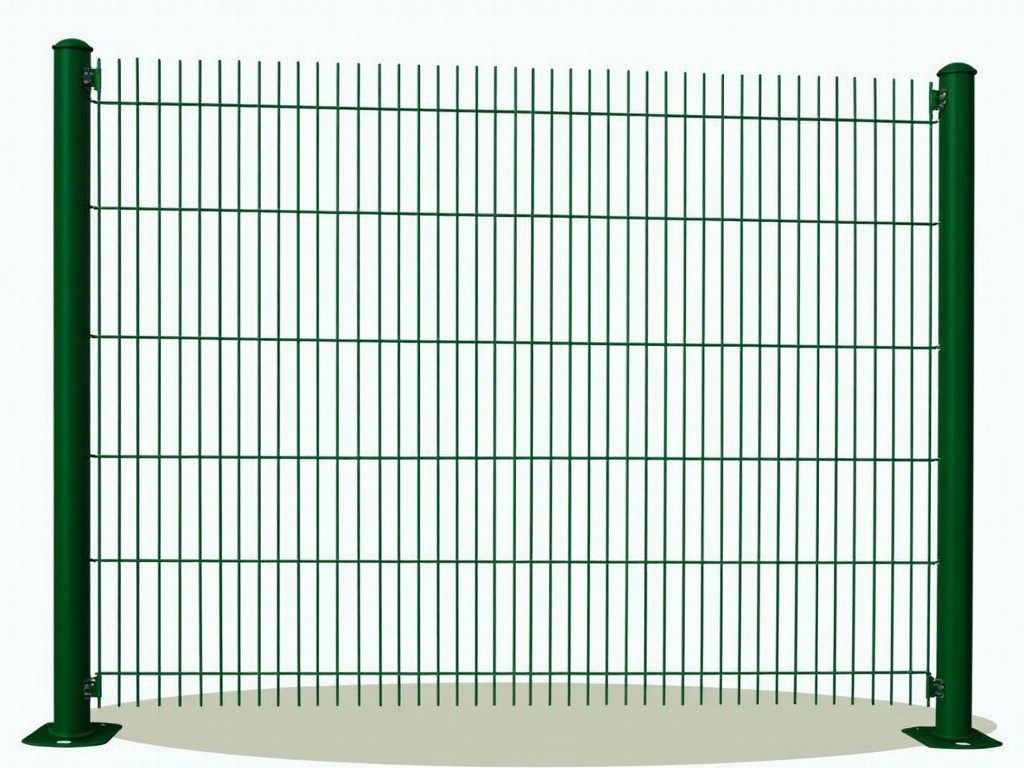
Movable Temporary Fence Systems
Temporary fencing solutions designed for rapid deployment and relocation serve critical functions across construction, event management, industrial sites, and emergency response. These systems provide immediate perimeter security, crowd control, and hazard demarcation without permanent installation. Understanding the engineering trade-offs between stability, portability, and durability enables procurement teams to select configurations that match site-specific operational demands while minimizing lifecycle costs and safety risks.
Structural Configuration and Load Path
Movable temporary fence panels typically consist of vertical posts connected by horizontal rails, forming a rigid rectangular frame. The structural integrity relies on the moment resistance at post-to-rail connections and the foundation's ability to counteract overturning forces. Panel height directly influences wind load susceptibility; taller panels generate greater overturning moments at the base, requiring increased ballast or ground anchorage to maintain stability. Base design—whether flat plate, skid, or weighted foot—determines load distribution and resistance to lateral displacement under dynamic loads such as crowd pressure or vehicle impact.
Material Selection and Environmental Performance
Frame materials are selected based on strength-to-weight ratio, corrosion resistance, and fatigue endurance under repeated handling. Hot-dip galvanized steel is commonly used for posts and rails due to its zinc coating providing sacrificial protection against rust in outdoor environments, with coating thickness typically ranging from 55 to 85 microns per ASTM A123. Alternative materials include powder-coated steel for enhanced UV resistance in high-sunlight regions or stainless steel grades (e.g., 304 or 316) for chemical exposure or coastal applications where chloride-induced corrosion is a concern. Infill options—such as welded wire mesh, plastic mesh, or solid panels—affect wind permeability, visibility, and debris containment; mesh aperture size influences both wind drag and climb resistance, with smaller openings (e.g., 50x50 mm) reducing passage of small objects while increasing solidity factor.
Connection Systems and Modularity
Inter-panel coupling mechanisms determine deployment speed, alignment accuracy, and system continuity. Common approaches include pin-and-loop couplers, U-bolts with nuts, or overlapping sleeve joints. Pin systems allow for rapid assembly without tools but require precise hole alignment to prevent binding; U-bolt couplers offer adjustable tension and tolerance for minor misalignment but increase installation time. The coupling design must maintain planar continuity to prevent tripping hazards and ensure consistent load transfer across the fence line. Some systems incorporate integrated base connectors that lock adjacent feet together, improving global stability by reducing independent panel movement under lateral loads.
Stability Metrics and Anchoring Requirements
Stability is evaluated through resistance to sliding, overturning, and uplift. Sliding resistance depends on the coefficient of friction between the base and substrate, multiplied by the normal force (self-weight plus added ballast). Overturning resistance is calculated as the restoring moment from the base width and weight versus the overturning moment from applied forces at centroid height. For a standard 2.1 m high panel with a 0.4 m wide base, a 150 kg/m wind load (equivalent to approximately 70 km/h gust) generates an overturning moment requiring approximately 220 kg of counterweight per meter of length to achieve a safety factor of 1.5 against overturning on concrete. On softer surfaces like soil or grass, ground anchors or sandbags become necessary to prevent base settlement or rotation.
Panel Dimensions and Handling Logistics
Standard panel widths range from 2.0 to 2.5 meters to balance coverage efficiency with manual handling feasibility. A 2.2 m wide, 2.1 m high panel constructed from 48.3 mm OD galvanized steel tube weighs approximately 28–35 kg depending on infill and base type, allowing two-person manual lifting and repositioning. Heights are typically offered in 1.2 m, 1.5 m, 1.8 m, and 2.1 m increments to accommodate varying security or visibility requirements. Nesting capability—where panels stack vertically or interlock when stored—reduces storage footprint; some designs allow up to 10 panels to be stacked in a footprint of less than 0.6 m², facilitating transport in standard utility trailers or containers.
Surface Treatments and Longevity Factors
Beyond base corrosion protection, surface treatments affect maintenance cycles and lifecycle cost. Hot-dip galvanization provides uniform coverage including edges and welds, with service life exceeding 15 years in rural environments and 5–10 years in industrial or coastal zones before significant rusting occurs. Powder coating adds a polymer layer that enhances UV stability and color retention but may chip under impact, exposing substrate to corrosion if not properly sealed. Regular inspection should focus on joint integrity, base flatness, and coating damage; repair protocols often involve spot priming and touch-up coating to prevent localized rust propagation. Panels designed with replaceable infill or base components extend service life by allowing partial refurbishment rather than full unit replacement.
Applications: Operational Justification by Sector
In construction, movable fences delineate excavation zones, restrict access to crane swing areas, and protect pedestrians from falling debris; their portability allows reconfiguration as building envelopes expand. For public events, systems control queue formation, separate vendor areas from pedestrian flow, and establish secure perimeters around stages—critical factors in emergency egress planning where predictable barrier placement aids evacuation modeling. Industrial facilities deploy temporary fencing during maintenance turnarounds to isolate hot work zones or contain spills; the ability to rapidly deploy and remove barriers minimizes production downtime. In disaster response, these systems create triage areas, manage displaced populations, and secure damaged structures—applications where speed of deployment and robustness under unpredictable loads (e.g., wind-driven debris) directly impact operational effectiveness.
Customization Parameters and Project-Specific Adaptation
Key customizable attributes include panel height, width, infill type, base configuration, coating system, and coupling mechanism. Height adjustments affect both material usage and wind loading; width changes influence handling logistics and corner post requirements. Infill selection balances visibility needs (e.g., larger mesh for sightlines) with security (e.g., smaller mesh or solid panels for climb resistance). Base options—flat plate for paved surfaces, spiked feet for soil, or weighted skids for temporary indoor use—must match substrate conditions to prevent settling or sliding. Coating choices are driven by environmental exposure duration and aesthetic requirements; couplings are selected based on desired assembly speed versus adjustability needs. Manufacturers typically require substrate type, expected load conditions (wind, crowd, impact), duration of use, and accessibility constraints to propose an optimized configuration.
| Parameter | Typical Range / Options | Selection Considerations |
|---|---|---|
| Panel Height | 1.2 m – 2.4 m | Taller panels increase wind load; require more ballast or deeper anchorage |
| Panel Width | 1.8 m – 2.5 m | Wider panels reduce post frequency but increase weight per unit |
| Frame Material | Hot-dip galvanized steel, powder-coated steel, stainless steel | Coating thickness and substrate grade determine corrosion resistance |
| Infill Type | Welded wire mesh (50x50 mm – 100x100 mm), plastic mesh, solid panels | Aperture size affects wind permeability, visibility, and climb resistance |
| Base Type | Flat plate, spiked foot, weighted skid, ground socket | Must match substrate: plate for concrete/asphalt, spike for soil/grass |
| Coupling System | Pin-and-loop, U-bolt, sleeve joint, overlapping flange | Pin systems: fastest; U-bolt: adjustable; flange: highest stiffness |
| Surface Finish | Galvanized only, galvanized + powder coat, PVC coating | Additional layers improve UV resistance but may trap moisture if damaged |
Quality Control and Manufacturing Consistency
Dimensional tolerances on critical interfaces—such as post-to-rail squareness and coupler hole alignment—directly affect field assembly speed and structural uniformity. Typical manufacturing controls include fixture-based welding to maintain angular precision within ±2 degrees and hole positioning within ±1.5 mm. Material traceability ensures that steel coil origins and coating batches are documented, enabling corrosion performance prediction. Load testing of sample panels under simulated wind and impact loads validates design assumptions; results are used to confirm safety factors against overturning and sliding. Visual inspection checks for coating continuity, weld penetration, and base flatness; any deviation from specified tolerances triggers rework or rejection. These practices ensure that interchangeability and performance consistency are maintained across production batches, reducing field-level surprises during deployment.
Packaging, Transport, and Storage Efficiency
Packaging methods influence handling damage and storage density. Panels are commonly bundled in groups of 5–10 using steel or plastic straps, with corner protectors preventing edge deformation during transit. For nested designs, storage racks or pallets allow vertical stacking without direct panel-to-panel contact, reducing abrasion. Export shipments often include moisture-barrier wraps and desiccant packs to mitigate condensation during long-term sea freight. Clear labeling on bundles—indicating height, quantity, and base type—simplifies inventory management on-site. Efficient packaging reduces volumetric weight, lowering freight costs; a standard 20-foot container can typically accommodate 300–400 panels depending on nesting efficiency, supporting economical large-scale distribution to rental yards or project warehouses.
Inquiry and Technical Support
To receive a detailed quotation or technical datasheet tailored to your project’s specific requirements—including site conditions, expected loads, duration of use, and accessibility constraints—please contact our technical team. Provide details such as substrate type, anticipated wind exposure, panel quantity, and any special requirements (e.g., fire-retardant infill, reflective striping, or integration with access gates). Our engineers will review your inputs and return a configured solution with material specifications, stability calculations, and deployment guidance within one business day.
Request Technical Specification
Product Categories


Send Inquiry
If you are interested in our products, leave your information here and we will be in touch shortly.