Netting For Chain Link Fence
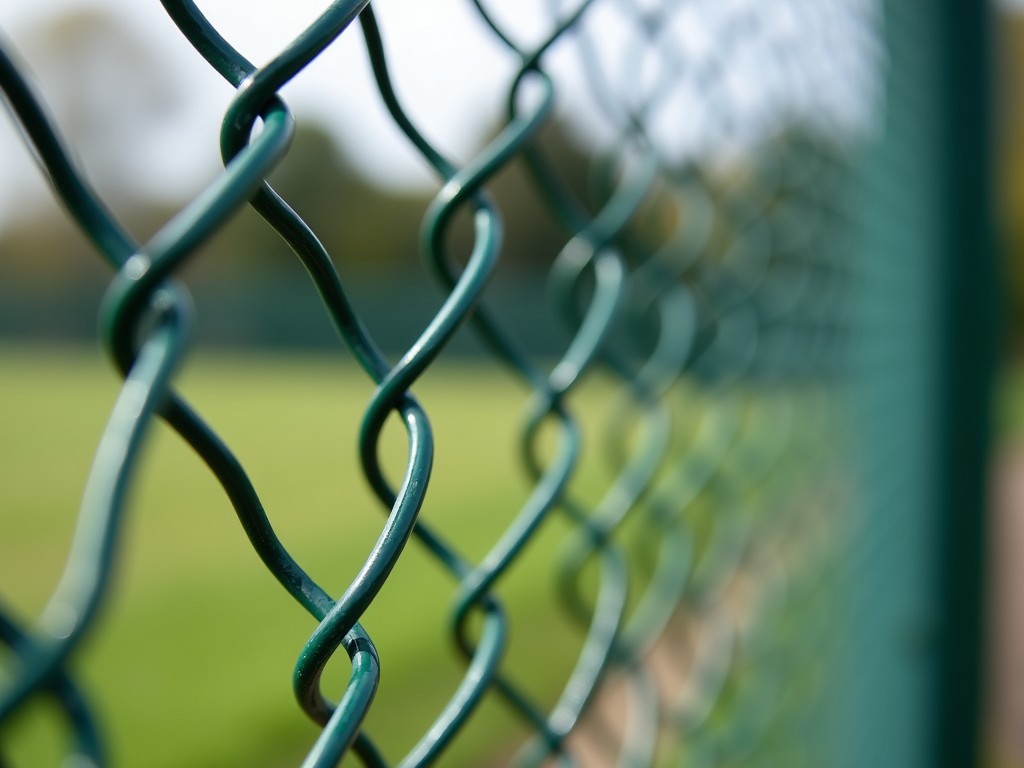
Chain link fence netting is a secondary containment or reinforcement layer installed over or within chain link mesh to modify its functional properties for specific applications. Unlike the primary
Netting for Chain Link Fence
Chain link fence netting is a secondary containment or reinforcement layer installed over or within chain link mesh to modify its functional properties for specific applications. Unlike the primary fence fabric, which provides structural boundary definition, netting alters aperture size, tensile behavior, or surface interaction to meet operational, safety, or regulatory requirements. This additive approach allows existing chain link installations to be adapted without full replacement, preserving the underlying post and tension wire infrastructure while introducing targeted performance enhancements.
The effectiveness of netting depends on its integration with the host fence system. Proper attachment methods — such as hog rings, plastic ties, or continuous lacing — ensure load transfer between netting and chain link without creating stress concentrations or failure points. Engineers must evaluate the combined system’s wind load resistance, impact energy absorption, and long-term creep behavior under UV exposure. Material selection is driven by environmental conditions: polyethylene for UV-stable outdoor use, nylon for high-abrasion zones, or polypropylene for cost-sensitive temporary barriers. Each material exhibits distinct elongation-at-break, melting point, and chemical resistance profiles that directly influence service life.
Material Selection and Engineering Properties
High-density polyethylene (HDPE) is the most common base material for outdoor chain link fence netting due to its UV stabilizer packages, which typically retain >70% tensile strength after 5,000 hours of xenon-arc exposure per ASTM G155. HDPE netting exhibits a typical elongation at break of 100–600% depending on denier and weave density, allowing it to absorb impact energy without brittle failure. Its specific gravity of 0.94–0.97 ensures buoyancy in waterlogged environments, while resistance to alkalis and salts makes it suitable for coastal or agricultural settings where fertilizer runoff or de-icing agents are present.
Nylon (polyamide) netting offers superior abrasion resistance and higher tensile strength per denier compared to polyethylene, with tenacity values ranging from 6–9 g/d. However, it absorbs up to 8% moisture by weight, which can temporarily reduce tensile properties and increase elongation in humid climates. Nylon is preferred in applications involving repeated mechanical contact — such as sports ball containment or animal enclosure liners — where surface wear dominates failure modes. Its melting point (~220°C) also allows for heat-sealing of edges in custom fabrication, reducing fraying risks.
Polypropylene provides a lower-cost alternative with good chemical resistance to acids and solvents but inferior UV stability unless heavily stabilized. Its tensile strength (typically 25–40 MPa) is lower than HDPE or nylon, and it becomes brittle below 0°C, limiting use in cold climates. Polypropylene netting is often selected for short-term applications like construction site debris control or seasonal crop protection where service life is measured in months rather than years. Its low melting point (~160°C) requires careful handling during installation to avoid thermal damage from friction or welding sparks.
Aperture Size and Functional Performance
The primary engineering function of netting over chain link is aperture reduction. Standard chain link mesh typically features 2" or 2.25" square openings. By adding netting with smaller apertures — such as 3/4", 1", or 1.5" — the system can contain smaller objects, prevent limb entrapment, or meet safety codes for child-resistant barriers. For example, reducing aperture from 2" to 3/4" decreases the maximum spherical object that can pass through by over 90% in volume, which is critical for preventing baseballs, golf balls, or small animals from exiting a secured zone.
Aperture size directly influences wind load characteristics. Solid-appearing netting (e.g., <1" aperture) increases drag coefficient, raising lateral forces on fence posts during high-wind events. Engineers must calculate the solidity ratio (area of material / total area) to determine if existing post embedment depth and tension wire capacity require augmentation. Open apertures (>1.5") maintain wind permeability similar to bare chain link, preserving original structural design margins while still providing visual screening or light diffusion. Computational fluid dynamics (CFD) modeling is recommended for installations in exposed corridors or hurricane-prone regions.
Beyond containment, netting modifies surface interaction properties. A smooth, monofilament polyethylene surface reduces abrasion on contacted objects compared to the zinc-coated steel wires of chain link, which can mar paint or damage equipment finishes. Conversely, textured or twisted multifilament netting increases friction, aiding in load retention for applications like slope erosion control where material slippage must be minimized. The coefficient of friction between netting and common contact materials (e.g., rubber, paint, foliage) is a key specification in sports, transportation, and agricultural engineering.
Installation Methods and System Integration
Attachment methodology determines load distribution and long-term reliability. Hog rings — pre-formed stainless steel clips — are crimped over both netting and chain link mesh at 6–12 inch intervals along edges and interior grids. This method provides discrete, replaceable connections but creates localized stress points if spacing exceeds material span capability. Continuous lacing using UV-stabilized polyethylene cord distributes load more evenly but increases installation time and requires precise tensioning to avoid puckering or sagging. Plastic cable ties offer rapid deployment for temporary use but degrade faster under UV exposure and are not recommended for permanent structural loads.
Edge treatment is critical to prevent unraveling and injury hazards. Netting edges are typically heat-sealed (for thermoplastic materials), taped with UV-resistant polymer strips, or folded and sewn with bonded thread. Unfinished edges exhibit fraying that propagates under cyclic load, reducing effective tensile width by up to 30% within six months in high-vibration environments. Proper edge finishing maintains design integrity and satisfies OSHA 1910.147 and ANSI/ASSE Z359.1 requirements for barrier systems in industrial settings where entanglement risks exist.
Pretensioning the netting during installation affects performance under dynamic loads. Over-tensioning reduces energy absorption capacity and increases transfer of impact loads to the fence structure. Under-tensioning allows excessive deflection, potentially allowing objects to pass through apertures during deformation. The optimal pretension range — typically 5–15% of material breaking strength — is determined by the intended function: higher tension for sports ball rebound control, lower tension for debris catch systems where energy dissipation is prioritized over rebound characteristics.
Applications Across Industrial Sectors
In transportation infrastructure, netting over chain link fences along highways prevents debris from vehicle undercarriages or cargo shifts from entering travel lanes. Aperture sizes of 1–1.5" are common, balancing wind permeability with the need to retain items such as mufflers, tire treads, or cargo pallets. The system must withstand repeated low-energy impacts without permanent deformation, making UV-stabilized HDPE with a denier of 1,000–2,000 the preferred choice. Installation height and setback from pavement are governed by AASHTO LRFD Bridge Design Specifications for barrier systems.
Waste management and recycling facilities use netting to contain lightweight materials — such as plastic film, paper, or foam — that would otherwise become airborne litter. Here, aperture size is minimized (often 3/4" or less) to capture fine particulates, while the netting must resist chemical exposure from leachates and cleaning agents. Anti-static additives are sometimes incorporated to reduce cling of dry materials. These systems are frequently designed as removable panels for maintenance access, requiring grommet-reinforced edges and quick-release fastening systems compatible with lockout/tagout procedures.
Agricultural applications include bird exclusion netting over chain link enclosures for poultry or fruit orchards, where aperture size is dictated by target species exclusion (e.g., 1" for starlings, 1.5" for pigeons). The netting must endure prolonged UV exposure, resist tearing from beak or claw penetration, and allow sufficient light transmission for plant growth. Photometric testing shows that white or black HDPE netting at 50–70% shade coefficient provides optimal balance between exclusion efficacy and photosynthetically active radiation (PAR) transmission for crop yield maintenance.
Customization Options and Technical Specifications
Netting width is customized to match fence height or specific coverage zones, with standard rolls available in 4', 6', 8', and 12' widths. Custom widths up to 20' can be fabricated through seaming, though seam strength typically reaches 80–90% of base material strength and requires overlap widths of 2–4 inches with double-stitching or thermal bonding. Length is typically supplied in 50' or 100' linear rolls to minimize handling complexity, but custom lengths are available for full-panel fabrication to reduce field seams — a critical factor in high-reliability applications where seam failure is a known risk mode.
Denier and filament construction directly affect durability and handling. Monofilament netting offers smooth surfaces and predictable elongation but lower tear resistance. Multifilament constructions (e.g., 12x, 24x) provide higher toughness and energy absorption due to fiber pull-out mechanisms, though they may trap debris more readily. Typical denier ranges for industrial chain link netting are 800–3,000, with higher values selected for impact-prone zones. Twist level in multifilament yarns influences surface texture and friction coefficient, with low-twist (S- or Z-twist <100 TPM) preferred for reduced snagging on contacted objects.
Color selection serves both functional and regulatory purposes. Black netting provides the lowest visibility and highest UV absorption, which can accelerate thermal degradation unless stabilized. White or gray netting reflects solar radiation, reducing surface temperature by up to 15°C in direct sunlight and extending service life in hot climates. Green or brown variants are used for visual blending in landscaping or wildlife management contexts. Retroreflective or fluorescent strips can be woven into edge borders for OSHA-compliant hazard marking in low-light industrial zones, meeting ANSI/ISEA 107-2020 standards for background material.
| Property | Typical Range / Value | Test Standard / Reference |
|---|---|---|
| Material | HDPE, Nylon, Polypropylene | ASTM D4066, D4068, D4101 |
| Aperture Size | 3/4" – 2" square | Customizable per application |
| Denier | 800 – 3,000 | ASTM D1577 |
| Elongation at Break | 100% – 600% | ASTM D2256 |
| UV Stability (Retained Strength) | >70% after 5,000 hrs | ASTM G155 (Xenon-Arc) |
| Specific Gravity | 0.90 – 1.14 | ASTM D792 |
| Melting Point | 160°C – 220°C | ASTM D3418 |
Quality assurance begins with raw material verification. Each resin lot is tested for melt flow index (MFI) to ensure consistency in extrusion properties, with acceptable variance typically ±15% from target. Finished netting undergoes width and aperture verification using optical comparators or laser scanning systems to maintain tolerances of ±2% for width and ±0.1" for aperture size. Tensile testing is performed on die-cut specimens per ASTM D2256 at a strain rate of 50 mm/min, with results documented for every production batch. UV stability is validated through accelerated weathering, though real-time outdoor exposure data is referenced for critical infrastructure projects.
Seam integrity is evaluated when custom fabrication is required. Sewn seams are tested for tensile strength per ASTM D5034, with minimum acceptance criteria set at 70% of parent material strength. Thermally bonded seams undergo peel and shear testing to confirm cohesive failure mode rather than interfacial adhesion loss. Edge treatments are inspected for continuity and absence of gaps or thin spots that could initiate fraying. All inspections are traceable to batch numbers and production shifts, supporting root cause analysis in the event of field performance concerns.
Packaging is designed to prevent damage during transit and storage. Netting rolls are wound onto rigid cores with internal diameter sufficient to prevent permanent deformation (typically 3" or 4" ID). Outer wrapping uses UV-stabilized polyethylene film with desiccant packs to limit moisture ingress. Rolls are labeled with material type, denier, aperture size, width, length, batch number, and QR code linking to digital test certificates. Palletizing uses corner boards and stretch wrap to unitize loads, with maximum stack height determined by compressive strength of core material to avoid telescoping or crushing of lower rolls.
Ordering Information and Technical Support
To receive an accurate quotation, provide the following technical details: fence height and post spacing, required netting width and length, target aperture size, material preference (HDPE/nylon/polypropylene), color, edge treatment specification, and attachment method. Environmental factors such as UV exposure zone (per ASTM G154), temperature extremes, chemical contact risks, and mechanical load expectations (impact frequency, object mass, velocity) should also be disclosed. This information enables proper denier selection, UV stabilizer package recommendation, and validation of structural compatibility with existing chain link infrastructure.
Technical support includes material data sheets, installation guidelines, and load calculation assistance. For projects involving dynamic loads or regulatory compliance (e.g., sports facilities, transportation barriers), finite element analysis (FEA) references or wind load calculation worksheets are available upon request. Sample sections (typically 12" x 12") can be provided for physical evaluation of hand feel, aperture consistency, and color accuracy. Lead time for standard configurations is 2–3 weeks; custom widths, lengths, or specialized treatments may extend lead time to 4–6 weeks depending on raw material availability and production scheduling.
All products are manufactured under ISO 9001:2015 quality management principles, with traceability from resin lot to finished roll. While specific certifications vary by product line, documentation of material properties, test methods, and quality records is maintained for a minimum of five years. For export shipments, packaging complies with ISPM 15 for wood components and includes moisture barriers suitable for ocean transit. No claims are made regarding specific project installations, certifications beyond standard quality systems, or performance values not derived from recognized test methods.
Product Categories


Send Inquiry
If you are interested in our products, leave your information here and we will be in touch shortly.