No Drill Temporary Pool Fence
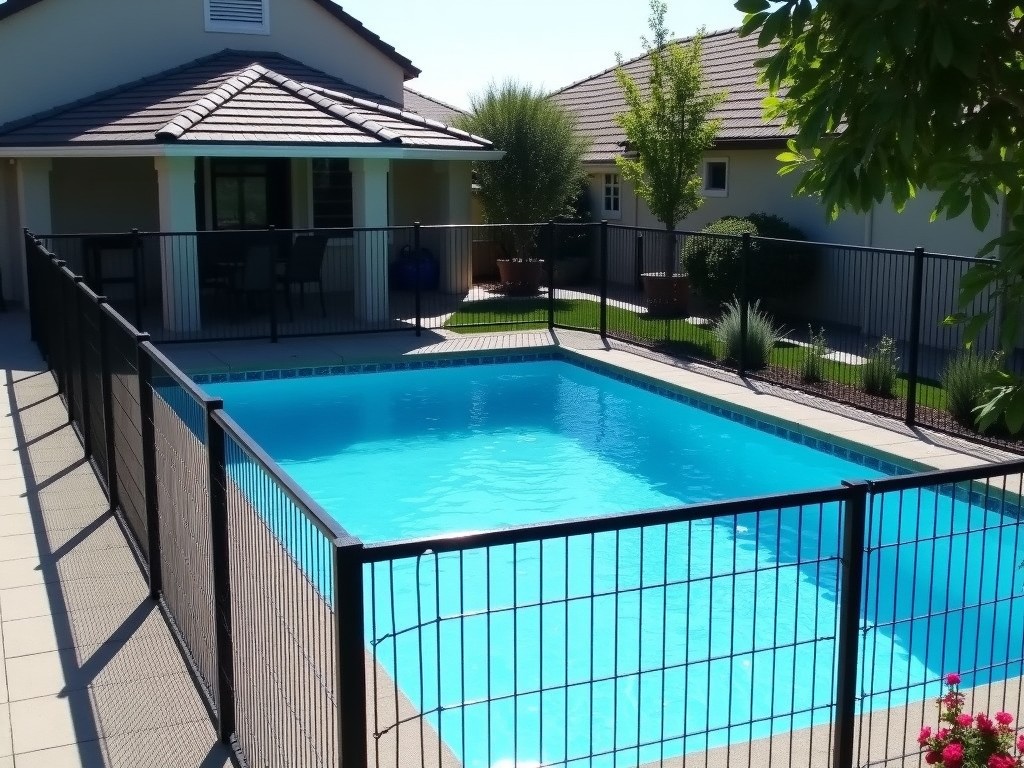
Temporary pool fencing without drilling is required when permanent installation is impractical, prohibited, or when site conditions prevent anchoring into substrate. This solution provides a physical
No Drill Temporary Pool Fence
Temporary pool fencing without drilling is required when permanent installation is impractical, prohibited, or when site conditions prevent anchoring into substrate. This solution provides a physical barrier to restrict unauthorized access to pool areas while complying with local safety codes for temporary barriers. Unlike permanent fences, it must be rapidly deployable, removable without surface damage, and stable under environmental loads such as wind and incidental impact.
Design Principles for Non-Penetrating Stability
Stability is achieved through weighted bases or clamp systems that transfer lateral forces to the ground via friction and gravity rather than penetration. The center of gravity of the fence panel must be kept low to resist overturning moments from wind or impact. Base weight is calculated based on panel height, projected area, and local wind load requirements (typically 30–50 psf for temporary barriers). Materials are selected to resist UV degradation, chlorine exposure, and temperature cycling without embrittlement or corrosion.
Core Components and Material Selection
The system consists of three primary components: vertical posts, horizontal rails or mesh infill, and non-penetrating bases. Posts are typically extruded aluminum (6063-T5) or galvanized steel (G90) for strength-to-weight ratio and corrosion resistance. Infill options include 1.25-mm polypropylene mesh (UV-stabilized, 90% shade coefficient) or 25-mm square PVC-coated steel wire (minimum 1.6-mm wire diameter). Bases are constructed from recycled HDPE or concrete-filled plastic shells, weighing 15–25 kg each depending on panel height and exposure conditions.
Load Resistance and Safety Performance
The fence must withstand a horizontal force of 200 N applied at the top of the panel without permanent deformation or base sliding, per ASTM F2286 for temporary pool barriers. Wind uplift resistance is evaluated by testing the base-to-panel connection under simulated gust loads; sliding resistance depends on base weight and coefficient of friction with the substrate (typically 0.4–0.6 for HDPE on concrete or pavers). Deflection under load is limited to 25 mm at the top of a 1.2-m panel to maintain barrier integrity and prevent climbability.
Installation and Removal Process
Installation requires no tools beyond a rubber mallet for seating bases. Posts are inserted into base sockets and secured with a captive pin or twist-lock mechanism. Panels connect via interlocking couplers that align and lock adjacent sections, maintaining consistent height and preventing gaps. Removal reverses the process: pins are lifted, posts withdrawn, and bases stacked. No adhesives, anchors, or surface preparation are needed, preserving decking, pavers, or grass surfaces.
Typical Configurations and Dimensions
| Parameter | Typical Value | Notes |
|---|---|---|
| Panel Height | 1.2 m | Standard for residential pool codes |
| Panel Width | 2.0 m | Modular for easy handling and transport |
| Base Weight | 20 kg | HDPE shell with concrete infill |
| Infill Type | UV-stabilized polypropylene mesh | 90% shade, 3mm strand thickness |
| Post Material | 6063-T5 aluminum extrusion | Wall thickness 2.0 mm, anodized finish |
| Connection Method | Twist-lock coupler with safety pin | Tool-free, audible click confirmation |
Environmental and Surface Compatibility
The system is designed for use on common pool deck materials including poured concrete, pavers, natural stone, wood decking, and compacted gravel. Base designs feature wide bearing surfaces (minimum 300 mm diameter) to distribute load and prevent sinking into softer substrates. For surfaces with low friction (e.g., wet tile or polished stone), optional rubber pads or high-friction coatings can be applied to the base underside. All materials are non-staining and will not leach chemicals into pool water or surrounding soil under normal use conditions.
Applications Beyond Residential Pools
While commonly used for residential pool safety during construction, renovation, or seasonal use, the same principles apply to commercial aquatic facilities, water parks, and hotel pools where temporary access control is needed. Events such as swim meets or community gatherings often require short-term barriers that must be installed and removed quickly without damaging finished surfaces. The non-penetrating nature also makes it suitable for historic sites, landscaped areas, or locations where subsurface utilities prevent drilling.
Quality Control and Manufacturing Considerations
Dimensional consistency is critical for interlocking components; post sockets and coupler tolerances are held to ±0.5 mm to ensure reliable fit and lock engagement. Base weight is verified per unit during production using calibrated scales. UV stability of polymeric materials is validated through accelerated weathering testing (ASTM G154, 1000 hours). Finish adhesion on metal components is tested via cross-hatch adhesion (ASTM D3359) to ensure durability under handling and environmental exposure.
For project-specific requirements such as custom heights, alternative infill materials, or branded finishes, technical consultation is recommended to ensure compliance with local safety regulations and site conditions.
Contact Us for Technical Specification or Quotation
Product Categories


Send Inquiry
If you are interested in our products, leave your information here and we will be in touch shortly.