Non Permanent Privacy Fence
Temporary site security and visual privacy requirements often arise during construction, renovation, event staging, or seasonal operations. Unlike permanent barriers, non permanent privacy fence
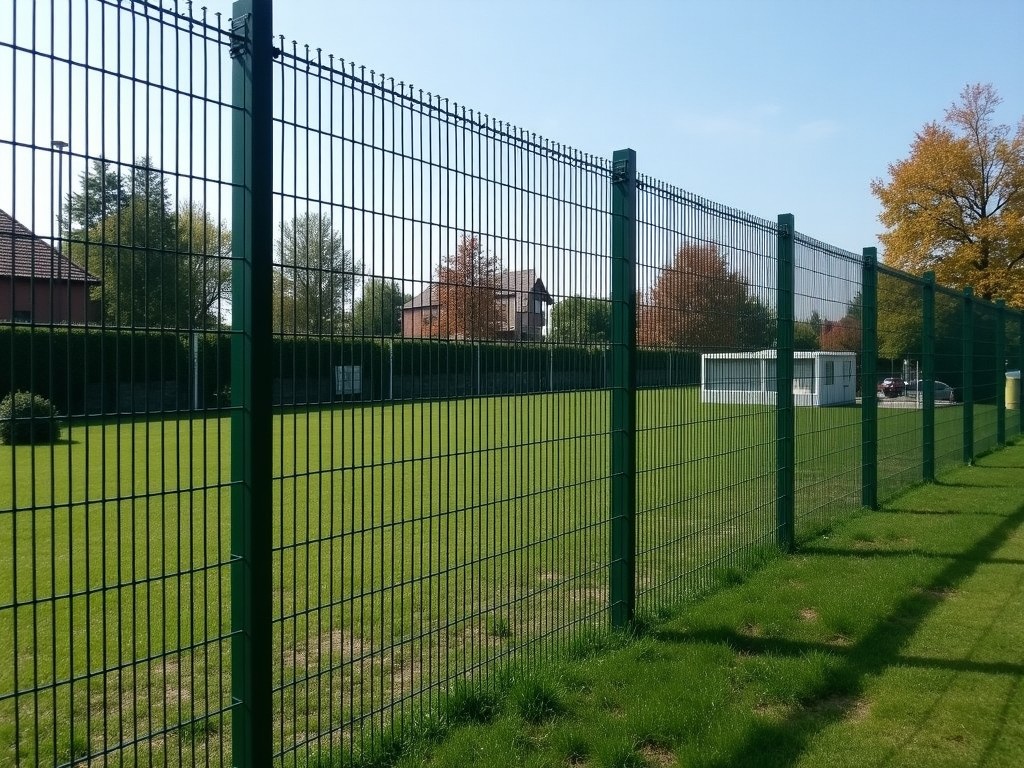
Non Permanent Privacy Fence Systems for Industrial and Commercial Sites
Temporary site security and visual privacy requirements often arise during construction, renovation, event staging, or seasonal operations. Unlike permanent barriers, non permanent privacy fence systems offer rapid deployment, reconfigurability, and removal without substrate damage. These solutions balance opacity, structural stability, and ease of handling to meet short-term enclosure needs across diverse environments.
Core Design Principles of Temporary Privacy Barriers
Effective non permanent privacy fences prioritize three interconnected factors: visual obstruction capability, wind load resistance, and installation efficiency. Panel height typically ranges from 1.8 to 2.4 meters to block line-of-sight while remaining manageable for manual handling. Opacity is achieved through solid infill materials or overlapping slat configurations that minimize gaps without creating sail effects. Structural integrity relies on interconnected panel systems with reinforced framing and ground anchoring methods suited to transient use—such as weighted bases, sandbags, or removable ground spikes—avoiding excavations or permanent fasteners.
Material selection directly impacts reusability, weather resistance, and storage logistics. High-density polyethylene (HDPE) panels offer UV stabilization, impact resistance, and lightweight properties (approximately 8–12 kg/m²), enabling frequent relocation. Steel-frame systems with powder-coated finishes provide higher wind load tolerance (up to 120 km/h gusts) but increase unit weight. Fabric-based barriers using PVC-coated polyester mesh deliver moderate opacity (60–80%) with superior wind permeability, reducing anchorage demands in exposed locations. Each option involves trade-offs between durability, deployment speed, and site-specific environmental conditions.
Installation Methods and Site Adaptability
Deployment speed depends on panel interconnectivity and ground preparation requirements. Interlocking HDPE or polypropylene panels often feature tongue-and-groove edges or pin-and-socket joints, allowing two workers to erect 10 linear meters in under 15 minutes on level surfaces. Steel-framed units may use bolt-together frames with snap-on infill, requiring basic tools but offering greater rigidity. For uneven terrain, adjustable-height posts or telescoping legs compensate for gradients up to 15 degrees without custom fabrication.
Ground contact methods determine suitability for different substrates. On asphalt or concrete, weighted ballast systems (rubber or plastic bases filled with sand or water) prevent movement without surface penetration. On compacted soil or gravel, driven ground spikes or screw anchors provide lateral resistance. In environmentally sensitive areas—such as root zones or archaeological sites—non-penetrative solutions like concrete jersey barriers with fence brackets or friction-based stabilizers are preferred. All methods must comply with local temporary structure regulations regarding setback, height, and wind load calculations.
Material Performance and Lifecycle Considerations
Longevity under repeated use depends on material resilience to UV exposure, temperature cycling, and mechanical stress. HDPE panels with HALS (hindered amine light stabilizer) additives retain >80% tensile strength after 2,000 hours of UV exposure (equivalent to 2–3 years outdoor use in temperate climates). Polypropylene variants offer higher stiffness but lower impact resistance below 0°C. Steel frames with zinc-rich primers and polyester topcoats resist corrosion for 5+ years in C3 environments; marine-grade coatings extend this to C4. Fabric barriers require periodic tension re-adjustment and surface cleaning to prevent mold retention and UV degradation.
Storage efficiency affects total cost of ownership. Nestable HDPE panels reduce volume by 60–70% when stacked, fitting standard pallet dimensions (1.2m × 1.0m). Steel frames often disassemble into flat packs, though corner joints and framing elements increase bulk. Fabric systems roll onto cores, minimizing volume but requiring protection from punctures and rodent damage. Manufacturers typically provide reusable storage bags or cages to maintain component integrity between deployments.
Typical Applications Across Sectors
Construction sites use non permanent privacy fences to conceal ongoing work, protect public walkways from debris, and comply with urban planning visual impact requirements. The ability to reposition panels as work fronts advance supports phased projects without reinstallation delays. In event management, these systems create secure perimeters for concerts, festivals, or sporting events while screening back-of-house areas from public view. Their rapid deployment aligns with short permit windows and tight turnaround schedules.
Utility and infrastructure projects deploy temporary barriers during roadworks, pipeline installations, or substation upgrades to shield ongoing operations from public sight and reduce distraction-related hazards. Municipal agencies utilize them for seasonal applications—such as snow storage containment or leaf collection zones—where permanence is impractical. Film and television production crews value their adaptability for creating controlled shooting environments on public streets or private lots, with color options available to match set requirements or local aesthetic guidelines.
Comparison of Common System Types
| System Type | Typical Panel Weight | Wind Load Resistance | Opacity Range | Re-deployment Cycles |
|---|---|---|---|---|
| Interlocking HDPE/PP Panels | 8–12 kg/m² | Up to 100 km/h gusts | 90–95% | 20+ cycles |
| Steel Frame with Solid Infill | 15–25 kg/m² | Up to 120 km/h gusts | 95–98% | 15+ cycles |
| PVC-Coated Polyester Mesh | 3–5 kg/m² | Up to 80 km/h gusts (due to permeability) | 60–80% | 10+ cycles |
| Hybrid Frame with Fabric Slats | 6–10 kg/m² | Up to 100 km/h gusts | 80–90% | 15+ cycles |
Values represent typical ranges; actual performance depends on specific product design, anchoring method, and site conditions. Manufacturers provide project-specific wind load calculations based on ASCE 7 or equivalent standards. Opacity is measured as the percentage of visual blockage under direct viewing conditions. Re-deployment cycles indicate typical reuse intervals before noticeable degradation in functionality or appearance under normal handling and storage.
Customization Options for Project-Specific Needs
Beyond standard configurations, non permanent privacy fences can be adapted to address unique constraints. Panel height is frequently customized in 150mm increments to match sight-line requirements or equipment clearance needs. Width modulation allows for tight-radius turns or variable bay sizes without custom fabrication. Infill patterns—such as vertical slats, horizontal louvers, or perforated panels—alter both opacity and aerodynamic properties to suit local wind conditions.
Color selection serves functional purposes beyond aesthetics. Darker shades (gray, green, brown) reduce glare and improve visibility contrast in low-light environments. Reflective strips or high-visibility bands (often compliant with ISO 20471) enhance safety near traffic zones. Fire-retardant treatments (meeting NFPA 701 or equivalent) are available for indoor or enclosed public spaces. Some systems integrate mounting brackets for signage, lighting, or surveillance equipment, transforming the barrier into a multi-functional site asset.
Accessory compatibility extends utility. Stabilizer outriggers increase resistance to lateral forces without additional ground penetration. Locking mechanisms prevent unauthorized panel removal. Wheeled dollies or cart systems facilitate internal site relocation. Manufacturers typically offer these as configurable options during quotation, allowing buyers to tailor the system to precise operational workflows and safety protocols.
Quality Assurance and Lifecycle Management
Reliability in temporary applications hinges on consistent manufacturing and proactive maintenance. Dimensional tolerances for interlocking features are typically held to ±2mm to ensure seamless panel engagement and prevent binding during assembly. Material batch testing verifies UV stabilizer concentration and melt flow index for polymers, while coating adhesion and thickness are validated for metal components via ASTM D3359 and ISO 2808. Each production run includes sample retention for traceability.
End-of-life considerations influence material choice. HDPE and polypropylene panels are widely recyclable through standard plastic streams. Steel frames achieve high reclamation rates in scrap metal circuits. Fabric barriers, due to composite construction, often require specialized recycling pathways. Manufacturers increasingly provide take-back programs or material return guidance to support circular economy principles and reduce landfill burden.
Regular inspection protocols extend service life. Before each deployment, panels are checked for warping, cracking, or UV-induced brittleness. Connection points are tested for play or corrosion. Anchoring components—such as ballast bags or spikes—are verified for integrity. Damage thresholds are defined: panels with >10% surface deformation or infill loss are typically retired from visual privacy duty but may serve in low-risk demarcation roles.
Environmental and Regulatory Compliance
Temporary privacy fences must align with local ordinances governing height, setback, and wind load. Many jurisdictions classify them as temporary structures requiring permits if exceeding 2m in height or remaining in place beyond 30–60 days. Manufacturers provide engineering documentation—such as load tables and material data sheets—to support permit applications. Compliance with accessibility standards (e.g., ADA) may require smooth, continuous bottom rails or gap-free transitions at pedestrian crossings.
Material safety is increasingly scrutinized. REACH and RoHS compliance confirm absence of restricted substances in plastics and coatings. Low-VOC adhesives and sealants reduce off-gassing during storage and use. For food-adjacent or pharmaceutical sites, food-grade HDPE options (FDA 21 CFR 177.1520) ensure material inertness. Dust and particulate containment capabilities are evaluated for demolition or abrasive blasting scenarios, often requiring additional sealing layers or geotextile backing.
Noise attenuation, while secondary to privacy, can be a beneficial side effect. Solid panels with mass-loaded barriers or dampening cores reduce airborne sound transmission by 5–10 dB(A), improving comfort for nearby occupants. Manufacturers may provide acoustic performance data upon request for sensitive environments such as hospitals, schools, or residential zones adjacent to active work areas.
Ready to discuss your temporary enclosure requirements?
Our engineering team can review your site conditions, duration, and privacy goals to recommend a configured solution. Share your project details for a no-obligation assessment.
Submit Project Inquiry
Product Categories


Send Inquiry
If you are interested in our products, leave your information here and we will be in touch shortly.