Oem Concertina Razor Barbed Wire Fence
Concertina razor barbed wire fencing is a high-security perimeter solution formed by helically coiled steel strips with sharp barbs and blades, designed to deter and delay unauthorized access through
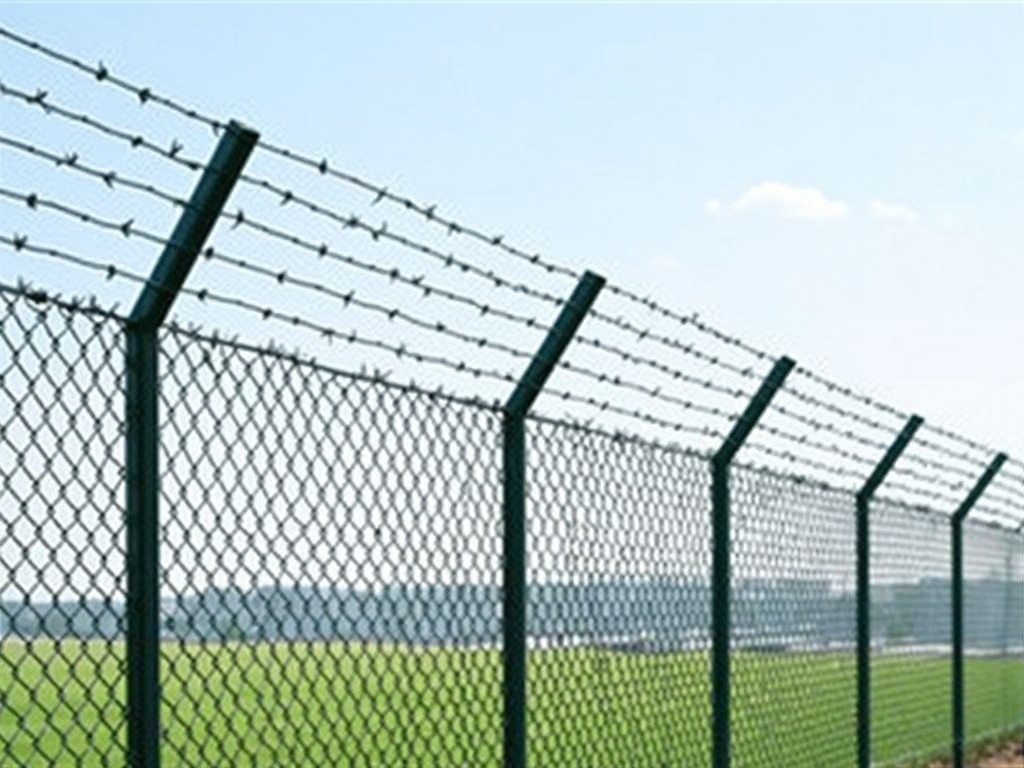
OEM Concertina Razor Barbed Wire Fence
Concertina razor barbed wire fencing is a high-security perimeter solution formed by helically coiled steel strips with sharp barbs and blades, designed to deter and delay unauthorized access through physical resistance and psychological intimidation.
Unlike conventional barbed wire, the concertina configuration expands and contracts like an accordion, allowing rapid deployment over uneven terrain while maintaining consistent tension and barrier integrity when installed.
Core Engineering Characteristics
The effectiveness of concertina razor wire depends on three interrelated engineering parameters: core wire tensile strength, blade geometry, and coil diameter. These factors determine penetration resistance, cutting efficiency, and long-term structural stability under environmental stress.
Core wires are typically manufactured from high-carbon steel (ASTM A228) with minimum tensile strength of 1770 MPa, cold-drawn to achieve uniform diameter tolerance of ±0.05mm. This precision ensures consistent helical formation during coiling and prevents weak points that could compromise barrier continuity.
Blade geometry follows ISO 11612 standards for protective clothing resistance, with blade length, thickness, and angle optimized for maximum tissue disruption while minimizing material usage. Standard blade profiles feature 22mm length, 0.5mm thickness, and 45° cutting angle, creating a combined shearing and piercing action.
Alternative blade configurations include shorter 15mm blades for reduced weight in temporary installations or extended 30mm blades for high-risk zones where maximum delay is critical. Blade spacing along the core wire averages 26mm pitch, creating approximately 38 blades per meter of concertina length.
Coil diameter directly influences deployment speed and recovered diameter after expansion. Standard concertina coils use 450mm inner diameter, expanding to approximately 900mm outer diameter when deployed. This ratio allows compact storage (typically 5 coils per meter of recovered length) while achieving effective barrier height when installed in multiple tiers.
Larger diameters (up to 600mm inner) reduce deployment force requirements but increase storage volume, while smaller diameters (300mm inner) maximize storage density at the cost of increased recoil energy during installation. Selection depends on site-specific constraints including access limitations, installation method, and required barrier height.
Material Selection and Corrosion Resistance
Material choice determines service life in corrosive environments. The core wire and blades are typically supplied in one of three finish conditions, each balancing cost, longevity, and environmental compatibility based on ISO 12944 corrosion categories.
Hot-dip galvanized coating (Zn minimum 55g/m² per EN 10244-2) provides adequate protection for C2-C3 urban and industrial environments, offering 5-10 years of service life before significant red rust appears. The zinc coating acts as a sacrificial anode, protecting exposed steel at cut ends and minor abrasions.
Galvanized and polymer-coated (ZnAl coating with PP/PVC overcoat) extends service life to 10-15 years in C4 coastal and heavy industrial zones. The polymer layer prevents direct electrolyte contact with the zinc layer, significantly reducing underfilm corrosion at coating defects.
Stainless steel (Grade 304 or 316L) eliminates corrosion concerns entirely in C5-I and C5-M marine and industrial environments. While initial cost is higher, lifecycle analysis shows lower total ownership cost in chloride-rich atmospheres where frequent replacement of coated steels would otherwise be required.
Installation Methods and System Integration
Concertina razor wire functions as a standalone barrier or as part of a layered security system. Installation methodology affects both immediate effectiveness and long-term maintenance requirements. Three primary deployment patterns are recognized in perimeter security engineering.
Single-coil ground-level installation provides basic deterrent capability against pedestrian intrusion, typically deployed at 300-450mm height above grade. This configuration requires anchoring every 1.5 meters to prevent lateral displacement under load and is most effective when combined with clear zone maintenance to eliminate cover approaches.
Double-coil concertina barriers (two coils stacked vertically with 150mm offset) create a more formidable obstacle, increasing penetration time by approximately 40% compared to single-coil systems. The offset configuration prevents attackers from exploiting alignment gaps between coils and requires intermediate support arms to maintain vertical separation.
Triple-coil or pyramid configurations (three coils in triangular formation) are used in high-risk applications where maximum delay is paramount. These systems demand robust post foundations and tensioning hardware to resist cumulative lateral forces, often incorporating shock springs to accommodate thermal expansion and contraction cycles.
Integration with electronic security systems enhances overall perimeter effectiveness. Concertina wire can be mounted on fence extensions or standalone brackets to create a non-conductive buffer zone between sensors and potential intruders, reducing false alarms from vegetation or small animals while maintaining detection capability for human-scale targets.
When used with buried sensor cables, the concertina coil is positioned above the detection zone to prevent direct contact damage while still providing psychological deterrence. Proper standoff distance (minimum 150mm) ensures sensor functionality is not compromised by electromagnetic interference from the steel coil.
Typical Technical Specifications
| Parameter | Typical Value | Customization Range |
|---|---|---|
| Core Wire Diameter | 2.5mm ±0.05mm | 2.0mm - 3.0mm |
| Blade Length | 22mm | 15mm - 30mm |
| Blade Thickness | 0.5mm | 0.4mm - 0.8mm |
| Inner Coil Diameter | 450mm | 300mm - 600mm |
| Recovered Length per Coil | 5.0m | 3.0m - 8.0m |
| Tensile Strength (Core) | 1770 MPa minimum | 1570 - 1960 MPa |
| Coating Weight (Galvanized) | 55g/m² Zn | 25 - 275g/m² |
| Operating Temperature | -40°C to +80°C | -50°C to +100°C (special alloys) |
Quality Control and Testing Protocols
Manufacturing consistency is verified through inline and batch testing procedures aligned with ASTM F1664 for barbed wire and concertina systems. Critical control points include wire diameter uniformity, blade attachment integrity, and helical pitch consistency.
Diameter tolerance is monitored every 30 meters of core wire production using laser micrometers, with automatic line speed adjustment to maintain ±0.05mm specification. Blade attachment strength is tested destructively on 0.1% of production samples, requiring minimum 150N pull-off force to prevent blade loss during handling or impact.
Coil memory and recovery characteristics are validated through cyclic expansion-compression testing. Each coil design undergoes 500 expansion cycles between storage and deployed diameter, with measurements taken to ensure less than 5% permanent set and consistent recovery force throughout the test sequence.
Coating adhesion and continuity are verified using ASTM D3359 tape test and ASTM G62 electrochemical detection for pinholes. Galvanized coatings must achieve minimum 5B adhesion rating and less than 5 pinholes per square meter to qualify for shipment.
Final inspection includes visual examination under 3x magnification for blade sharpness uniformity and core wire surface defects. Coils are checked for proper nesting and absence of kinks that could impede deployment. Random samples undergo salt spray testing (ASTM B117) for 500 hours to validate corrosion resistance claims.
Documentation package includes material test certificates, coating thickness reports, and dimensional inspection records traceable to production batch. Custom testing protocols (e.g., cyclic humidity, UV exposure) are available upon request for specialized environmental conditions.
Applications in Critical Infrastructure
Military installations employ concertina razor wire as a tactical delay mechanism in layered defense perimeters. The rapid deployment capability allows forces to establish protective barriers within minutes during transient operations, while the physical resistance disrupts enemy momentum and creates engagement opportunities for defending units.
Forward operating bases and temporary checkpoints utilize concertina coils mounted on HESCO barriers or sandbag walls to create immediate vertical obstruction. The system's lightweight nature (approximately 8kg per meter of recovered length) enables manual handling by small teams without mechanical assistance.
Correctional facilities integrate concertina razor wire into perimeter security systems to prevent escape attempts and contraband introduction. Installation typically occurs at the top of existing fences or walls, creating an overhang that increases the effective climbing distance while maintaining visibility for surveillance systems.
The psychological deterrent effect is particularly valuable in high-security units where visual monitoring may be limited. Regular inspection protocols ensure barrier integrity is maintained despite environmental exposure and potential tampering attempts.
Industrial sites handling hazardous materials or valuable inventory use concertina barriers to establish sterile zones around critical infrastructure. Chemical plants, power generation facilities, and telecommunications hubs deploy the system to prevent unauthorized access to control rooms, transformer yards, or server farms where even brief intrusion could cause catastrophic failure.
The non-conductive nature of properly coated concertina wire allows safe installation near electrical equipment when minimum clearance distances are observed. Unlike solid barriers, the open coil design prevents wind loading accumulation that could compromise structural integrity during storms.
Environmental and Safety Considerations
Handling concertina razor wire requires specific safety protocols due to the inherent laceration risk. Personnel must wear puncture-resistant gloves (ANSI/ISEA 105 Level 4 or higher), forearm protection, and eye protection during installation, inspection, or removal operations.
Training programs emphasize controlled deployment techniques using specialized tools such as coil handling poles and tensioning devices to minimize direct contact. Storage areas should be clearly marked and access restricted to trained personnel only to prevent accidental exposure.
Environmental impact assessments consider the long-term persistence of steel components in the environment. While the base material is recyclable, coated variants may require specialized processing depending on coating composition. End-of-life planning should include coordination with metal recycling facilities capable of handling polymer-coated or galvanized steel.
Wildlife exclusion zones sometimes incorporate concertina barriers to protect endangered species from hazardous areas or to prevent human-wildlife conflict. In these applications, blade geometry may be modified to reduce injury risk to non-target species while maintaining effectiveness against human intruders.
Installation near public access routes requires compliance with local regulations regarding protruding hazards. Many jurisdictions mandate warning signs, buffer zones, or alternative barrier types in areas accessible to the public. Consultation with local authorities is recommended before deployment in semi-public or mixed-use environments.
Temporary installations for events or construction sites often use removable mounting systems that allow rapid deployment and retrieval without permanent ground alteration. These systems typically incorporate quick-release brackets and ground stakes designed for repeated use cycles.
Customization Options for OEM Requirements
OEM customers frequently require tailored specifications to integrate concertina razor wire into proprietary security systems or meet unique project constraints. Customization extends beyond basic dimensions to include material composition, packaging configurations, and accessory integration.
Blade geometry can be modified to create specific threat profiles—for example, longer blades with reduced spacing for increased penetration resistance, or serrated edges designed to catch on clothing and increase entanglement delay. Core wire metallurgy can be adjusted for extreme temperature applications or non-magnetic requirements in sensitive electronic environments.
Packaging options address logistical constraints at deployment sites. Standard packaging uses UV-stabilized polypropylene bags containing 5-10 coils each, but OEMs may request custom counts, protective casing for harsh transport conditions, or pre-assembled mounting brackets for rapid installation systems.
Labeling and barcode systems can be integrated to support inventory management in large-scale deployments. Some customers require individual coil identification for maintenance tracking or contractual compliance with specific inspection intervals.
Surface treatments beyond standard galvanization include specialized coatings for specific environments: zinc-aluminum-magnesium alloys for enhanced corrosion resistance in marine atmospheres, or color-matched polymer coatings for aesthetic integration with surrounding infrastructure in urban settings.
Stainless steel variants can be supplied with passivation treatments or electropolishing to further enhance corrosion resistance and reduce particulate generation in cleanroom-adjacent applications. All customizations are subject to minimum order quantities and tooling considerations based on the complexity of the requested modification.
Ordering Information and Technical Support
Accurate quotation requires specific technical parameters to ensure the delivered product meets installation and performance requirements. Essential information includes: desired coil dimensions (inner diameter, recovered length), blade specifications (length, thickness, angle), material grade and coating type, required quantity, and delivery timeline.
Environmental conditions at the installation site significantly influence material selection recommendations. Providing details about proximity to saltwater, industrial pollutants, pH levels, and temperature extremes enables appropriate corrosion protection specification.
Installation method affects accessory requirements. Customers planning ground-level deployment need different anchoring hardware than those mounting on existing structures. Information about post type, mounting height, and integration with other security components (fencing, sensors, lighting) allows for comprehensive system compatibility verification.
Sample requests are evaluated based on the complexity of customization. Standard configurations can typically be shipped within 3-5 business days, while custom blade geometries or specialized coatings may require 2-3 weeks for tooling and production setup.
Technical support includes installation guidance, maintenance recommendations, and regulatory compliance assistance. Documentation provides detailed handling procedures, inspection checklists, and troubleshooting guidance for common issues such as coil deformation or coating damage.
For large-scale projects, on-site technical consultation is available to assist with deployment planning, safety protocol development, and integration with existing security infrastructure. All communications are subject to confidentiality agreements to protect proprietary security specifications.
Product Categories


Send Inquiry
If you are interested in our products, leave your information here and we will be in touch shortly.