Oem Euro Style Steel Mesh Fencing Panels
Euro style steel mesh fencing panels are precision-engineered perimeter solutions designed for industrial, commercial, and infrastructure applications requiring durability, visibility, and low
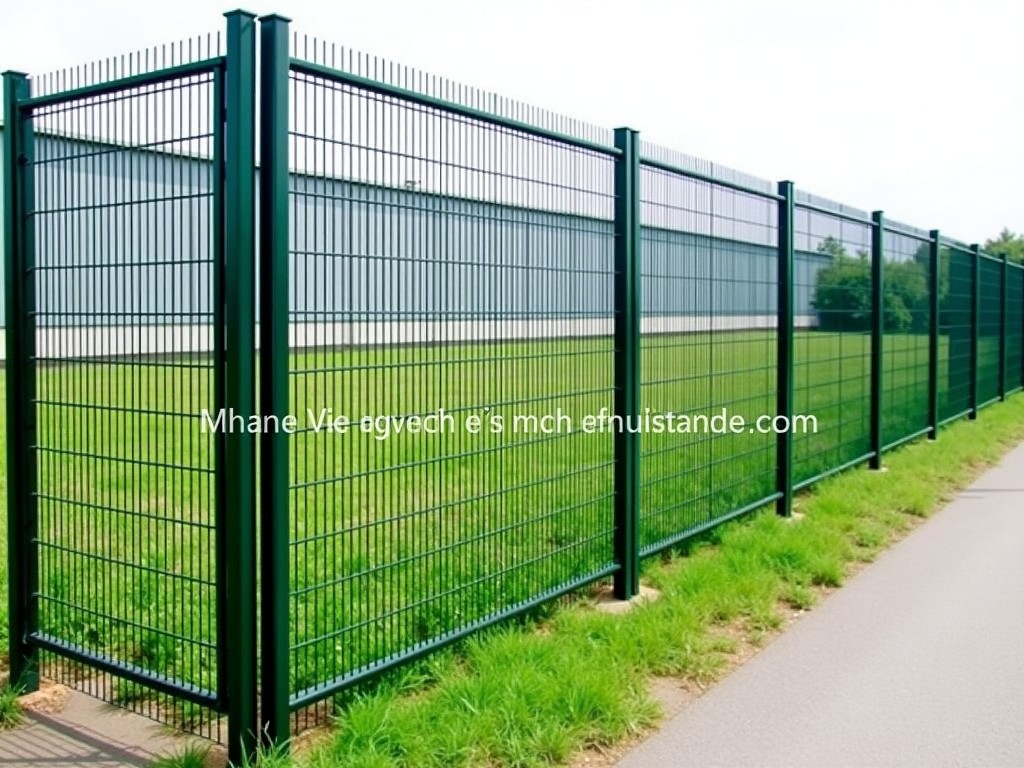
OEM Euro Style Steel Mesh Fencing Panels
Euro style steel mesh fencing panels are precision-engineered perimeter solutions designed for industrial, commercial, and infrastructure applications requiring durability, visibility, and low maintenance. Manufactured to OEM specifications, these panels combine welded mesh construction with galvanized or coated steel to meet stringent European standards for structural integrity and environmental resistance. This page details the technical characteristics, material options, and application considerations that inform procurement decisions for long-term fencing systems.
Material Composition and Corrosion Protection
The base material is typically low-carbon steel wire, cold-drawn to achieve tensile strengths between 350–550 MPa, depending on wire diameter and panel geometry. Vertical and horizontal wires are electrically resistance-welded at every intersection to form a rigid mesh grid, eliminating reliance on weaving or tying methods that can loosen over time. This welding process ensures consistent load distribution and dimensional stability under wind load and impact.
Corrosion protection is applied post-welding to preserve coating integrity. Hot-dip galvanizing per EN ISO 1461 provides a zinc coating thickness of 55–85 µm, offering 15–25 years of service life in moderate environments. For aggressive conditions — such as coastal zones, industrial pollutants, or deicing salt exposure — panels may undergo duplex treatment: hot-dip galvanizing followed by powder coating (60–120 µm) or Epoxy ester finish, increasing predicted lifespan to 30+ years. Coating adhesion is verified via ASTM D3359 tape testing, with minimum rating of 4B required for acceptance.
Panel Dimensions and Structural Performance
Standard panel heights range from 1.0 m to 2.4 m, with widths typically 2.5 m or 3.0 m to align with standard post spacing. Mesh apertures vary by application: 50×50 mm or 50×100 mm for general security, 75×150 mm for animal containment or wind permeability, and 25×25 mm for high-security or small-particle retention. Wire diameters range from 3.0 mm to 5.0 mm, directly influencing panel rigidity and resistance to deformation under dynamic loads such as ball impact or climbing attempts.
Structural performance is evaluated through standardized testing. Panels are designed to withstand a minimum wind load of 1100 Pa (equivalent to 110 km/h gusts) without permanent deflection when installed per manufacturer guidelines. Impact resistance is tested using a 50 kg pendulum dropped from 1.0 m height; acceptable performance shows no wire fracture or weld separation. These values are not guarantees but represent typical outcomes based on material selection and fabrication quality — actual performance depends on installation quality, post embedment depth, and local environmental factors.
Surface Finish Options and Aesthetic Considerations
Beyond corrosion protection, surface finish influences appearance and maintenance. Hot-dip galvanized panels exhibit a spangled metallic finish that weathers to a uniform matte gray over 6–18 months. Powder coating allows RAL color matching — common choices include RAL 6005 (moss green), RAL 7016 (anthracite gray), and RAL 9005 (jet black) — to blend with landscaping or architectural elements. Powder coating also provides UV stability, preventing chalking or fading for 10+ years under direct sunlight when using polyester-based formulations.
For applications requiring anti-graffiti properties, a clear polyurethane topcoat (20–30 µm) can be applied over powder coating, enabling solvent-based cleaning without damaging the underlying layer. This adds cost but reduces lifecycle maintenance in high-visibility or public-access zones. Finish selection should balance initial cost, expected service life, environmental exposure, and aesthetic requirements — none of which can be universally optimized without project-specific analysis.
Customization and OEM Integration
As an OEM product, these panels are manufactured to buyer-specified drawings, allowing integration into larger systems such as gate assemblies, sound barriers, or modular security enclosures. Customization options include:
- Non-standard apertures (e.g., 40×40 mm, 100×50 mm) for specialized filtration or visibility needs
- Reinforced edges with bent or flanged wire to eliminate sharp ends and increase frame rigidity
- Pre-punched mounting tabs or brackets for direct attachment to structural steel or concrete posts
- Integrated anti-climb features such as angled top rollers or tight-mesh zones (≤25 mm aperture) at the upper 300 mm of panel height
Tooling adjustments for custom wire spacing or panel dimensions typically require 2–4 weeks of lead time, depending on complexity. OEM buyers are expected to provide CAD files (DWG or DXF) or detailed sketches with tolerances, finish requirements, and quantity forecasts. Early engagement allows optimization of material usage and welding efficiency, reducing unit cost without compromising structural performance.
Quality Control and Testing Protocols
Quality assurance begins with incoming wire inspection, including tensile strength, elongation, and zinc coating weight (if pre-galvanized wire is used). During production, each weld is monitored via current and time parameters; statistical process control ensures consistency. Post-welding, panels undergo dimensional verification — height, width, and squareness — using calibrated fixtures. Visual inspection under 500 lux lighting checks for weld spatter, wire protrusion, or coating defects.
Batch testing includes salt spray exposure (ASTM B117) for coated samples, with 500 hours as a common benchmark for powder-coated systems showing less than 10% red rust adhesion. Coating thickness is measured via magnetic induction (ISO 2178) at five points per panel. All test records are retained for traceability. While specific test results are project-dependent and not published as guarantees, the manufacturer maintains internal benchmarks aligned with EN 10223-3 for welded steel mesh fencing.
Typical Applications Across Industries
These panels are selected not merely for their physical properties but for how they solve site-specific challenges. In transportation infrastructure — such as highway medians or rail corridors — the open mesh design reduces wind loading compared to solid barriers while maintaining pedestrian deterrence and debris containment. Visibility through the mesh allows for unobstructed camera sightlines and facilitates emergency responder access, a critical factor in tunnel or overpass installations where sight distance affects safety.
In waste management and recycling facilities, the 50×50 mm aperture prevents wind-blown litter escape while permitting airflow to reduce methane buildup in enclosed zones. The smooth, weld-free surface minimizes snagging hazards for conveyor belts or sorting equipment located nearby. For agricultural use — particularly livestock containment — the 75×150 mm mesh provides sufficient strength to resist animal pressure while allowing hoof visibility, reducing stress in enclosed pens compared to solid fencing that limits visual contact with the environment.
Data centers and utility substations employ these panels as part of layered security systems. The mesh prevents tool passage (e.g., bolt cutters cannot easily grip wires) while allowing thermal dissipation from transformers or generators mounted behind the fence. Powder-coated finishes in dark colors reduce visual impact in residential-adjacent zones, addressing community concerns without sacrificing security performance. Each application leverages a combination of permeability, strength, and finish durability rather than relying on a single attribute.
Packaging and Logistics
Panels are stacked horizontally on steel pallets, separated by corrosion-resistant spacers to prevent coating abrasion during transit. Typical stack height is 1.0–1.2 m, secured with polypropylene straps and corner protectors. For export shipments, panels are wrapped in UV-stabilized polyethylene film and placed in ventilated crates to minimize condensation buildup. Pallet dimensions are optimized for standard container loading — usually 20 or 40 ft — maximizing payload while minimizing handling points.
Each pallet includes a packing list with panel count, dimensions, finish specification, and heat number for material traceability. Labels are affixed to two sides and include QR codes linking to digital test certificates upon request. Damage during shipping is rare but possible; receivers are advised to inspect for coating scratches or bent edges before signing delivery notes. Claims must be filed within 48 hours of receipt with photographic evidence to be valid under standard terms.
Installation Considerations and Long-Term Value
Proper installation significantly affects lifecycle performance. Posts should be set in concrete to a depth of at least 1/6 of the panel height — e.g., 400 mm for a 2.4 m panel — with a base width of 200–250 mm to resist overturning moments. Panel-to-post attachment uses galvanized brackets or clamp systems that allow for thermal expansion without inducing stress concentrations. Drilling through the mesh for fasteners is discouraged; instead, panels are secured via edge flanges or proprietary clips that maintain coating integrity.
Maintenance requirements are minimal but not zero. Annual visual inspections should check for coating damage at ground level (from weed whackers or debris impact) and loose fasteners. Touch-up repairs use zinc-rich primer followed by matching topcoat — never generic paint, which may cause galvanic incompatibility. Over 20 years, a properly installed and maintained Euro style mesh fence typically incurs less than 15% of its initial cost in maintenance, making it a cost-effective solution for permanent perimeter systems where replacement disruption is high.
Comparison with Alternative Perimeter Solutions
| Attribute | Euro Style Steel Mesh Panel | Welded Wire Mesh (Roll Form) | Palisade Fencing | Concrete Panel Wall |
|---|---|---|---|---|
| Wind Load Resistance | High (open mesh reduces force) | Moderate (depends on post spacing) | Moderate (solid verticals increase load) | Very High (but requires deep foundations) |
| Visibility | Good (50–70% open area) | Good | Poor (solid verticals) | None |
| Impact Resistance | High (rigid welded frame) | Low to Moderate (flexible) | High (but prone to localized denting) | Very High |
| Installation Speed | Moderate (panel handling) | Fast (roll deployment) | Slow (individual pales) | Very Slow (curing time) |
| Expected Lifespan (Coated) | 20–30 years | 10–15 years | 15–25 years | 30+ years (but prone to cracking) |
| Maintenance Frequency | Low (annual inspection) | Moderate (tension adjustment) | Low | Very Low (but repair is difficult) |
*Values are typical ranges based on common configurations. Actual performance depends on material grade, coating quality, installation practices, and site conditions. Palisade fencing assumes hot-dip galvanized steel; concrete assumes reinforced, non-prestressed panels.
Environmental and Sustainability Factors
Steel mesh fencing offers inherent sustainability advantages over alternatives. The primary material — steel — is 100% recyclable at end-of-life, with recovery rates exceeding 90% in industrial streams. Unlike PVC or composite coatings, zinc and powder coating do not emit volatile organic compounds (VOCs) during service life. Manufacturing scrap rates are typically below 5% due to nesting optimization in CNC wire cutting and welding processes.
The open mesh design reduces material usage per linear meter compared to solid barriers, lowering embodied energy. In vegetated zones, the fence facilitates natural seed dispersal and small wildlife passage — particularly important in ecological corridors or conservation areas where fragmentation is a concern. Some manufacturers offer take-back programs for used panels, though logistics and cleaning requirements limit widespread adoption. Environmental product declarations (EPDs) are available upon request for specific product configurations.
For technical inquiries, custom specifications, or project consultation, contact our engineering team to discuss your requirements.
Request a Quote or Technical Data Sheet
Product Categories


Send Inquiry
If you are interested in our products, leave your information here and we will be in touch shortly.