Oem Non Permanent Pool Fence
OEM non-permanent pool fence systems are engineered for temporary or seasonal pool enclosures that require rapid installation, secure barrier performance, and clean removal without structural
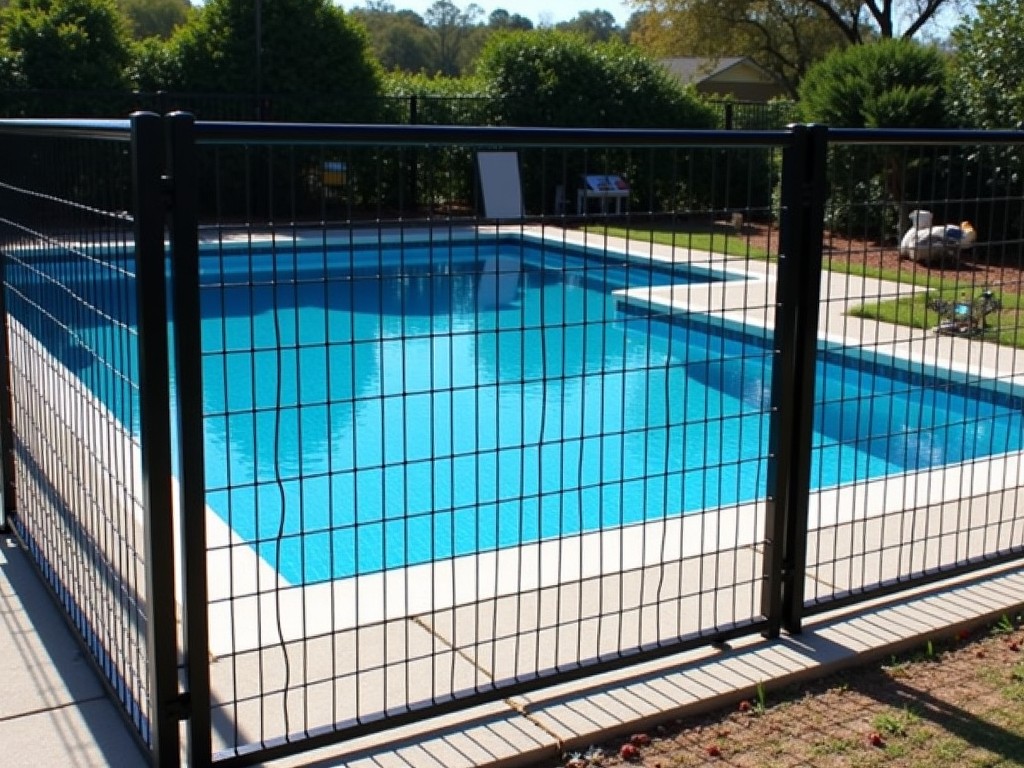
OEM Non-Permanent Pool Fence Systems
OEM non-permanent pool fence systems are engineered for temporary or seasonal pool enclosures that require rapid installation, secure barrier performance, and clean removal without structural alteration to the surrounding area. These systems are commonly specified by pool contractors, resort operators, municipal aquatic facilities, and private property owners who need compliance with safety regulations while maintaining flexibility for seasonal use, landscaping changes, or event reconfiguration. Unlike permanent fencing, non-permanent designs avoid concrete footings, welded joints, or subsurface penetrations, relying instead on weighted bases, clamp-on mechanisms, or ground stakes that distribute load without damaging decking, pavers, or turf. The primary engineering objective is to meet or exceed local pool barrier codes—such as ASTM F2286 or regional equivalents—while allowing disassembly and storage within a single work shift by a two-person crew.
Core Design Principles
The structural integrity of non-permanent pool fences depends on three interdependent factors: panel rigidity, connection stability, and base resistance to lateral and uplift forces. Panels are typically constructed from extruded aluminum or powder-coated steel tubes with vertical pickets spaced to prevent sphere passage (typically <4 inches or 100mm diameter), meeting child safety requirements. Horizontal rails are engineered to resist bending under impact loads—such as from pool equipment or accidental contact—while maintaining a smooth, climb-resistant surface. Connection systems use reinforced nylon or stainless steel clamps with torque-limiting features to prevent over-tightening and material creep, ensuring consistent preload across varying temperatures. Base systems incorporate recycled rubber or high-density polyethylene (HDPE) weights, often stackable and interlocking, designed to resist sliding under dynamic loads calculated from wind pressure and human impact scenarios.
Material Selection and Performance Characteristics
Material choice directly affects durability, maintenance, and environmental compatibility in wet, chlorinated, or UV-exposed environments. Aluminum alloys (commonly 6063-T5) offer a natural oxide layer that resists corrosion without coating, weigh approximately one-third of steel, and allow for precise extrusion tolerances critical for seamless panel alignment. Steel variants use pre-galvanized or hot-dipped galvanized substrates with polyester powder coating (minimum 80 microns thickness) to resist chip formation and UV degradation; coating adhesion is validated via ASTM D3359 tape testing. Infill options include solid aluminum pickets, vertical mesh panels (HDPE or polyester-coated polyester with <10mm aperture), or tempered glass segments (8–10mm thick) with polished edges and rubber gaskets to prevent metal-to-glass contact. All materials are selected for resistance to pool chemical splash, salt spray, and thermal cycling between -20°C and 60°C.
Standard Configurations and Customization Parameters
OEM non-permanent pool fence systems are typically supplied in modular panels ranging from 0.9m to 2.4m in width and 1.0m to 1.5m in height, allowing adaptation to irregular pool geometries, obstructions, or varying local code requirements for barrier height. Panel height is often adjustable in 50mm increments via telescoping posts or sliding rail mechanisms to accommodate uneven decking or slope compensation. Connection hardware includes quick-release pins, cam locks, or spring-loaded latches designed for gloved operation and infrequent maintenance. Base weights are commonly available in 15kg, 25kg, or 35kg units, stackable to achieve required resistance—typically calculated as 20–30kg per linear meter for inland installations and up to 50kg/m for coastal or high-wind zones. Finish options include standard RAL colors (e.g., RAL 9005 black, RAL 9016 white) or custom powder coating to match architectural elements, with salt-spray resistance validated per ASTM B117 for 500+ hours.
Installation and Removal Workflow
Installation begins with site verification: confirming pool perimeter dimensions, identifying trip hazards, and marking panel alignment using non-permanent chalk or tape. Base units are positioned at intervals not exceeding 2.4m, leveled using shims if necessary, and weighted to design specifications. Panels are inserted into base sockets or clamped to vertical posts, then secured with locking mechanisms; tension is verified by applying a 50N lateral force at mid-span—deflection should not exceed 10mm under load. For removal, pins or latches are released, panels are lifted vertically to avoid scraping, and bases are stacked for storage. The entire process for a 15m perimeter typically requires <90 minutes for two technicians using only hand tools (rubber mallet, level, wrench). No drilling, anchoring, or surface modification is required, preserving warranties on decking, tile, or landscaping.
Quality Assurance and Testing Protocols
Each production batch undergoes dimensional inspection of critical features: picket spacing (measured at three points per panel using GO/NOGO gauges), rail straightness (<0.5mm deviation over 1m), and coating thickness (verified via magnetic induction or eddy current testing). Load testing simulates worst-case scenarios: a 100kg dynamic load applied at 600mm height to represent a child climbing, and a 500N horizontal force distributed over 1m to model wind or impact. Residual deformation after load removal must be <2mm to ensure relocking capability. Finished systems are subjected to 100+ installation/removal cycles to validate latch fatigue and base wear. Documentation includes material certificates, test reports, and a unique traceability code laser-etched on each base or post for lifecycle tracking.
Typical Applications and Operational Benefits
These systems are ideal for seasonal pools in colder climates where winterization requires full enclosure removal, allowing debris covers to be installed without obstruction. Hotels and resorts use them to reconfigure pool areas for events, conferences, or seasonal demand shifts—installing barriers during peak occupancy and removing them for open-access layouts. Municipal facilities deploy non-permanent fences during maintenance windows or when converting pools to splash pads or dry-use zones. Contractors benefit from reduced liability: since no structural alterations are made, there is no risk of voiding deck warranties or damaging waterproofing membranes. Storage footprint is minimized—15m of fence typically stacks into a footprint of <0.8m² and <0.5m height, fitting in standard utility closets or service vehicles.
Comparison: Non-Permanent vs. Permanent Pool Fencing
| Parameter | Non-Permanent System | Permanent System |
|---|---|---|
| Installation Time (15m) | < 90 minutes | 1–2 days (includes curing) |
| Site Alteration | None | Drilling, anchoring, concrete footings |
| Reusability | Full disassembly and reuse | Not applicable |
| Wind Load Resistance | Dependent on base weight (customizable) | Fixed by foundation depth |
| Height Adjustability | ±50mm via telescoping posts | Fixed after installation |
| Storage Requirement | Stackable bases and flat panels | Not applicable |
Ordering and Technical Support
OEM quotations require submission of pool perimeter dimensions, local barrier code references (e.g., municipal ordinance number), deck material type (concrete, pavers, wood, tile), and desired finish color. Custom panel widths, non-standard heights, or integrated gate solutions (self-closing, magnetic latch) are available upon request with associated engineering review. Lead times typically range from 3–6 weeks for standard configurations, extending to 8–10 weeks for custom coatings or specialized infill materials. Samples of panel sections, base units, and hardware kits are available for evaluation—customers are responsible for return shipping unless a purchase order is issued. Technical documentation, including installation manuals, load test summaries, and material safety data sheets (MSDS), is provided digitally upon order confirmation.
For detailed specifications, customization options, or to request a quotation for your specific pool enclosure project, contact our engineering team.
Request Technical Consultation
Product Categories


Send Inquiry
If you are interested in our products, leave your information here and we will be in touch shortly.