Portable Fence For Above Ground Pool
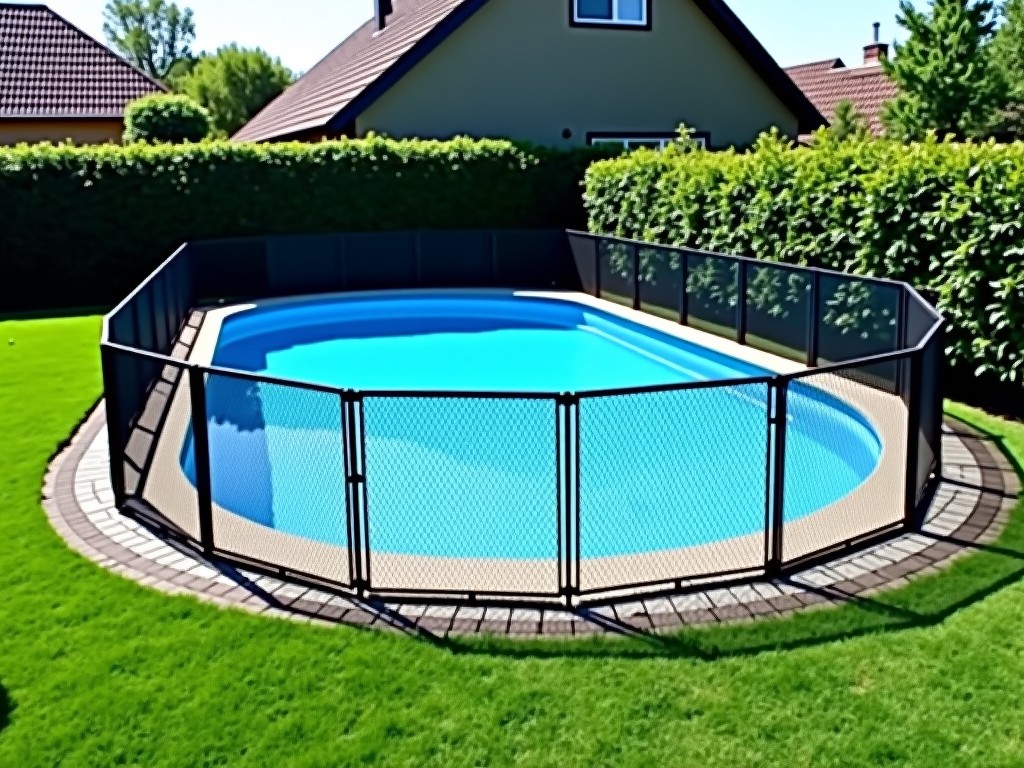
Portable fencing for above ground pools provides a temporary yet code-compliant barrier designed to meet residential safety regulations without permanent installation. These systems are engineered
Portable Fence Systems for Above Ground Pools
Portable fencing for above ground pools provides a temporary yet code-compliant barrier designed to meet residential safety regulations without permanent installation. These systems are engineered for rapid deployment and removal, addressing seasonal pool use while maintaining structural integrity under specified load conditions. Unlike permanent fencing, portable solutions must balance ease of handling with resistance to wind uplift, lateral impact, and climbing attempts, all within the constraints of non-penetrating ground engagement.
Key Design Considerations for Portable Pool Fencing
Effective portable pool fencing begins with understanding the failure modes it must resist: lateral force from accidental impact, vertical lift from wind gusts, and horizontal shear from climbing attempts. Regulatory standards typically require a minimum height of 48 inches with no openings exceeding 4 inches in diameter to prevent child passage. The system must maintain this geometry under dynamic loads without tipping, sliding, or deformation that compromises the barrier function. Ground engagement relies on weighted bases or friction-dependent systems since anchoring into soil or decking is often prohibited or impractical for above ground installations.
Material selection focuses on corrosion resistance, UV stability, and strength-to-weight ratio. Aluminum alloys (commonly 6063-T5) are frequently used for vertical posts and rails due to their inherent resistance to poolside moisture and chlorine exposure, with tensile strengths ranging from 20,000 to 35,000 psi depending on temper. High-density polyethylene (HDPE) or polypropylene components may be used for bases and connectors, offering impact resistance and UV stabilization through additives like carbon black or hindered amine light stabilizers (HALS). All materials must retain mechanical properties after prolonged exposure to sunlight and pool chemicals, verified through accelerated weathering tests per ASTM G154 or equivalent.
Structural Configuration and Load Path
A typical portable fence panel consists of vertical infill members (pickets or mesh) connected to top and bottom rails, forming a rigid frame. The rails transfer lateral loads to the end posts, which in turn transmit forces to the ground engagement system. For stability, the center of gravity must remain within the base footprint under load; this is achieved by concentrating mass low in the base design or using wide, low-profile ballast containers. Wind uplift resistance depends on the base weight and the friction coefficient between the base and the supporting surface (e.g., wood deck, concrete patio, or grass pad), with typical requirements resisting gusts up to 90 mph in exposed locations.
Panel interconnection uses specialized couplers that maintain alignment and load transfer while allowing quick release. These couplers must resist disengagement under lateral loads exceeding 50 lbs per connection point, as specified in safety guidelines for pool barriers. Rail-to-post connections often employ internal splines or tongue-and-groove designs with stainless steel fasteners (grade 304 or 316) to prevent corrosion and loosening from vibration. Diagonal bracing within the panel or between posts may be added for spans exceeding 6 feet to prevent racking under asymmetric loading.
Ground Engagement Systems
Since permanent anchoring is often undesirable or forbidden for above ground pools, portable fencing relies on non-penetrating methods. The most common approach uses weighted bases made of HDPE or recycled plastic, filled with sand or water on-site to achieve the required mass. Typical base weights range from 35 to 50 lbs per post when filled, providing sufficient friction to resist sliding under lateral loads of 150 lbs applied at the top of the fence (per ASTM F2286). Alternative designs use concrete-filled steel tubes encased in protective coatings, offering higher mass in a smaller footprint but requiring careful handling due to weight.
Friction enhancement is critical on smooth surfaces. Some systems incorporate rubber pads or textured undersides on bases to increase the coefficient of friction, particularly on wet decking or painted concrete. Others use adjustable leveling feet to compensate for uneven surfaces, ensuring all posts remain plumb and the top rail stays within tolerance. For grass or soil installations, wide-flange bases distribute load to prevent sinking, though long-term placement may require periodic repositioning to avoid ground deformation.
Material Performance in Pool Environments
Poolside exposure presents a unique combination of challenges: constant moisture, fluctuating pH (typically 7.2–7.8), chlorine levels (1–4 ppm free chlorine), and UV radiation. Aluminum components naturally form a protective oxide layer, but prolonged exposure to chlorinated water can lead to pitting if the alloy lacks sufficient manganese or chromium content. Anodizing (Type II, minimum 0.4 mil thickness) or powder coating (epoxy primers with polyurethane topcoat, 2–3 mil total) significantly extends service life by providing a barrier against ion penetration. Coating adhesion is tested per ASTM D3359, with acceptable results showing no peeling or blistering after 500 hours of salt fog exposure (ASTM B117).
Plastic components must resist stress cracking from chlorine and UV degradation. HDPE used in bases typically contains 2–3% carbon black for UV stabilization, maintaining over 70% of its original tensile strength after 1,500 hours of UV exposure (ASTM G154, Cycle 6). Polypropylene connectors may include HALS additives to prevent embrittlement. Impact resistance is evaluated via notched Izod testing (ASTM D256), with values above 2 ft-lb/in indicating sufficient toughness for handling and accidental impacts. All materials undergo dimensional stability checks to ensure connections remain tight after thermal cycling.
Typical Configurations and Dimensions
| Parameter | Typical Value | Notes |
|---|---|---|
| Fence Height | 48 inches | Minimum code requirement for pool barriers |
| Maximum Opening Size | 4 inches diameter | Sphere test: prevents child passage |
| Panel Width | 4–6 feet | Balances stability and handling; wider panels require intermediate posts |
| Base Weight (filled) | 35–50 lbs per post | Depends on fill material (sand/water) and base volume |
| Wind Load Resistance | Up to 90 mph gust | Dependent on base weight, surface friction, and panel height |
| Material: Posts/Rails | 6063-T5 Aluminum | Anodized or powder coated; tensile strength 20–35 ksi |
| Material: Bases | HDPE (UV-stabilized) | 2–3% carbon black; fillable with sand or water |
| Fasteners | Stainless Steel 304/316 | Corrosion resistant; prevents staining and galling |
Dimensions are configured to accommodate common above ground pool diameters (typically 12–30 feet) while allowing for gate access and equipment clearance. Modular design enables users to create rectangular, oval, or free-form enclosures by combining straight panels with adjustable corner units. Gates are integrated using the same panel system, with self-closing hinges and latch mechanisms positioned at least 54 inches above grade to prevent unauthorized access by young children. All moving parts use stainless steel bushings or bearings to ensure long-term operation without seizing.
Installation and Deployment Process
Deployment begins with site preparation: ensuring the surface is clean, level, and capable of supporting the base load. For deck installations, load distribution is verified to prevent point loading that could damage decking boards. Bases are positioned according to the layout plan, then filled with the specified material (sand or water) to achieve the required weight. Posts are inserted into the base receptacles and secured with locking pins or set screws. Rails and panels are then connected sequentially, using the integrated couplers to maintain alignment and tension.
Final verification includes checking plumbness of all posts (using a level), confirming rail height consistency, and testing gate operation. The entire perimeter is inspected for gaps exceeding 4 inches or any climbable features (e.g., horizontal rails near the top that could serve as a foothold). Once validated, the fence is considered operational. Removal follows the reverse sequence: disconnecting panels, emptying bases, and disassembling components for storage. Components are designed to nest or stack efficiently, minimizing storage volume during the off-season.
Customization and Application Flexibility
Portable pool fencing systems are adapted to site-specific constraints through modular components and adjustable features. Corner angles can be customized from 90° to 135° using hinged or slide-in connectors, accommodating irregular pool decks or landscaping obstacles. Gate width is typically configurable between 24 and 36 inches, with wider options available for equipment access. Rail spacing and picket density can be adjusted to meet aesthetic preferences while maintaining compliance with the 4-inch sphere rule—vertical pickets spaced no more than 3-7/8 inches apart, or mesh with openings limited to 1.75 inches square.
Finish options extend beyond standard mill aluminum to include powder-coated colors (white, black, bronze, or custom shades) for visual integration with surrounding structures. Anodized finishes in clear, bronze, or black provide metallic appearance with enhanced corrosion resistance. For temporary events or rental properties, some systems offer quick-release bases that allow removal without draining sand or water, using frangible pins or magnetic latches (though these require additional safety validation). All customizations retain the core performance characteristics: height compliance, load resistance, and non-penetrating ground engagement.
Quality Assurance and Longevity Factors
Manufacturing quality begins with material certification: aluminum extrusions must meet ASTM B221 for alloy and temper, with mill test reports available upon request. Plastic components are inspected for melt flow index, density, and additive concentration to ensure consistency across batches. Welded or fastened assemblies undergo pull-test validation to confirm connection strength exceeds design loads by a safety factor of at least 1.5. Surface treatments are verified for thickness and adhesion using dry film gauges and tape tests (ASTM D3359).
Longevity in pool environments is influenced by maintenance practices. While the system is designed for minimal upkeep, periodic rinsing with fresh water reduces chlorine buildup on surfaces. Inspection points include checking for loose fasteners, corrosion at joints (particularly in crevices), and base integrity (cracks, leaks, or UV degradation). Moving parts should be lubricated annually with silicone-based compounds to prevent galling. With proper care, aluminum structures can exceed 10 years of seasonal use, while HDPE bases typically last 5–7 years before UV embrittlement necessitates replacement.
Note: Specific performance values, material grades, and coating thicknesses are available upon request and may be customized according to project requirements, local building codes, and environmental exposure conditions.
Product Categories


Send Inquiry
If you are interested in our products, leave your information here and we will be in touch shortly.