Portable Outdoor Privacy Fence Panels
Portable outdoor privacy fence panels are engineered for temporary or semi-permanent visual screening in environments where permanent installation is impractical or prohibited. Unlike fixed fencing
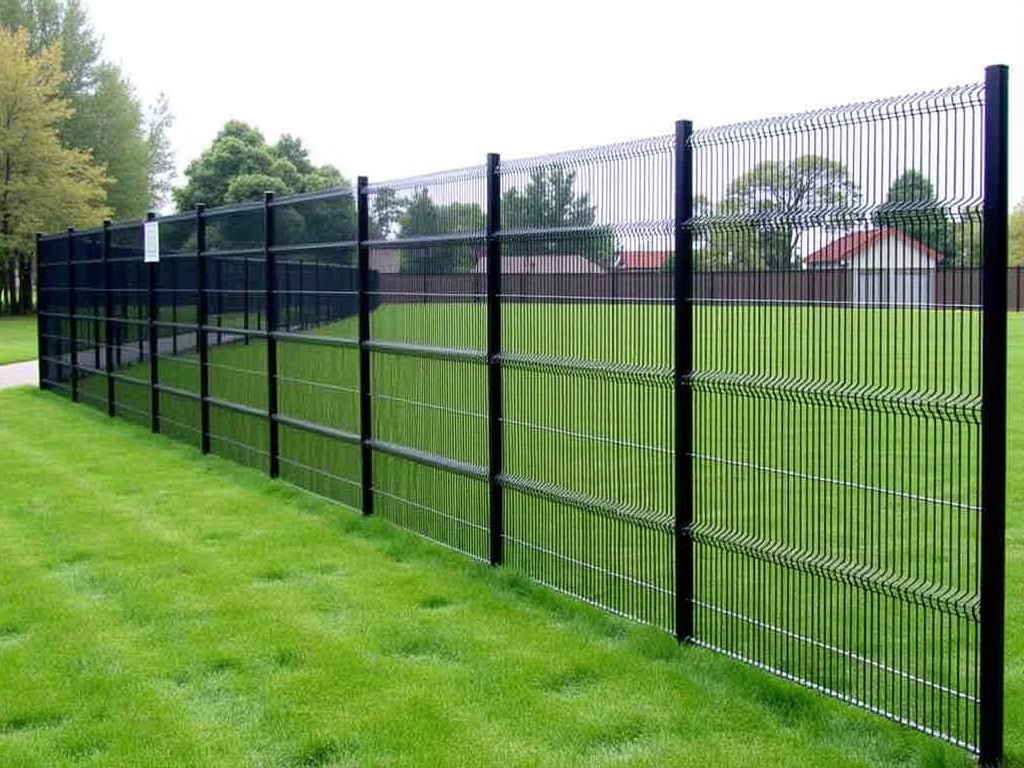
Portable Outdoor Privacy Fence Panels
Portable outdoor privacy fence panels are engineered for temporary or semi-permanent visual screening in environments where permanent installation is impractical or prohibited. Unlike fixed fencing systems, these panels prioritize modularity, rapid deployment, and structural stability without ground penetration. They are commonly used in construction sites, event venues, utility work zones, and temporary residential setups where privacy, dust containment, or visual delineation is required. The core design principle balances wind load resistance with ease of handling, ensuring panels remain upright under expected environmental loads while being lightweight enough for manual repositioning by two workers.
Material Composition and Structural Design
Panel frames are typically constructed from extruded aluminum alloys (6063-T5) or galvanized steel tubing, selected for their strength-to-weight ratio and corrosion resistance in outdoor conditions. Aluminum frames offer inherent rust resistance and lower mass, facilitating manual handling, while galvanized steel provides higher impact resistance for high-traffic zones. The infill material consists of high-density polyethylene (HDPE) or polyvinyl chloride (PVC) slats, UV-stabilized to prevent embrittlement and color fading over 2–3 years of sun exposure. Slat thickness ranges from 12–18 mm, with interlocking edges designed to minimize light gaps while allowing thermal expansion. Frame profiles incorporate internal channels to accommodate slat insertion and provide torsional rigidity.
Wind Load Performance and Base Systems
Stability under wind load is achieved through engineered base systems rather than ground anchoring. Common bases include weighted rubber or recycled plastic modules filled with sand or water, providing ballast that scales with panel height and expected wind velocity. For a standard 1.8 m tall panel, base weight typically ranges from 20–35 kg per unit to resist gusts up to 80 km/h, calculated using ASCE 7-16 exposure C conditions. Some designs integrate low-profile steel skids with adjustable leveling feet for use on uneven surfaces like gravel or asphalt. The connection between frame and base uses pinned or bolted joints to allow quick release while maintaining lateral rigidity under load.
Modular Assembly and Connection Methods
Panels are designed for tool-free assembly using spring pins, cam locks, or sliding bolt mechanisms that engage frame stiles to create continuous barriers. Connection hardware is recessed to avoid snag hazards and maintains alignment under lateral stress. Standard panel widths range from 0.6–1.2 m, allowing users to configure runs of arbitrary length by combining units. Corner posts and T-joints are available as separate components to enable 90° or 180° configurations. All connection points are designed to accommodate misalignment of up to 5° without compromising structural integrity, accommodating slight ground variations during deployment.
Typical Applications in Industrial and Commercial Settings
In construction, these panels shield public walkways from debris, dust, and visual distraction during facade work or demolition, helping sites comply with local safety ordinances. Utility crews deploy them around trenching or manhole work to prevent unauthorized access and reduce liability exposure. At outdoor events such as festivals or markets, they create vendor booths, backstage areas, or queue lines without requiring permits for permanent structures. Municipal agencies use them for temporary traffic control zones or to screen maintenance operations in parks. Their reusability across multiple projects reduces long-term cost compared to single-use alternatives like plywood barriers.
Customization Options for Project-Specific Needs
Manufacturers offer customization in height (typically 1.2–2.4 m), slat color (standard: white, beige, gray; custom colors available via pigment infusion), and frame finish (powder-coated in RAL colors or anodized for aluminum). Slat orientation can be vertical, horizontal, or lattice-patterned to adjust visibility and wind permeability. For applications requiring additional functionality, options include integrated mounting brackets for signage, light fixtures, or surveillance cameras. Some suppliers provide perforated metal or mesh infill variants for applications needing airflow while maintaining visual screening, such as around HVAC units or generators.
Quality Control and Manufacturing Considerations
Dimensional tolerances for frame components are held to ±1.5 mm to ensure consistent interlocking and connection fit. Slat straightness is verified via laser scanning during production to prevent bowing that could create gaps. UV stabilization levels are quantified using accelerated weathering test chambers (ASTM G154), with a minimum 1,500-hour exposure benchmark for outdoor grades. Frame welds (where applicable) undergo visual and dye-penetrant inspection to detect porosity or cracking. Final assembly includes a functional test where panels are connected and subjected to lateral push-pull loads to verify joint integrity before packaging.
Packaging, Handling, and Logistics
Panels are stacked flat or on edge in protective polyethylene sleeves or corrugated cardboard dividers to prevent surface abrasion during transit. Standard packaging configurations accommodate 10–20 units per pallet, depending on height and frame thickness. Corner protectors and edge guards are added to vulnerable points. Each pallet is strapped and stretch-wrapped for unit load stability. Manual handling is facilitated by integrated lift handles or fork pockets in the base design. For international shipments, packaging adheres to ISPM 15 standards for wood pallets or uses exempt materials like plastic or metal.
| Parameter | Typical Range | Notes |
|---|---|---|
| Panel Height | 1.2 – 2.4 m | Custom heights available; affects base weight requirements |
| Panel Width | 0.6 – 1.2 m | Standard modular widths; custom widths possible |
| Frame Material | Extruded Aluminum (6063-T5) or Galvanized Steel | Aluminum for lightweight; steel for impact resistance |
| Infill Material | UV-Stabilized HDPE or PVC | 12–18 mm thickness; interlocking edges |
| Base Ballast (per panel) | 20 – 35 kg | Sand/water-filled; scales with height and wind load |
| Wind Resistance | Up to 80 km/h gusts | Based on ASCE 7-16 Exposure C; varies with height |
| Surface Finish | Powder Coat, Anodize, or UV-Stabilized Pigment | Custom colors available upon request |
| Connection Type | Spring Pin, Cam Lock, or Sliding Bolt | Tool-free; recessed hardware |
For project-specific inquiries regarding portable outdoor privacy fence panels, including technical data sheets, load calculations, or custom configuration requests, contact our engineering team. Provide details on intended use environment, required height and length, expected wind conditions, and surface type to receive accurate recommendations. We can supply sample panels for evaluation upon request, subject to availability and logistics.
Product Categories


Send Inquiry
If you are interested in our products, leave your information here and we will be in touch shortly.