Powder Coated Chain Wire Fencing
This product page details the technical specifications, manufacturing considerations, and performance characteristics of powder coated chain wire fencing for industrial and infrastructure
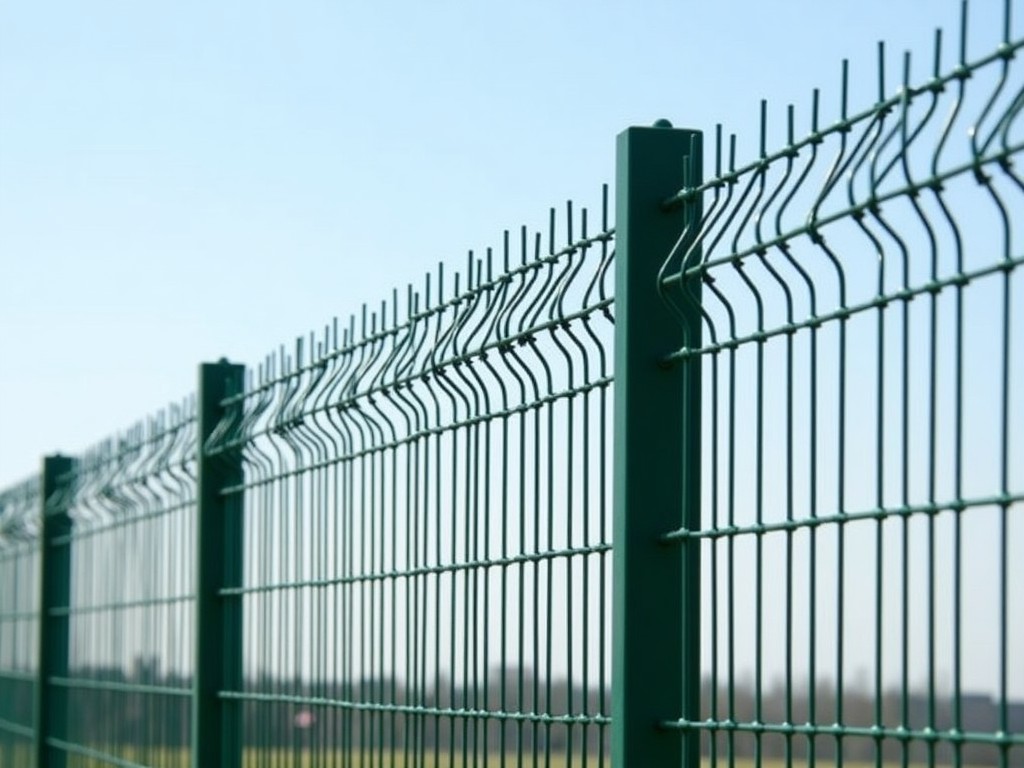
Powder Coated Chain Wire Fencing
This product page details the technical specifications, manufacturing considerations, and performance characteristics of powder coated chain wire fencing for industrial and infrastructure applications. Information is structured to support procurement decisions based on engineering requirements rather than promotional claims.
Material Composition and Coating Process
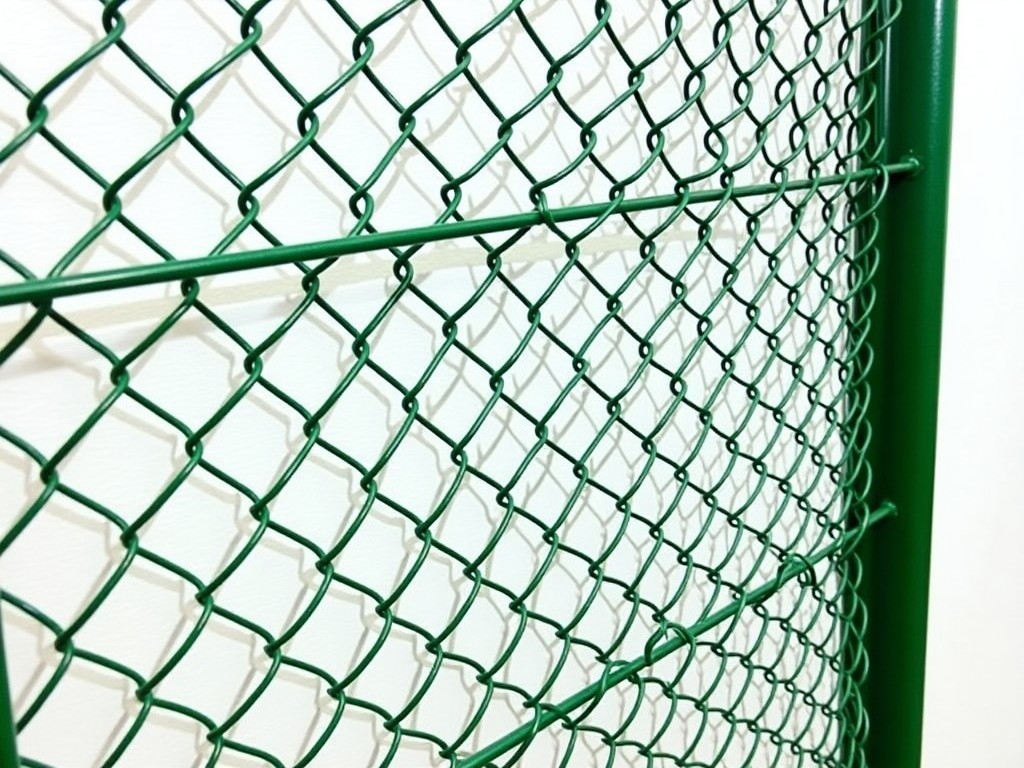
The base material is low-carbon steel wire, typically ASTM A641 Grade 1 or equivalent, drawn to diameters ranging from 2.0mm to 4.0mm depending on mesh specification. The wire is woven into a diamond or square mesh pattern before undergoing a multi-stage pretreatment process including degreasing, phosphating, and rinsing to ensure optimal adhesion. A thermosetting polyester or epoxy-polyester hybrid powder coating is then applied via electrostatic spray and cured at 180–200°C to form a continuous, adherent film with a minimum thickness of 60–80 microns as measured by magnetic induction gauges.
Coating thickness is critical for corrosion resistance; field performance data indicates that coatings below 50 microns show accelerated degradation in humid or saline environments, while thicknesses exceeding 100 microns may compromise flexibility and impact resistance. The coating formulation includes UV stabilizers and corrosion-inhibiting pigments to maintain color stability and barrier properties over extended exposure to sunlight and atmospheric pollutants.
Mesh Specifications and Structural Properties
Chain wire fencing is available in standard mesh openings of 50mm, 75mm, and 100mm, with custom sizes possible upon engineering review. The wire diameter and mesh size combination determines the tensile strength per unit width, which typically ranges from 800 N/mm to 2,500 N/mm for common industrial configurations. For example, a 50mm mesh with 3.0mm wire delivers approximately 1,800 N/mm tensile resistance, suitable for medium-security perimeter applications.
Post-coating, the fencing retains its flexibility, allowing it to be rolled for transport and installed over uneven terrain without cracking or delamination of the coating. Bend testing according to ISO 1520 standards shows no coating failure at bend radii down to 5x the wire diameter, confirming compatibility with standard installation practices involving tensioning and stapling to posts.
Performance Characteristics in Service Environments
The powder coating provides a barrier against moisture and chlorides, reducing the corrosion rate of the underlying steel to less than 5 microns per year in C3 environments (urban/industrial atmospheres) as defined by ISO 12944-2. In C4 environments (coastal or industrial zones with higher pollution), the expected corrosion rate increases to 5–15 microns per year, necessitating thicker coatings or alternative alloys for extended service life.
Impact resistance is maintained through the ductility of the powder coating; Gardner impact tests typically show no cracking or adhesion loss at 1–2 Joules for standard formulations. The coating also resists common industrial chemicals such as diluted acids, alkalis, and solvents encountered in wastewater treatment or manufacturing facilities, though prolonged exposure to concentrated substances may require material-specific validation.
Comparison of Coating Types and Longevity Expectations
| Coating Type | Typical Thickness (microns) | UV Stability (Hours to 50% Gloss Loss) | Recommended Environment |
|---|---|---|---|
| Standard Polyester | 60–80 | 1,000–1,500 | C2–C3 (Urban/Industrial) |
| Epoxy-Polyester Hybrid | 70–90 | 800–1,200 | C3 (High Humidity/Chemical Exposure) |
| UV-Resistant Polyester | 60–80 | 2,000–3,000 | C3–C4 (High UV/Saline) |
Note: Values are typical ranges based on standard formulations; actual performance depends on specific pigment packages, cure conditions, and environmental exposure. Custom coating systems are available for specialized requirements such as anti-graffiti or fire-retardant properties.
Installation and Post-Coating Handling
The fencing is supplied in rolls or panels, with roll widths typically matching the height of the fence (e.g., 1.2m, 1.8m, 2.4m) and lengths up to 50m for manual handling. Care must be taken during unrolling to avoid abrasion of the coating against rough surfaces; protective sleeves or interleaving layers are recommended for long-distance transport. On-site, the fencing is tensioned using straining wires or bolts and secured to posts via staples, clips, or weld mesh ties, depending on the post material (steel, timber, or concrete).
Coating damage during installation should be minimized; minor scratches can be touched up with compatible liquid paint, but significant delamination or corrosion exposure warrants section replacement. The coating’s adhesion to the wire ensures that cut edges do not immediately corrode, though field sealing of cut ends with zinc-rich primer is advised for installations in aggressive environments to prevent creep corrosion from the mesh openings.
Customization Options and Ordering Considerations
- Wire diameter: 2.0mm, 2.5mm, 3.0mm, 3.5mm, 4.0mm (custom diameters available)
- Mesh opening: 25mm–150mm (square or diamond pattern)
- Coating color: Standard RAL colors (e.g., RAL 6005, 7016, 9005); custom color matching available
- Height: 0.9m–3.0m in 100mm increments; custom heights upon request
- Roll length: Standard 25m or 50m; custom lengths for panelized systems
- Edge finish: Knuckled or twisted (barbed) edges for safety or security
Customization affects lead time, tooling requirements, and minimum order quantities. For example, non-standard mesh sizes may require new weaving dies, while custom colors necessitate powder batch qualification. Technical consultation is recommended during the specification phase to ensure compatibility with site conditions, installation methods, and regulatory requirements such as AS 1725 for chain-link fencing or local building codes.
Quality Control and Testing Protocols
Quality assurance begins with incoming wire inspection for diameter tolerance, tensile strength, and elongation, followed by in-process monitoring of coating thickness, adhesion (cross-hatch test per ASTM D3359), and cure degree via DSC or solvent resistance. Finished product sampling includes visual inspection for defects such as pinholes, orange peel, or incomplete coverage, with acceptance criteria typically set at <5 defects per 100m² for commercial grades.
Additional testing may include salt spray exposure (ASTM B117) for 500–1,000 hours depending on coating class, flexibility testing over mandrels, and impact resistance as previously noted. Test reports are available upon request for project-specific validation. Manufacturers typically maintain traceability from raw material lot to final roll, supporting quality investigations and compliance with ISO 9001 or equivalent quality management systems.
For technical inquiries, custom specifications, or project consultation, please contact our engineering team to discuss your requirements.
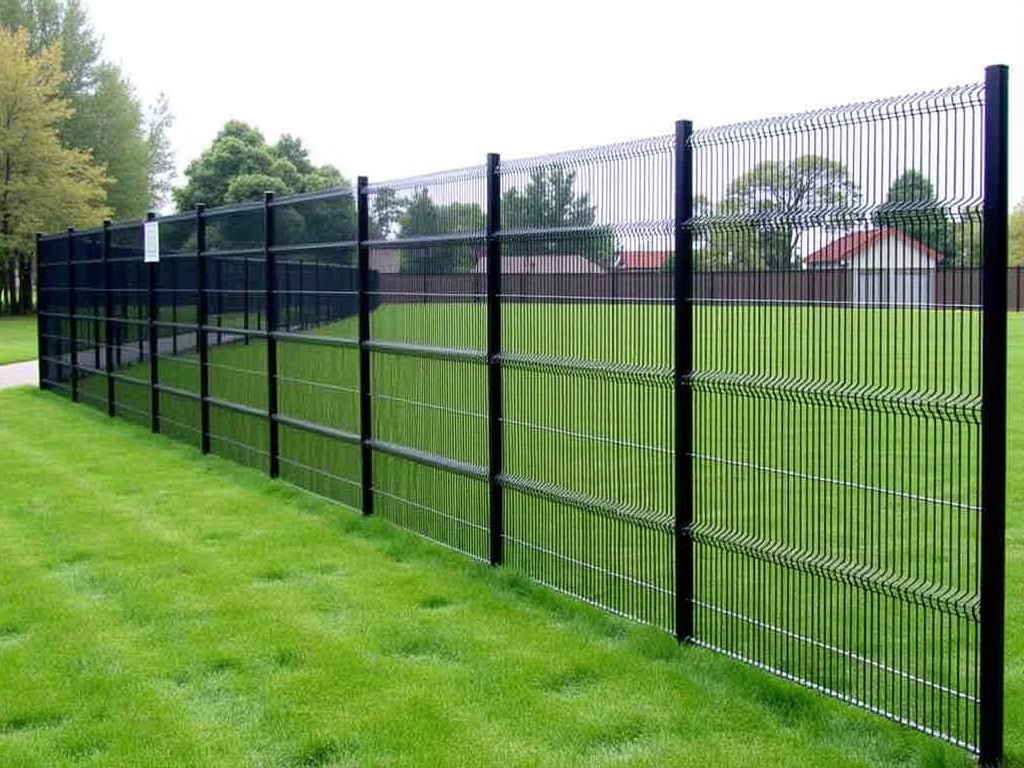
Product Categories


Send Inquiry
If you are interested in our products, leave your information here and we will be in touch shortly.