Powder Coated Hog Wire Fence Panels
Hog wire fence panels are welded wire mesh assemblies designed for agricultural, livestock, and perimeter containment applications. The base material consists of high-tensile steel wire, typically
Powder Coated Hog Wire Fence Panels
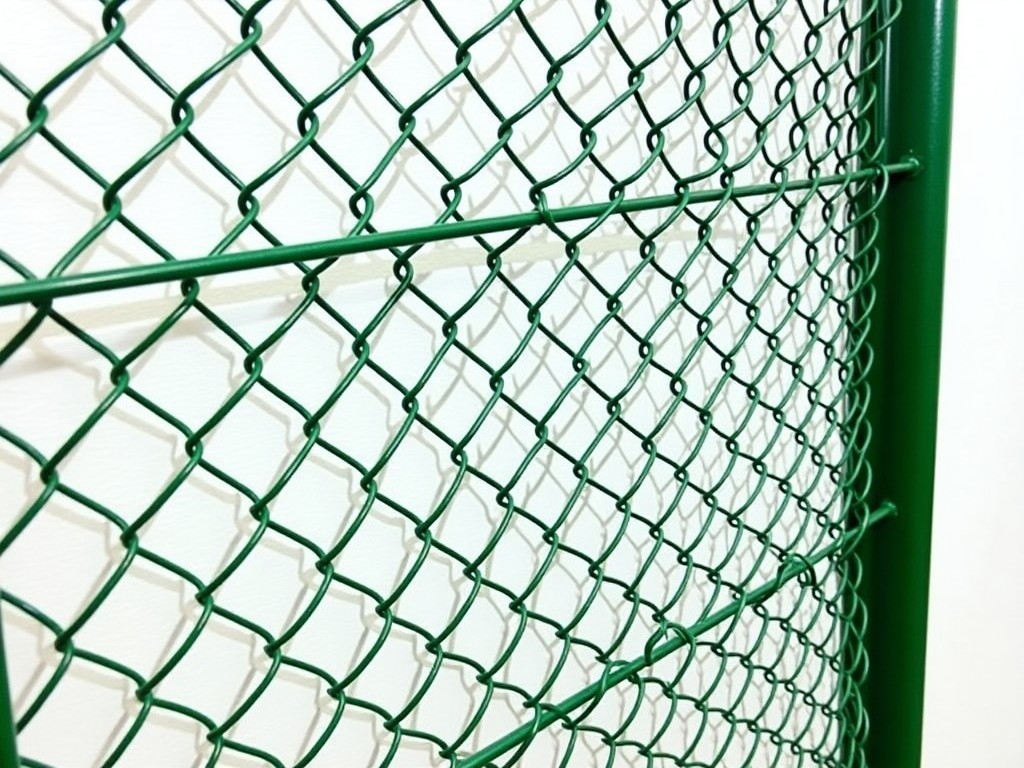
Hog wire fence panels are welded wire mesh assemblies designed for agricultural, livestock, and perimeter containment applications. The base material consists of high-tensile steel wire, typically arranged in a rectangular grid pattern with 2-inch by 4-inch openings. This geometry provides structural rigidity while allowing visibility and airflow. Powder coating is applied as a protective finish to enhance corrosion resistance and extend service life in outdoor environments.
Material Construction and Coating Process
The wire core is manufactured from cold-drawn steel with a minimum tensile strength of 65,000 psi, ensuring resistance to deformation under livestock pressure or impact. Welding occurs at each intersection using electric resistance welding, creating joints with shear strength exceeding 300 lbs per weld. Prior to coating, panels undergo alkaline cleaning and zinc phosphate pretreatment to promote adhesion.
Powder coating is applied via electrostatic spray, followed by curing at 400°F for 10–15 minutes. The resulting film thickness averages 2–3 mils (50–75 microns), providing uniform coverage on all surfaces, including weld points and edges. This process eliminates runs, drips, and thin spots common in liquid painting, while avoiding VOC emissions.
Performance Characteristics
Corrosion resistance is evaluated through salt spray testing (ASTM B117), where powder coated hog wire panels typically exceed 500 hours before red rust appears on 10% of the surface. UV stability is maintained through the use of polyester-based powders, which retain color and gloss for 5–7 years in direct sunlight without chalking or cracking.
Impact resistance is measured by dropping a 5-lb steel ball from 3 feet onto the panel surface; coated panels show no cracking or delamination at the welds. Flexibility testing involves bending a 12-inch wire segment 180 degrees without coating failure, confirming the powder’s ability to withstand substrate movement.
Standard Dimensions and Configurations
Panels are commonly fabricated in 4-foot and 5-foot heights, with lengths of 8, 10, or 12 feet to match standard post spacing. Wire gauges range from 12.5 to 14 gauge (0.099–0.080 inch diameter), selected based on load requirements and animal size. Heavier gauges are used for hog containment, while lighter variants suit small livestock or garden barriers.
Custom dimensions are available upon request, including non-standard heights, lengths, and mesh apertures (e.g., 1-inch by 2-inch for small animal exclusion). Panel ends can be finished with flared wires, bent-over edges, or left straight for integration into post-and-rail systems.
Comparison of Coating Types
| Property | Powder Coating | Hot-Dip Galvanizing | Vinyl Coating |
|---|---|---|---|
| Film Thickness | 2–3 mils | 1.5–2.5 mils (Zn) | 10–15 mils |
| UV Resistance | Good (polyester) | Fair (Zn degrades) | Excellent |
| Impact Resistance | Excellent | Good | Fair (can crack) |
| Edge Coverage | Uniform | Uniform | Poor (thin at edges) |
| Typical Use Case | Agricultural, perimeter | Industrial, marine | Decorative, low-impact |
Applications in Livestock and Perimeter Systems
In swine operations, powder coated hog wire panels are used for pen dividers, alleyways, and exterior fencing where durability and animal safety are critical. The smooth coating reduces abrasion on livestock hides compared to bare or galvanized wire, while the open mesh allows for visual monitoring and ventilation. Panels are often mounted between steel or wood posts using U-bolts, clips, or welded brackets.
Beyond livestock, these panels serve as erosion control barriers on slopes, tree protection guards in nurseries, and security fencing around equipment yards. The coating’s resistance to fertilizer chemicals, urine, and cleaning agents makes it suitable for washdown areas and feed storage perimeters where corrosion accelerates on untreated steel.
Installation and Compatibility
Panels are designed for post-center spacing of 8 feet, aligning with standard agricultural post layouts. Installation requires no specialized tools—common tools include post drivers, wrenches, and wire cutters for minor adjustments. The powder coating does not interfere with standard fastening methods; U-bolts and T-post clips maintain full holding strength without coating damage.
When used with wooden posts, a plastic or rubber isolator is recommended between the panel and post to prevent moisture trapping and crevice corrosion. For steel posts, direct contact is acceptable due to the coating’s dielectric properties, which minimize galvanic coupling. Panels can be stacked or overlapped at corners to create continuous barriers without gaps.
Quality Control and Testing
Each production lot undergoes visual inspection for coating uniformity, weld integrity, and dimensional accuracy. Adhesion is verified using ASTM D3359 tape test, with a minimum rating of 4B required for acceptance. Hardness is measured via pencil hardness test, typically achieving 2H–3H, indicating sufficient resistance to scratching during handling and installation.
Dimensional tolerances are maintained within ±0.5 inch for length and height, and wire spacing varies no more than ±0.1 inch from nominal. Packaging includes plastic corner protectors and steel banding to prevent deformation during transit. Panels are stacked flat or on edge, depending on length, to avoid bending stress.
Customization and Ordering
Customization options include wire gauge, mesh size, panel dimensions, coating color (standard: black, brown, green; custom RAL colors available), and edge treatment. Coating color selection affects UV stability—darker pigments may fade faster than lighter ones in intense sunlight, though all polyester powders meet minimum 5-year color retention.
To receive a quotation, buyers should provide: required quantity, panel dimensions (height × length), wire gauge, mesh opening, coating color, and any special end finishes. Lead time typically ranges from 2–4 weeks for standard configurations, with longer times for custom tooling or non-standard colors. Samples are available upon request for validation testing.
For technical specifications, custom requests, or project consultation, contact our engineering team.
Request a Quote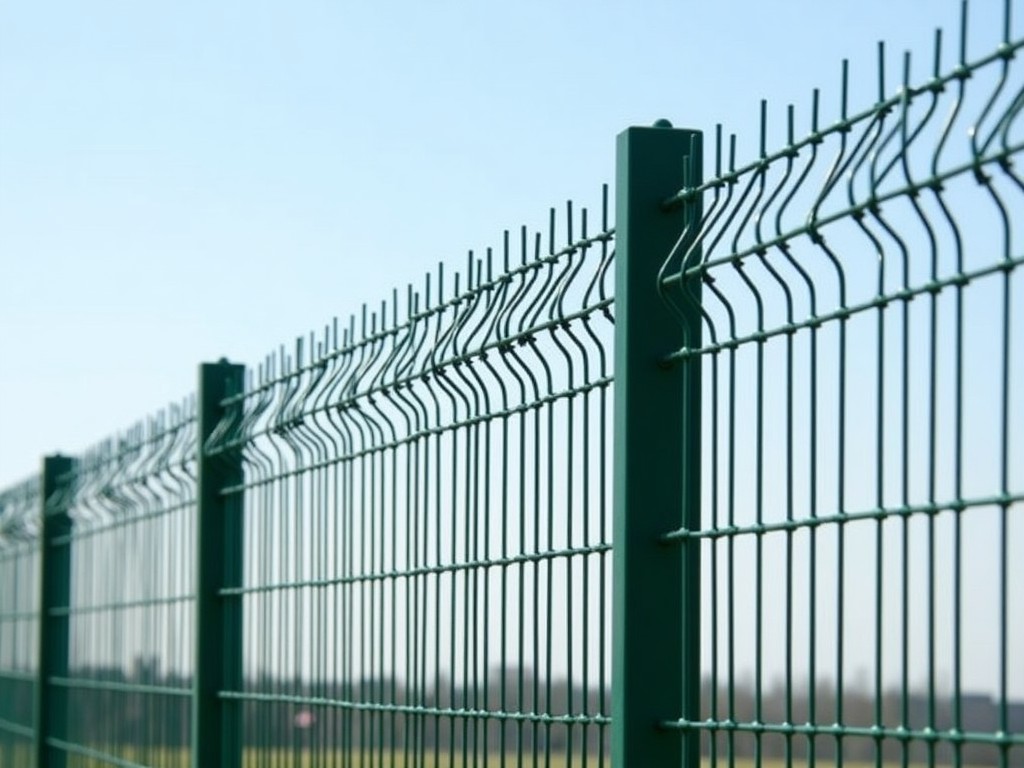
Product Categories


Send Inquiry
If you are interested in our products, leave your information here and we will be in touch shortly.