Ranch Rail Fence With Wire Factory Price
Ranch rail fences with integrated wire are engineered for livestock containment and perimeter security in agricultural and rural settings. This system combines horizontal wooden or composite rails
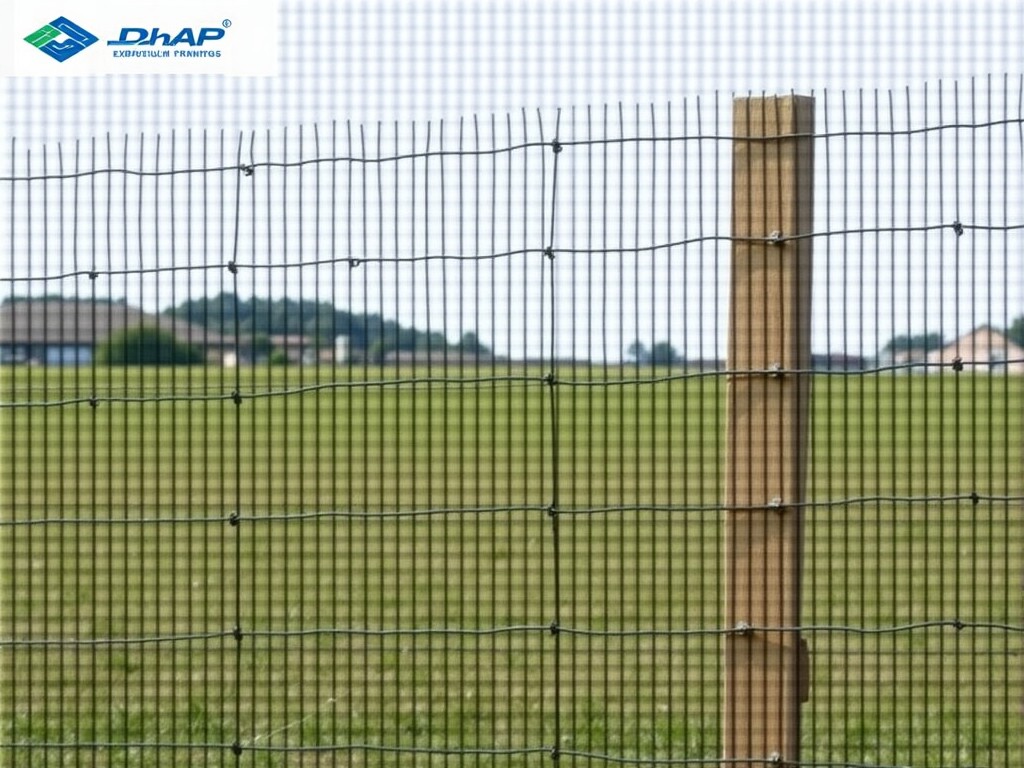
Ranch Rail Fence with Wire – Factory Direct Pricing
Ranch rail fences with integrated wire are engineered for livestock containment and perimeter security in agricultural and rural settings. This system combines horizontal wooden or composite rails with welded or woven wire mesh to prevent animal escape while maintaining visibility and structural integrity. Factory pricing reflects standardized production runs, material sourcing efficiencies, and reduced intermediary costs, making it suitable for large-scale installations where budget predictability is critical.
System Design and Load Performance
The structural performance of a ranch rail fence with wire depends on rail spacing, post embedment depth, and wire tension capacity. Standard configurations use 8-foot post spacing with rails positioned at 20", 40", and 60" above grade to resist horizontal forces from livestock pressure. The wire component—typically 12.5-gauge galvanized steel with 2" x 4" mesh openings—is tensioned to 150–200 lbs to prevent sagging and maintain barrier effectiveness under dynamic loads.
Post selection is critical for lateral stability. Treated southern yellow pine posts (nominal 6" x 6") are commonly embedded 36–42 inches deep in concrete or compacted soil to withstand overturning moments. For corrosive environments, galvanized steel posts with a minimum wall thickness of 0.120" are available, offering comparable stiffness with improved longevity. Rail-to-post connections use hot-dipped galvanized brackets or through-bolts rated for shear loads exceeding 800 lbs per connection.
Material Specifications and Durability Factors
Rail materials are selected based on environmental exposure and expected service life. Pressure-treated pine (ACQ or CA-B) provides 15–20 year ground-contact durability in temperate climates. In high-moisture or termite-prone regions, composite rails made from recycled polyethylene and wood fiber offer zero rot, insect resistance, and minimal maintenance, though with a higher initial cost and lower modulus of elasticity (~400,000 psi vs. 1.4M psi for wood).
Wire corrosion resistance is determined by coating type and thickness. Class 3 galvanization (0.80 oz/ft² zinc) is standard for general use, providing 20+ years of service in non-industrial atmospheres. For coastal or high-humidity zones, Galfan-coated (zinc-aluminum) or PVC-over-galvanized wire extends lifespan to 30+ years by reducing oxidation rates. All wire undergoes tensile testing to confirm minimum break strength of 800 lbs per strand before shipment.
Customization Options and Project Scalability
Factory pricing accommodates standard configurations, but dimensions and materials are adjustable per project requirements. Rail height can be increased to 72" for larger livestock, with additional intermediate rails added to maintain spacing under 12". Post spacing may be reduced to 6 feet in high-wind areas or where soil bearing capacity is low, increasing material use by ~33% but improving deflection limits.
Wire mesh aperture can be modified to 2" x 2" for small animal containment or 4" x 4" for reduced material cost in large pasture applications. Gate options include single or double swing designs with matching rail and wire infill, equipped with self-latching hinges and drop bolts. All customizations are quoted based on material weight, fabrication time, and surface treatment needs—no hidden fees or arbitrary markups.
Quality Control and Factory Tolerances
Dimensional consistency is maintained through CNC-guided rail cutting and automated wire tensioning rails. Rail length tolerance is ±1/8" over 8-foot sections to ensure seamless alignment during installation. Post hole spacing is jig-drilled to ±1/16" accuracy, minimizing on-site adjustments. Wire is tensioned using calibrated winches with load cells to ensure uniform 180 lb ±10% force across all strands, preventing weak points.
Surface preparation follows SSPC-SP2 hand tool cleaning for steel components before coating application. Galvanized coatings are verified via magnetic thickness gauges per ASTM A90/A123, with minimum 2.0 mil average zinc coating. Composite rails undergo UV stability testing (ASTM G154) and are marked with production dates for traceability. Every batch includes a mill test report for wire and a treatment certificate for wood components.
Installation Considerations and Site Preparation
Proper installation begins with accurate staking and grading. Posts must be set plumb within ±1.5° and aligned to a string line to prevent cumulative misalignment. In rocky substrates, post holes are pre-drilled with augers to 80% depth before tamping; in sandy soils, wider holes (12" diameter) with gravel backfill improve lateral resistance. Rail installation follows a bottom-up sequence to avoid sagging, with temporary bracing used until wire tensioning is complete.
Wire tensioning is performed after all rails are secured, using a come-along or hydraulic tensioner at midpoint between posts. Tension is measured at each post with a wire gauge; adjustments are made in 10-lb increments until uniform. Over-tensioning (>250 lbs) risks rail deformation or post pullout, while under-tensioning (<120 lbs) allows sagging that compromises containment. Final inspection includes visual walk-through and probe testing for loose fasteners or damaged coatings.
Cost Factors and Value Engineering
Factory pricing is influenced by raw material costs, production volume, and finish specifications. Pressure-treated pine rails average $2.10–$2.80 per linear foot in bulk, while composite rails range from $3.50–$4.70/lf. Galvanized wire at 12.5-gauge runs $0.18–$0.25/ft, with Galfan or PVC options adding 20–40%. Post costs vary: treated pine 6x6x8' at $12–$15/unit, galvanized steel posts at $22–$28/unit based on wall thickness and coating class.
Labor savings come from prefabricated rail assemblies and pre-drilled post holes—available upon request—which reduce field cutting and alignment time by up to 30%. For projects over 1,000 linear feet, volume discounts apply to wire and rail, while post pricing remains linear. Shipping is optimized via flatbed stacking, with wire rolls coiled to 500-ft lengths and rails bundled in 20-ft increments to minimize handling damage.
Long-term value is assessed through lifecycle cost analysis. Although composite rails have a higher upfront cost, their zero maintenance (no painting, staining, or replacement) can offset the difference within 7–10 years in harsh environments. Galvanized steel posts eliminate rot-related failures, reducing total ownership cost by an estimated 25% over 20 years compared to wood in wet climates. All options are quoted with clear lead times and FOB factory terms.
Typical Configuration Table
| Component | Standard Specification | Optional Upgrade | Impact on Performance/Cost |
|---|---|---|---|
| Rail Material | Pressure-treated pine (ACQ) | Recycled composite (HDPE/wood) | +65% material cost; 0% maintenance; -60% stiffness |
| Post Type | Treated pine 6x6x8' | Galvanized steel (0.120" wall) | +80% cost; 2x lifespan in wet soil; equal stiffness |
| Wire Gauge/Coating | 12.5-galvanized, Class 3 | 12.5-Galfan or PVC-coated | +25–40% cost; 25–50% longer life in humid/saline zones |
| Mesh Opening | 2" x 4" | 2" x 2" or 4" x 4" | 2"x2": +15% wire, small animal control; 4"x4": -20% wire, large pasture only |
| Rail Height | 3 rails @ 20", 40", 60" | 4 rails @ 18", 36", 54", 72" | +25% rail material; improved containment for horses/cattle |

Product Categories


Send Inquiry
If you are interested in our products, leave your information here and we will be in touch shortly.