Temporary Fence Panels For Sale
Temporary fence panels are engineered structures designed for rapid deployment, secure containment, and repeated reuse across construction sites, public events, and industrial facilities. Unlike
Temporary Fence Panels for Sale
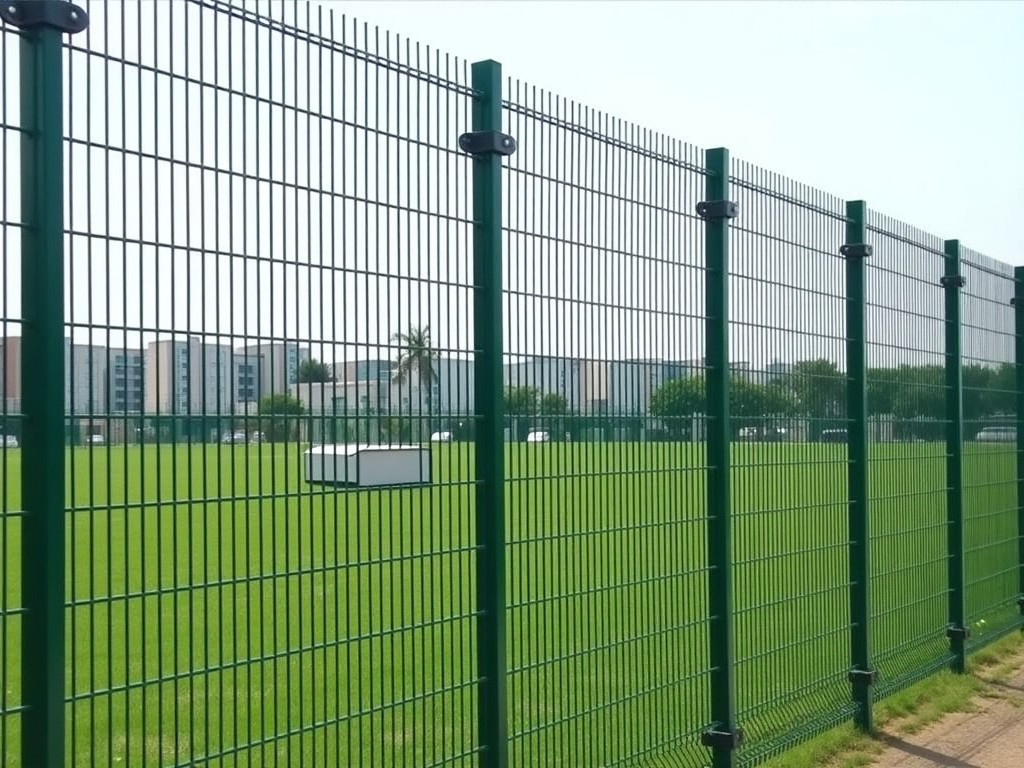
Temporary fence panels are engineered structures designed for rapid deployment, secure containment, and repeated reuse across construction sites, public events, and industrial facilities. Unlike permanent barriers, they prioritize modularity, impact resistance, and ease of relocation without compromising safety or structural integrity under dynamic loads.
Core Design Specifications
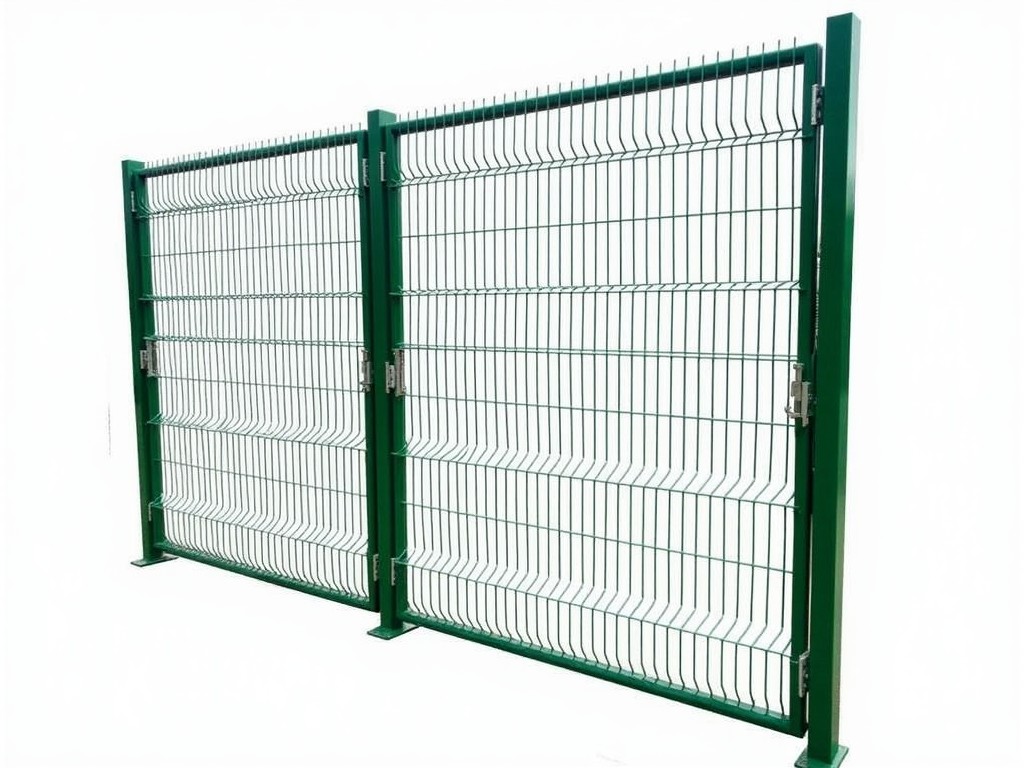
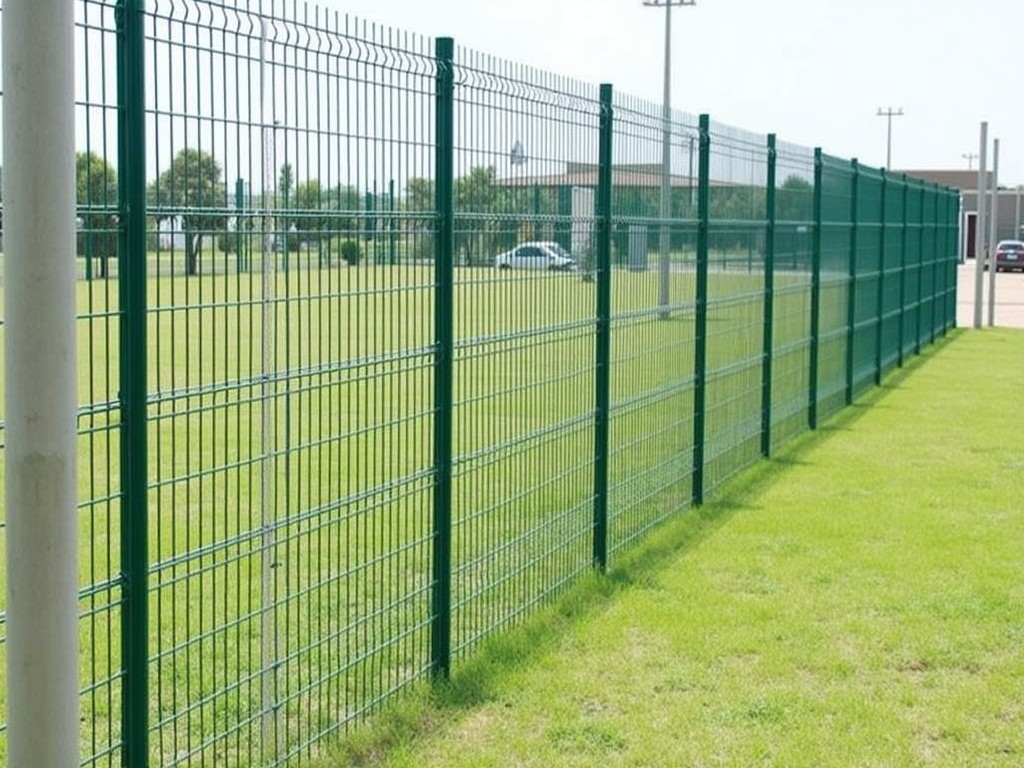
Standard temporary fence panels consist of a welded steel mesh infill within a tubular steel frame, typically measuring 2.1 meters in height and 2.4 meters in width. The mesh uses 4mm diameter wire woven into 50mm x 50mm or 75mm x 50mm apertures, providing visibility while resisting climbing and projectile penetration. Frame tubing is commonly 32mm or 38mm outer diameter with 1.8mm to 2.5mm wall thickness, selected based on anticipated wind loads and impact requirements.
Panels connect via forged steel clamps or pin-and-lug systems that allow angular adjustment for uneven terrain while maintaining lateral stability. Base systems include weighted concrete feet (typically 20-25kg each) or spiked stands for soft ground, engineered to resist overturning moments from wind gusts up to 110 km/h when properly installed. All structural welds undergo full penetration inspection to ensure fatigue resistance during repeated handling cycles.
Material Composition and Treatment
Primary structural components are manufactured from hot-rolled ASTM A500 Grade B carbon steel tubing, offering a minimum yield strength of 315 MPa and tensile strength of 400 MPa. Mesh wires are cold-drawn low-carbon steel (ASTM A641) with a typical tensile range of 350-550 MPa, galvanized post-weaving to achieve a minimum zinc coating of 275 g/m² (Z275) per ASTM A123.
Alternative coatings include hot-dip galvanizing after fabrication (providing edge protection) or powder coating over galvanized substrate for enhanced corrosion resistance in coastal or industrial environments. For high-abrasion applications, some panels feature abrasion-resistant mesh alloys or UV-stabilized polymer coatings to extend service life beyond 5 years under continuous outdoor exposure.
Load Performance and Stability
Design calculations assume a basic wind pressure of 0.6 kN/m² acting on the panel’s projected area, resulting in a total lateral force of approximately 300 N per panel at 2.1m height. This is counteracted by the base system’s weight and ground penetration, with safety factors of 1.5 applied to overturning and sliding resistance. Independent testing confirms stability when base weights exceed 18kg per panel leg under 100 km/h winds.
Impact resistance is evaluated through drop tests simulating accidental vehicle contact; panels are designed to absorb 500J of kinetic energy without permanent frame deformation or mesh separation. Connection hardware retains 80% of its initial shear capacity after 500 assembly/disassembly cycles, verified through accelerated wear testing. These performance metrics inform rental fleet maintenance schedules and purchase decisions for long-term use.
Customization Options
Panel dimensions can be adjusted within manufacturing constraints: heights from 1.2m to 2.5m and widths from 1.8m to 3.0m are feasible by altering frame tubing length and mesh panel count. Custom aperture sizes (e.g., 100mm x 50mm for increased visibility or 25mm x 25mm for debris containment) require corresponding wire diameter adjustments to maintain structural equivalence.
Frame geometry modifications include single-double tube configurations for increased bending resistance or integrated toe boards (150mm height) to prevent small-object passage. Base systems can be customized with stackable concrete weights, rubber-coated feet for indoor use, or ground anchors for sandy or frozen substrates. All customizations undergo engineering review to ensure load path continuity and compliance with local temporary structure guidelines.
Quality Control and Testing
Manufacturing quality control begins with incoming material certification, verifying steel grade, wall thickness, and zinc coating weight via X-ray fluorescence. Dimensional checks occur at laser-cutting and bending stages, with tolerances held to ±2mm on critical interfaces. Weld procedures are qualified per ASME Section IX, and 10% of production welds undergo magnetic particle inspection for surface-breaking defects.
Finished panels are subjected to proof load testing at 1.5x design wind load, with deflection limits set to L/100 to prevent permanent set. Cycle testing simulates 1,000 rental deployments, measuring connection wear and coating adhesion. Test reports and material traceability documentation are available upon request, supporting procurement audits and project safety submissions.
Applications Across Industries
In construction, temporary fence panels secure perimeter boundaries, segregate pedestrian walkways from active work zones, and protect adjacent properties from falling debris—functions governed by OSHA 1926.502 and local municipal codes. Their reusability reduces lifecycle costs compared to single-use plastic barriers, particularly on multi-phase projects lasting 6-24 months.
For public events, panels manage crowd flow, establish VIP perimeters, and shield equipment from unauthorized access. The open mesh design satisfies fire marshal requirements for visibility and ventilation while deterring climbing through non-slip surface treatments and clamp positioning. Event organizers select panel heights based on risk assessments, with 2.1m being standard for concerts and 2.4m for high-security venues.
Industrial facilities deploy these panels during plant turnarounds to isolate hazardous areas, contain spills, or create temporary storage zones. Chemical plants prefer polyethylene-coated versions for corrosion resistance, while steel mills opt for abrasion-resistant mesh to withstand slag splash. In all cases, the ability to rapidly reconfigure the barrier system supports dynamic operational needs without permanent site alteration.
Packaging and Logistics
Panels are typically bundled in stacks of 10-20 units using steel or polyester strapping, with corner protectors to prevent frame damage during transit. Standard bundles measure 2.4m (L) x 0.5m (W) x 1.1m (H), optimized for containerization and truck loading. Each bundle includes matching base units and connection hardware in segregated compartments to streamline field assembly.
For export shipments, panels undergo additional edge protection and moisture-barrier wrapping to prevent coating damage during ocean transit. Packaging complies with ISPM 15 for wooden pallets (when used) and includes shock indicators to detect mishandling. Delivery lead times vary from 2-4 weeks for stock configurations to 6-8 weeks for customized orders, depending on material availability and production scheduling.
| Parameter | Typical Range | Notes |
|---|---|---|
| Panel Height | 1.2m - 2.5m | Customizable in 100mm increments |
| Panel Width | 1.8m - 3.0m | Standard: 2.4m |
| Mesh Wire Diameter | 3.0mm - 5.0mm | Aperture size dependent |
| Frame Tubing OD | 25mm - 42mm | Wall thickness: 1.2mm - 3.0mm |
| Base Weight (per leg) | 15kg - 30kg | Concrete or recycled rubber |
| Wind Load Resistance | Up to 110 km/h | With proper base installation |
| Galvanizing Coating | Z275 or higher | Hot-dip, min. 275 g/m² |
Selecting temporary fence panels requires evaluating site-specific conditions, anticipated duration of use, and handling frequency. Engage with suppliers early in project planning to confirm load calculations, accessory compatibility, and compliance with local regulations. Request material test certificates, welding procedure specifications, and cycle test data to validate long-term performance claims.
Product Categories


Send Inquiry
If you are interested in our products, leave your information here and we will be in touch shortly.