Temporary Fence Panel Stands Factory Price
Temporary fence panel stands are engineered components designed to securely support modular fencing systems without permanent installation. Unlike ground stakes or concrete footings, these stands
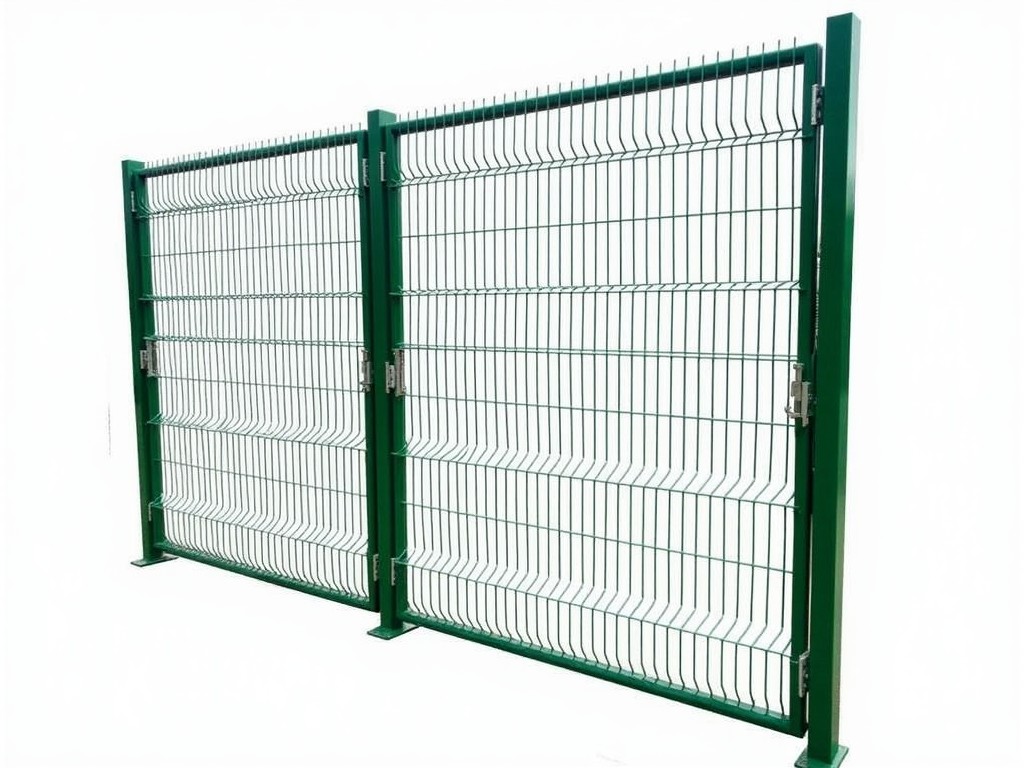
Temporary Fence Panel Stands – Factory Direct Pricing
Temporary fence panel stands are engineered components designed to securely support modular fencing systems without permanent installation. Unlike ground stakes or concrete footings, these stands provide vertical load transfer and lateral stability through weighted bases and mechanical interlocks, enabling rapid deployment on paved, compacted, or sensitive surfaces where excavation is prohibited or impractical.
The primary function of a fence stand is to resist overturning moments caused by wind load, impact, or tension from the fence fabric. Design standards typically reference ASCE 7 for wind pressure calculations, with stand geometry optimized to lower the center of gravity and increase the resisting moment arm. Base dimensions, material density, and connection geometry are interdependent variables that determine stability under specified load cases.
Engineering Characteristics of Factory-Produced Stands
Factory-produced temporary fence stands are manufactured from raw materials with traceable mill certifications, ensuring consistent mechanical properties. Common base materials include recycled HDPE (high-density polyethylene) for corrosion resistance and UV stability, or steel with hot-dip galvanization per ASTM A123 for impact durability. The choice between polymer and steel affects weight, lifecycle cost, and environmental performance.
HDPE stands typically range from 15 to 25 kg per unit, depending on base footprint and reinforcement ribs. Steel stands, while heavier (20–35 kg), offer higher point-load resistance at connection interfaces. Both types are designed to interface with standard 32mm or 42mm diameter fence tube via a dual-locking collar system that prevents rotational slip and vertical displacement under cyclic loading.
Manufacturing tolerances are controlled to ±2mm on critical dimensions to ensure repeatable fit with fence panels. Mold design for HDPE stands incorporates draft angles and uniform wall thickness to minimize sink marks and warping. Steel stands undergo robotic welding with real-time penetration monitoring to maintain joint integrity under fatigue loading.
Load Performance and Design Basis
Stability is verified through static overturning analysis where the resisting moment (base weight × lever arm) must exceed the overturning moment (wind force × height of force application). For a typical 2.1m high fence panel with 1.2m width, a 100km/h wind speed generates approximately 380N of lateral force at the midpoint, requiring a resisting moment of at least 400Nm for a safety factor of 1.5.
Factory pricing reflects material efficiency and production volume. HDPE stands benefit from lower material density and high-volume injection molding cycles, reducing unit cost at scale. Steel stands involve higher material and processing costs but may be preferred in high-abuse environments where impact resistance outweighs weight considerations.
Customization options include base shape (square, circular, or U-shaped), connection height adjustment (±50mm), and integration of ballast receptacles for additional sand or water filling. These modifications are quoted based on tooling changes and material volume adjustments, not as standard adder fees.
Typical Specifications Table
| Parameter | HDPE Stand (Typical) | Steel Stand (Typical) |
|---|---|---|
| Base Dimensions | 400mm x 400mm x 80mm | 350mm x 350mm x 60mm (steel plate) |
| Unit Weight | 20 kg | 28 kg |
| Connection Type | Dual-lock collar for 32/42mm tube | Dual-lock collar for 32/42mm tube |
| UV Stability (HDPE) | Minimum 2000 hrs ASTM G154 | N/A |
| Coating (Steel) | N/A | Hot-dip galvanized, 60µm avg. |
| Operating Temp Range | -20°C to +60°C | -30°C to +80°C |
Applications Where Stands Provide Technical Advantage
Event venues such as concert grounds and sports complexes require fencing that can be installed and removed within hours without damaging asphalt or turf. Temporary fence stands eliminate the need for ground penetration, preserving surface integrity while meeting safety barrier requirements for crowd control and perimeter delineation.
Urban construction sites often operate above subways, utilities, or archaeological layers where drilling is restricted. Stands provide a non-invasive solution that complies with municipal codes prohibiting ground disturbance. Their portability allows repositioning as work zones shift, reducing labor and equipment costs associated with reinstalling anchored systems.
In disaster response scenarios, rapid deployment on uneven or debris-covered ground is critical. Stands with adjustable height collars accommodate slope variations up to 5 degrees without shimming, maintaining fence alignment and structural continuity. The ability to fill bases with local ballast (sand, gravel) further enhances adaptability where pre-weighted units are logistically impractical.
Quality Control and Manufacturing Consistency
Factory production implements statistical process control (SPC) on key dimensions such as collar inner diameter and base flatness. Incoming resin batches are tested for melt flow index and density before molding. Steel components undergo visual and dimensional inspection post-galvanization to verify coating continuity and absence of sharp edges.
Each stand is subjected to a functional test where a 32mm tube is inserted and torque-tested to 15Nm to confirm lock engagement. Random samples undergo 50-cycle load reversal testing to simulate wind-induced vibration. Documentation of test results is available upon request for project validation.
Traceability is maintained via batch codes laser-etched or molded into the base, linking each unit to material lot, machine settings, and inspection records. This supports recall readiness and quality audits without relying on external labeling that may degrade in outdoor exposure.
Procurement Considerations for Factory Pricing
Factory pricing is quoted EXW (Ex Works) or FOB port, based on incoterms agreed at order confirmation. Volume discounts apply at standard increments (e.g., 100, 500, 1000 units) due to reduced setup time and material handling efficiency. Tooling amortization is factored into unit cost for custom geometries but waived for standard designs.
Lead time for stock HDPE stands is typically 7–10 business days after payment confirmation. Custom colors or steel variants may extend lead time to 15–20 days due to material sourcing or coating scheduling. Samples are available at cost, with freight collect, and are refundable upon placement of a formal purchase order.
Payment terms are negotiable based on order history and credit assessment. For new customers, 30% T/T in advance and 70% against copy of BL is standard. Irrevocable L/C at sight is accepted for orders exceeding USD 10,000. All pricing excludes taxes, import duties, and destination handling unless explicitly included in the quotation.
Product Categories


Send Inquiry
If you are interested in our products, leave your information here and we will be in touch shortly.