Temporary Fencing Cost Per Foot Factory
Understanding the cost per foot of temporary fencing requires more than just a price quote—it involves evaluating material composition, structural design, installation requirements, and lifecycle
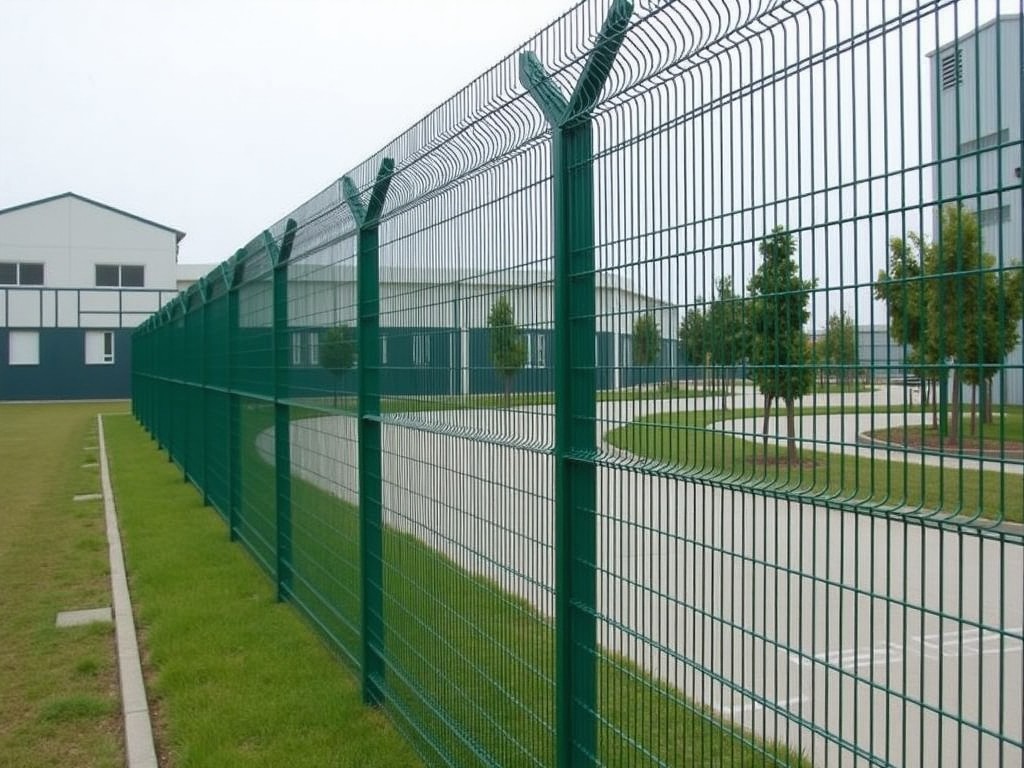
Temporary Fencing Cost Per Foot: Factory Direct Pricing and Specifications
Understanding the cost per foot of temporary fencing requires more than just a price quote—it involves evaluating material composition, structural design, installation requirements, and lifecycle value. This page breaks down the technical and economic factors that influence pricing from the factory source, enabling procurement teams to make informed decisions based on project-specific demands rather than generic market averages.
Material Composition and Structural Design
The base cost per foot of temporary fencing is primarily determined by the panel’s frame material, infill type, and connection system. Standard factory-produced panels typically use hot-dip galvanized steel tubing with a minimum wall thickness of 1.2mm for vertical posts and 1.0mm for horizontal rails. The infill is most commonly welded wire mesh with a 2" x 4" aperture and 8-gauge wire diameter, providing a balance of visibility, wind resistance, and impact tolerance. Panels are designed to interlock via male/female tube couplers at each end, eliminating the need for separate clamps or tools during assembly.
Alternative configurations include PVC-coated steel for enhanced corrosion resistance in coastal or humid environments, or mesh with smaller apertures (1" x 1") for high-security zones where climb resistance is critical. These modifications increase material cost by approximately 15–30% per foot but extend service life in aggressive conditions. The factory maintains strict tolerances on tube straightness (±1.5mm over 2m) and weld penetration depth (minimum 70% of material thickness) to ensure consistent panel alignment and load distribution during use.
Cost Drivers Beyond Raw Materials
While material costs form the foundation, the final price per foot reflects several indirect but significant factors. Panel length directly affects unit economics—standard 6-foot-wide panels distribute fixed costs (welding, galvanizing, packaging) over more linear footage than 4-foot or 8-foot variants, making 6ft the most cost-efficient width for most applications. Custom lengths require additional setup time on roll-forming lines and may incur a 10–20% surcharge unless ordered in volumes exceeding 500 linear feet.
Surface treatment is another key cost variable. Hot-dip galvanizing per ASTM A123 adds approximately $0.80–$1.20 per foot compared to pre-galvanized steel, but provides 2–3x longer service life in outdoor environments. Powder coating, while offering color customization, adds $1.50–$2.50 per foot and is typically reserved for urban or aesthetic-sensitive projects. The factory quotes galvanizing thickness in microns (typically 55–85µm) rather than vague terms like “heavy-duty,” allowing buyers to compare protection levels objectively.
Logistics and handling also influence effective cost. Panels are bundled in stacks of 10–15 units with plastic corner protectors and stretch-wrapped for transit. A standard 40’ container holds approximately 1,200 linear feet of 6ft panels. Factory-direct pricing excludes third-party logistics; buyers arranging their own freight typically save 8–15% versus quoted delivered rates, though this requires familiarity with hazardous goods declarations for bundled steel (though non-hazardous, proper blocking and bracing are still required).
Typical Price Ranges by Specification
| Specification | Cost Per Foot (Factory Direct) | Notes |
|---|---|---|
| 6ft wide, 1.2mm frame, 8ga mesh, HDG | $4.20–$5.00 | Most common configuration for construction sites |
| 6ft wide, 1.5mm frame, 6ga mesh, HDG | $5.80–$6.80 | High-wind or impact-prone zones (e.g., highway work) |
| 6ft wide, 1.2mm frame, PVC-coated mesh | $5.00–$6.00 | Coastal areas or chemical exposure |
| 8ft wide, 1.2mm frame, 8ga mesh, HDG | $4.80–$5.70 | Fewer posts per linear foot reduces installation time |
| Custom length (4–10ft), HDG | +10–20% to base rate | Applies per panel; volume discounts available |
Installation and Lifecycle Cost Considerations
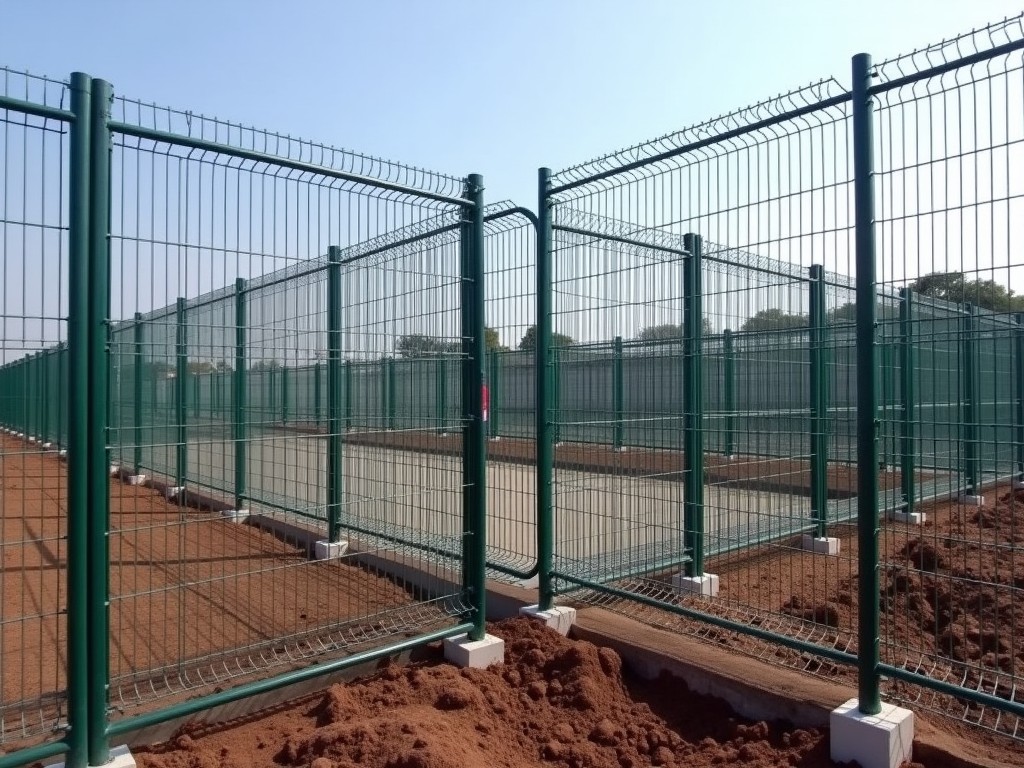
The purchase price per foot represents only a portion of total cost of ownership. Installation labor averages $0.50–$0.80 per foot for experienced crews using standard tools (level, mallet, safety gloves), assuming flat terrain and pre-staked ground. Uneven surfaces, rocky soil, or asphalt mounting increase labor by 30–50% due to the need for base plates or concrete anchors. The factory provides optional base plates (6"x6"x¼" steel) at $1.20 per unit, which add $0.20 per foot when used with 6ft panels.
Reusability significantly affects long-term value. A properly maintained galvanized panel system can withstand 15–20+ deployment cycles before showing significant wear at coupling points or mesh fatigue. Factory inspections recommend checking weld integrity and galvanization coverage after every 5 uses. Panels stored in dry, ventilated conditions with protective sleeves between stacks show minimal degradation. The cost per foot amortized over 20 uses drops below $0.25 for standard configurations, making temporary fencing one of the most economical perimeter solutions for phased projects.
Damage rates average 3–5% per deployment cycle in rigorous environments, primarily from vehicle impact or improper stacking. The factory designs panels with sacrificial rail ends that deform predictably to absorb energy while preserving the coupling mechanism—this feature is quantified in internal drop-test reports (available upon request) showing 70% energy dissipation at 5mph impacts. Buyers should factor in a 5% spare parts allowance for couplers and end caps when calculating total project cost.
Factory Quoting and Customization Process
Accurate pricing requires specific project details beyond linear footage. The factory requests: panel height (typically 4ft, 6ft, or 8ft), desired wall thickness and mesh gauge, surface treatment preference, total linear footage, delivery timeline, and destination port or site address. For projects requiring non-standard heights (e.g., 5ft or 7ft), tooling adjustments may apply, though these are amortized over orders exceeding 300 linear feet. Custom colors via powder coating require Pantone or RAL specifications and add a 7–10 day lead time.
Volume pricing tiers are structured as follows: 0–499 LF (base rate), 500–1,999 LF (–5%), 2,000–4,999 LF (–10%), 5,000+ LF (–15%). These tiers apply to the base material cost before logistics or accessories. The factory provides formal quotes with itemized breakdowns—material, treatment, length adjustment, volume discount, and packaging—valid for 30 days. All quotes include material test certificates (MTC) for steel composition and galvanizing thickness upon shipment.
Samples are available for validation: customers receive one full panel (6ft x 6ft) with specified finish for evaluation. Sample preparation takes 3–5 business days and is charged at 1.5x the unit cost, credited against the first order exceeding 500 LF. This allows buyers to verify weld quality, coating uniformity, and coupling fit before committing to volume production—reducing risk in long-term procurement decisions.
For detailed specifications, custom quotes, or sample requests, contact our technical sales team to discuss your project’s unique requirements.

Product Categories


Send Inquiry
If you are interested in our products, leave your information here and we will be in touch shortly.