Temporary Fencing For Building Sites
Temporary fencing serves as a critical safety and security barrier on construction sites, designed to control access, protect the public, and delineate work zones. Unlike permanent perimeter
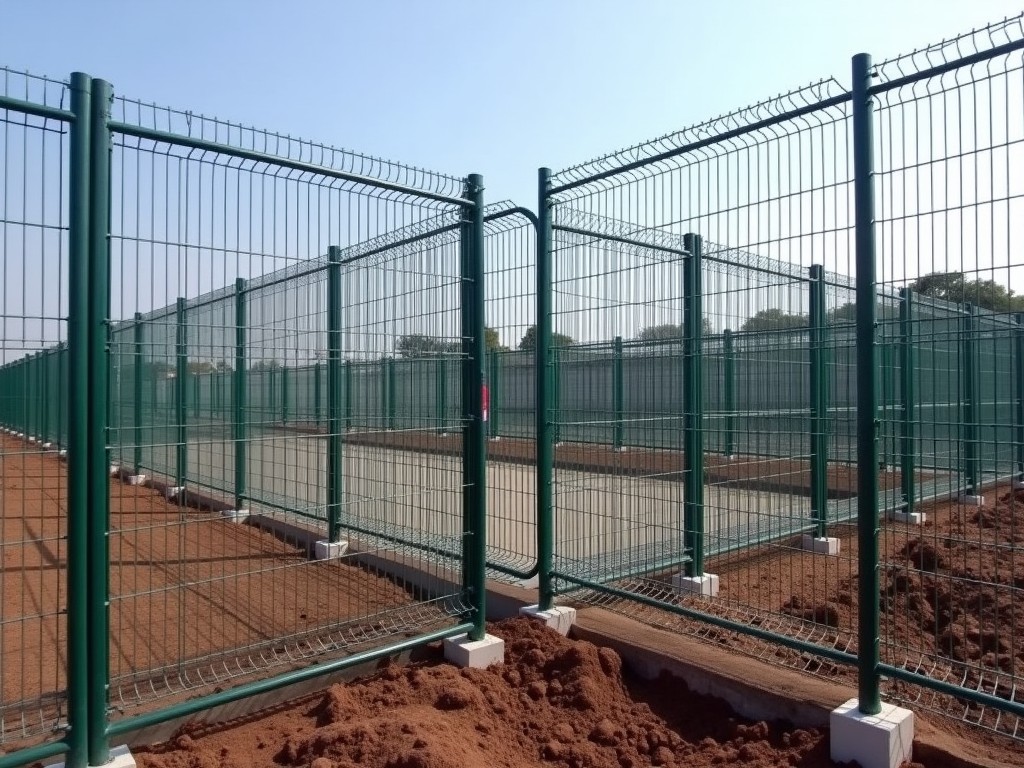
Temporary Fencing for Building Sites
Temporary fencing serves as a critical safety and security barrier on construction sites, designed to control access, protect the public, and delineate work zones. Unlike permanent perimeter solutions, these systems must balance rapid deployment with structural integrity to withstand environmental loads and incidental impacts during short-term use. Understanding the engineering trade-offs between material selection, connection methods, and foundation stability is essential for selecting a system that minimizes risk without impeding workflow.
Key Design Considerations for Site Safety Compliance
Regulatory frameworks such as OSHA 1926.502 and local municipal codes mandate specific performance criteria for temporary barriers, including minimum height requirements (typically 42 inches for guardrail systems) and load resistance (e.g., 200 lbs outward or downward force). Compliance hinges on the fence’s ability to maintain structural continuity under dynamic conditions—wind gusts, vehicle bumping, or crowd pressure—without creating gaps or collapse hazards. Engineers must evaluate not only the panel’s inherent strength but also the reliability of its coupling mechanism under repeated installation cycles.
Foundation stability presents a distinct challenge since temporary fencing cannot rely on concrete footings. Instead, systems use weighted bases, ground spikes, or ballast cages to resist overturning moments. The effectiveness of these solutions depends on soil conditions; for example, sandy substrates require larger bearing areas than compacted clay to achieve equivalent slip resistance. Calculating the required ballast weight involves analyzing the fence’s height, panel width, and expected wind pressure (per ASCE 7 guidelines) to ensure a sufficient safety factor against tip-over.
Material Selection and Lifecycle Performance
Galvanized steel remains the dominant material for temporary fencing due to its yield strength (typically 36–50 ksi) and corrosion resistance from hot-dip zinc coating (ASTM A123). The coating thickness directly impacts service life in aggressive environments; a 2.6 oz/ft² zinc layer provides approximately 20–25 years of protection in rural settings but may degrade faster in coastal or industrial zones with high chloride exposure. Alternative materials like HDPE-coated steel or aluminum alloys are selected when weight reduction or non-conductive properties are prioritized, though they involve trade-offs in impact resistance and cost.
Panel geometry influences both stiffness and handling efficiency. Common configurations include vertical pickets spaced 3–4 inches apart (to prevent climbing) connected to top and bottom rails, or mesh panels with 2-inch square openings. The moment of inertia of the rail section determines resistance to lateral deflection; a 1.5" x 1.5" square tube offers significantly higher rigidity than a 1" diameter round pipe of the same weight. Surface finish also matters—powder coating adds UV stability but increases susceptibility to chipping during transport compared to galvanization alone.
Connection Systems and Installation Logistics
The coupling mechanism dictates both installation speed and long-term integrity. Pin-and-latch systems allow rapid alignment but may experience wear at the shear points after 50+ cycles, potentially increasing play in the joint. Welded ring connectors with forged steel pins provide higher fatigue resistance but require more precise alignment during setup. Some systems incorporate anti-rotation features—such as asymmetric lugs or keyed slots—to prevent panel twisting under load, which could compromise alignment and create entrapment hazards.
Ground engagement methods vary by site conditions. Standard options include cast iron or recycled rubber bases weighing 35–50 lbs per foot of fence, suitable for asphalt or compacted gravel. For softer terrain, ground spikes (typically 24–36 inch galvanized rebar) penetrate the soil to provide lateral restraint, though their effectiveness diminishes in frozen or rocky substrates. Adjustable bases with threaded stems allow compensation for uneven surfaces, maintaining panel plumb within ±2 degrees—a critical factor for maintaining consistent gap sizes and preventing pinch points.
Customization for Project-Specific Requirements
While standard 6-foot wide x 8-foot high panels cover most applications, projects often require modifications to address unique constraints. Height extensions using top rails or additional mesh layers can achieve 10-foot barriers for high-security zones or debris containment. Panel width adjustments accommodate tight turns or narrow access points, though reducing width below 4 feet increases the number of posts per linear foot, affecting material handling time. Gate integration—whether single or double leaf—must maintain the same load resistance as adjacent sections, necessitating reinforced frames and heavy-duty hinges rated for frequent cycling.
Visual and functional enhancements are frequently requested without compromising safety. Privacy slats made from HDPE strips can be woven through mesh panels to reduce visibility while maintaining wind flow (typically 30–40% blockage). Retroreflective tape applied to top rails improves low-light conspicuity, meeting ANSI/ISEA 107 standards for worker safety. For sites requiring dust or sand suppression, impermeable barriers such as corrugated polycarbonate sheets can be mounted on the fence framework, though this significantly increases wind loading and requires corresponding foundation upgrades.
| Parameter | Typical Range | Notes |
|---|---|---|
| Panel Height | 6–10 ft | 8 ft standard; heights >8 ft require engineering review for wind load |
| Panel Width | 4–8 ft | 6 ft standard; narrower widths increase post density |
| Material (Posts/Rails) | Galvanized steel (ASTM A500 Grade B) | Yield strength 46–58 ksi; zinc coating 1.8–2.6 oz/ft² |
| Base Weight (per foot) | 30–60 lbs | Cast iron or recycled rubber; varies with soil conditions |
| Wind Load Resistance | Up to 90 mph (3-second gust) | Dependent on height, width, and foundation; requires site-specific calculation |
Quality Assurance and Field Performance Validation
Manufacturing consistency directly impacts field reliability. Dimensional tolerances on panel squareness (±1/8 inch) and rail straightness (±1/16 inch per foot) ensure proper coupling engagement and prevent stress concentrations. Weld integrity—particularly at rail-to-post junctions—is verified through visual inspection and, for critical applications, magnetic particle testing to detect subsurface flaws. Coating adhesion is tested per ASTM D4541, with minimum pull-off strength of 800 psi indicating adequate bonding between zinc layer and steel substrate.
Field performance is evaluated through periodic audits during use. Inspectors check for accumulated damage such as bent posts from impacts, cracked bases from UV degradation, or excessive play in couplings from wear. Systems deployed for longer than six months benefit from mid-term assessments, especially in high-traffic urban environments where incidental contact is frequent. Documentation of maintenance actions—such as replacing damaged pins or re-ballasting after settlement—creates a traceable record that supports liability mitigation and informs future procurement decisions.
For project handover or rental return, functional verification confirms that all panels connect securely, bases sit stably, and gates operate without binding. Any deviation from original specifications—such as missing components or unauthorized modifications—is noted before reissue. This closed-loop approach ensures that temporary fencing maintains its intended safety performance across multiple deployment cycles, reducing the likelihood of in-service failures that could lead to site incidents or regulatory penalties.
Product Categories


Send Inquiry
If you are interested in our products, leave your information here and we will be in touch shortly.