Temporary Privacy Fence For Backyard
A temporary privacy fence for backyard use is a freestanding, modular barrier system designed to provide visual screening and boundary definition without permanent installation. Unlike fixed fencing,
Temporary Privacy Fence for Backyard
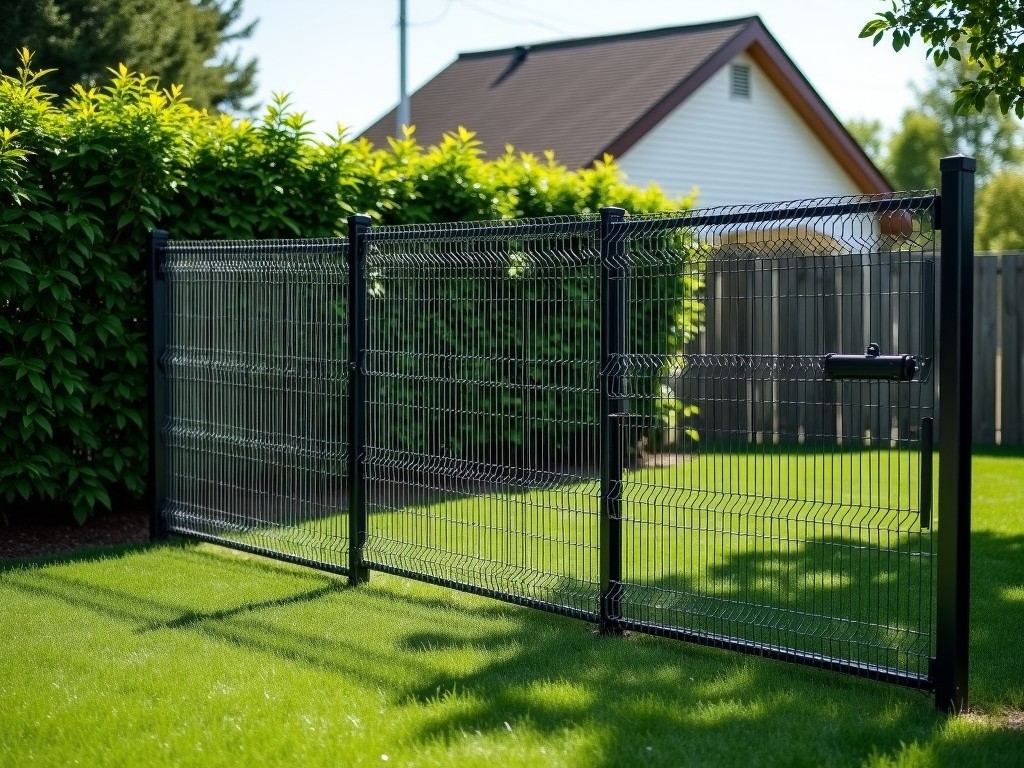
A temporary privacy fence for backyard use is a freestanding, modular barrier system designed to provide visual screening and boundary definition without permanent installation. Unlike fixed fencing, it relies on weighted bases, interlocking panels, or ground spikes for stability, allowing quick deployment and removal. This solution addresses short-term needs such as event hosting, construction zones, seasonal landscaping, or property transitions where permanence is impractical or prohibited by local regulations.
Core Design Principles
Effective temporary privacy fencing prioritizes three engineering criteria: lateral stability under wind load, ease of assembly without tools, and material durability under repeated handling. Panel height typically ranges from 4 to 6 feet to balance privacy with wind resistance, while base design distributes load to prevent tipping. Connection mechanisms—such as tongue-and-groove edges or pin-and-socket joints—ensure alignment and rigidity without compromising modularity.
Material selection focuses on UV-stabilized polymers or powder-coated steel to resist degradation from sun exposure and moisture. Common panel materials include high-density polyethylene (HDPE) for lightweight resilience or galvanized steel mesh for higher wind load tolerance. Base systems often use recycled rubber or concrete-filled containers weighing 20–50 lbs per unit, calibrated to withstand gusts up to 30 mph depending on panel surface area and porosity.
Panel and Base Configurations
| Component | Typical Specification | Functional Role |
|---|---|---|
| Panel Material | HDPE (0.125–0.25 in thick) or 18-gauge steel mesh | Provides visual barrier; HDPE offers impact resistance, steel mesh offers higher tensile strength |
| Panel Height | 48, 60, or 72 inches | Balances privacy needs with wind load; taller panels require wider bases |
| Base Type | Weighted rubber pad, concrete-filled plastic sleeve, or ground spike | Resists overturning moment; rubber pads protect surfaces, spikes suit soil, sleeves suit hardscapes |
| Connection Method | Interlocking tabs, aluminum pins, or bungee cords | Maintains panel alignment; pins allow disassembly, tabs enable tool-free setup |
Panel width commonly measures 2–4 feet per unit, enabling flexible layout adjustments for irregular yard dimensions. Interlocking systems typically achieve lateral rigidity within 5–10 degrees of lateral displacement before joint disengagement, a critical factor in maintaining continuous screening. Base weight requirements scale with panel height and local wind exposure; for example, a 6-foot HDPE panel in an open yard may require 35-lb bases every 2 feet to meet stability thresholds.
Installation and Handling Considerations
Deployment requires no excavation, fasteners, or power tools. Panels are connected horizontally, then bases are positioned at intervals of 2–4 feet depending on model specifications. For uneven terrain, adjustable-height bases or shims compensate for slope variations up to 5 degrees without compromising stability. The system’s center of gravity remains low due to base-weighted design, minimizing overturning risk during installation or wind events.
Handling efficiency is optimized through nested panel stacking and base nesting, reducing storage volume by up to 70% compared to assembled state. A typical 50-linear-foot system of 4-foot panels and rubber bases fits on a standard pallet (48x40 inches) with a height under 24 inches. Labor estimates for installation range from 10–15 minutes per 10 linear feet for two workers, decreasing with repetition due to the system’s repeatable connection logic.
Application-Specific Adaptations
Backyard use cases demand specific adaptations beyond generic temporary fencing. For privacy screening, panel opacity exceeds 85% to block line-of-sight at eye level (4–5 feet above ground), achieved through solid HDPE slats or tightly woven mesh with privacy strips. In pet containment scenarios, bottom rail height is kept under 3 inches to prevent digging under, while top edges feature rounded or capped profiles to eliminate snag hazards.
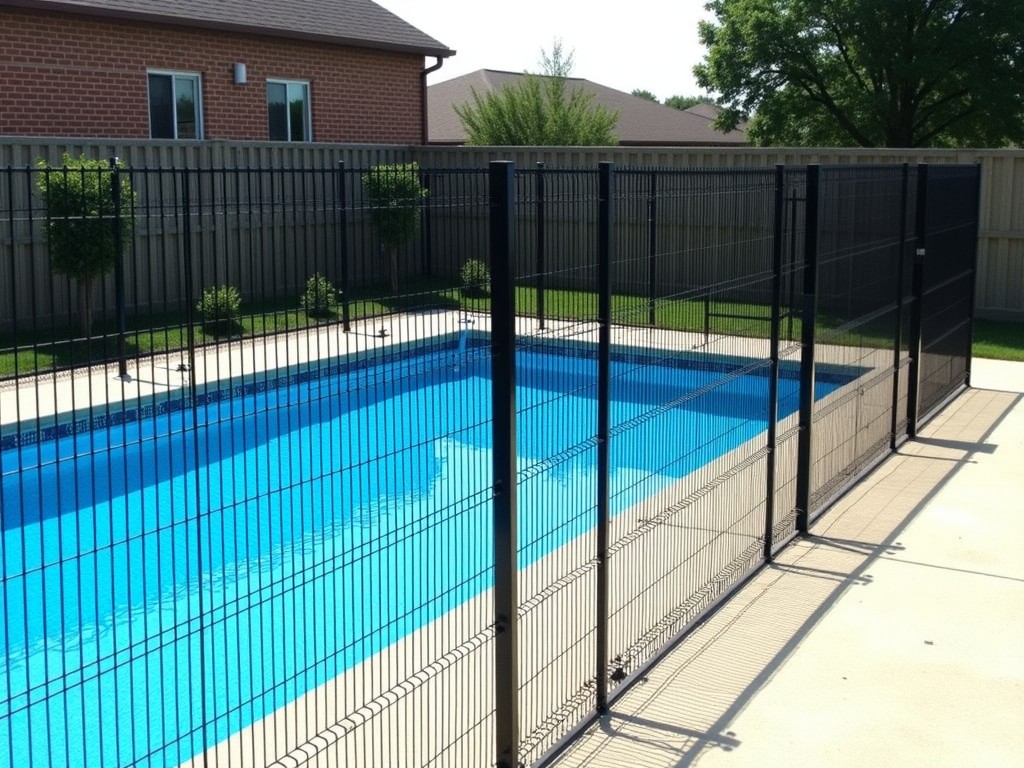
For seasonal use—such as summer pool privacy or fall garden protection—materials are selected for thermal cycling resistance, with HDPE maintaining flexibility down to -20°F and steel bases coated to prevent freeze-thaw corrosion. Some models incorporate UV inhibitors rated for 3,000+ hours of direct sunlight exposure, translating to 3–5 years of intermittent outdoor use before measurable degradation in impact strength or colorfastness.
Quality and Lifecycle Factors
Durability is evaluated through cycle testing simulating repeated assembly/disassembly, with premium designs enduring 50+ cycles without joint wear or base cracking. Impact resistance is tested via weighted pendulum strikes (per ASTM F1637 analogs) to ensure panels resist cracking from accidental kicks or tool drops. Color stability is monitored using Delta-E measurements under QUV exposure, with acceptable change limited to ΔE<5 after 1,000 hours to maintain aesthetic consistency.
End-of-life considerations include material recyclability: HDPE panels and rubber bases are commonly #2 and #5 recyclable plastics, while steel components are 100% recyclable. Manufacturers often provide take-back programs or specify recycling streams to support sustainable procurement. Warranty terms typically cover material defects for 12–24 months, excluding damage from misuse, extreme weather beyond design limits, or unauthorized modifications.
Selection Guidance for Buyers
When specifying a temporary privacy fence, buyers should first define the primary function: visual screening, pet control, dust containment, or visual deterrent. This determines required opacity, height, and base type. Second, assess site conditions—surface material (grass, concrete, pavers), slope, and prevailing wind direction—to select appropriate base weight and connection method. Third, evaluate frequency of use; high-cycle applications justify investment in reinforced joints and UV-stabilized materials.
Request documentation including wind load test reports (based on ASCE 7 principles), material safety data sheets (MSDS) for plastics, and assembly instructions with torque-free connection details. Avoid products relying on adhesives or permanent fasteners for “temporary” claims, as these violate the core premise of non-destructive installation. Confirm whether the supplier provides spare parts (pins, bases, panels) to extend service life through component-level replacement rather than full system disposal.
For projects requiring custom lengths or branded screening (e.g., for events), inquire about panel width customization, color matching (Pantone or RAL), and logo printing capabilities via screen printing or heat transfer on HDPE surfaces. Lead times for standard stock items range from 3–7 business days, while customized orders typically require 2–4 weeks depending on material availability and print setup.
Product Categories


Send Inquiry
If you are interested in our products, leave your information here and we will be in touch shortly.