Temporary Site Security Fencing
Temporary site security fencing provides a rapidly deployable barrier system designed to control access, deter unauthorized entry, and enhance safety at construction zones, event venues, industrial
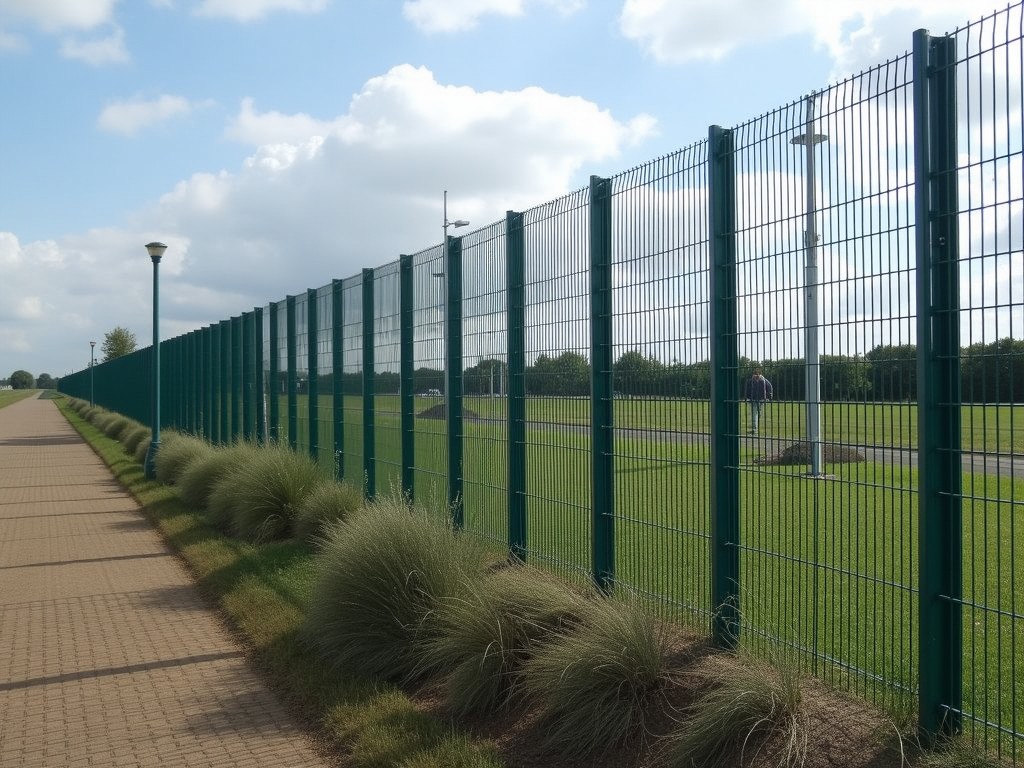
Temporary Site Security Fencing
Temporary site security fencing provides a rapidly deployable barrier system designed to control access, deter unauthorized entry, and enhance safety at construction zones, event venues, industrial facilities, and emergency response sites. Unlike permanent perimeter solutions, it prioritizes modularity, ease of installation, and reusability without compromising structural integrity under expected load conditions.
Material Composition and Structural Design
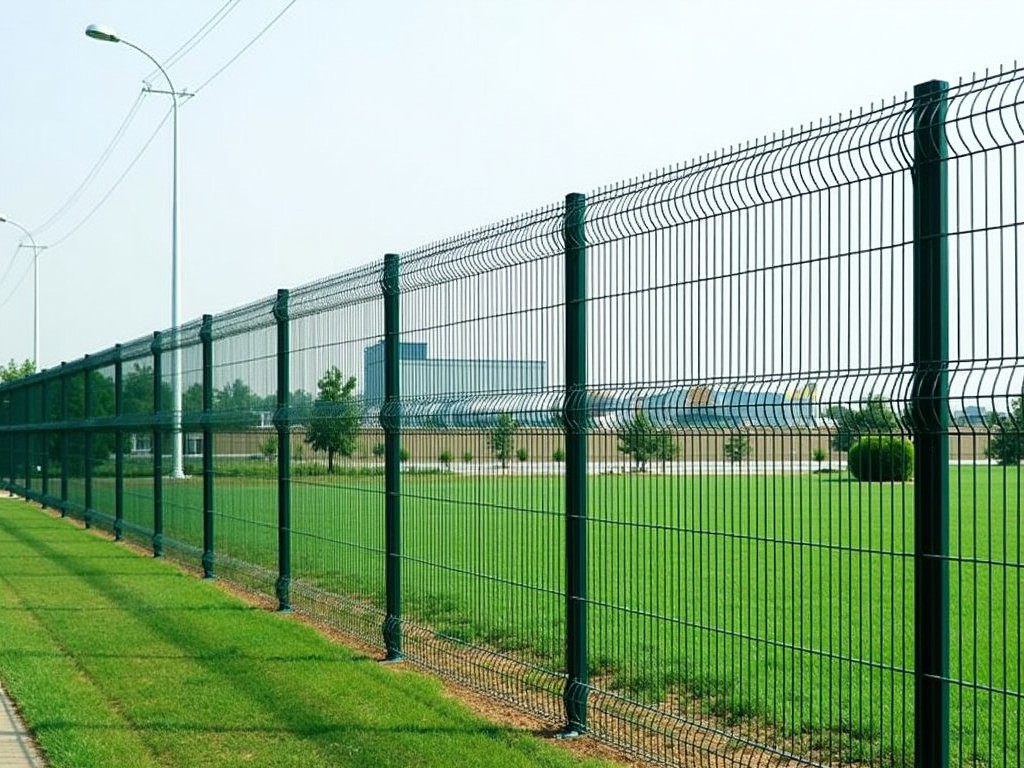
Panels are typically constructed from hot-dip galvanized steel tubing with a minimum wall thickness of 1.2mm, offering corrosion resistance suitable for outdoor exposure lasting 6–24 months. The frame uses 32mm diameter vertical posts connected to 25mm horizontal rails, forming a rigid rectangle that resists lateral deflection under wind loads up to 110 km/h when properly anchored. Infill options include welded wire mesh with 50x50mm openings and 3.0mm wire diameter, or anti-climb vertical bars spaced at 100mm intervals to prevent hand and footholds.
Each panel weighs approximately 18–22kg depending on height and infill type, allowing manual handling by two personnel while maintaining sufficient mass to resist casual displacement. Connection between panels employs a proprietary pin-and-latch mechanism that engages with a 15mm shear pin, providing tensile strength exceeding 8kN per joint and enabling reconfiguration without tools. The system accommodates ground irregularities through adjustable base plates that allow ±15mm vertical adjustment per post.
Standard Dimensions and Configuration Options
Standard panel heights range from 1.8m to 2.4m in 300mm increments, with a fixed width of 2.1m per section to balance coverage efficiency and handling practicality. Custom heights up to 3.0m are available upon request, requiring reinforced post sections and deeper ground penetration for stability. The system supports straight runs, 90° corners, and variable-angle junctions using specialized corner posts that maintain structural continuity without creating weak points in the perimeter.
| Parameter | Standard Value | Customizable Range |
|---|---|---|
| Panel Height | 1.8m, 2.1m, 2.4m | 1.5m–3.0m |
| Panel Width | 2.1m | 1.8m–2.5m (upon request) |
| Mesh Opening | 50x50mm | 25x25mm–100x100mm |
| Wire Diameter | 3.0mm | 2.5mm–4.0mm |
| Post Diameter | 32mm | 25mm–40mm |
Installation Methods and Ground Anchoring
Installation begins with positioning base plates at predetermined intervals, typically 2.1m center-to-center matching panel width. For soft ground conditions such as soil or gravel, spiked anchors penetrate 300–400mm deep and are secured to the base plate via bolts, providing uplift resistance exceeding 1.5kN per anchor. On hard surfaces like asphalt or concrete, weighted bases or bolt-down plates distribute load through friction or mechanical fastening, with typical ballast weights of 20–25kg per post required to resist overturning moments.
The pin-and-latch connection allows panels to be joined sequentially, with installation crews achieving rates of 30–40 linear meters per hour under optimal conditions. Alignment is maintained through visual guides on the posts and optional string lines for long runs. After assembly, the entire system should be retensioned after 24 hours to account for initial settlement, particularly in unpacked substrates. Removal follows the reverse sequence, with panels stacked flat and components sorted by type for efficient reuse.
Applications Across Industries
Construction sites utilize this fencing to establish secure perimeters around active work zones, separating pedestrian pathways from vehicle traffic and equipment storage areas. The 2.4m height option with anti-climb mesh is frequently specified for urban redevelopment projects where public proximity necessitates heightened deterrence against trespassing and vandalism.
Event management relies on rapid deployment capabilities to control crowd flow at festivals, marathons, and sporting events, where the system’s modularity allows quick reconfiguration based on attendance patterns or emergency egress requirements. The open mesh design maintains visibility for security personnel while preventing unauthorized crossing.
Industrial facilities deploy temporary fencing during plant expansions or maintenance shutdowns to isolate construction zones from ongoing operations, ensuring compliance with internal safety protocols and OSHA 1926.502 standards for barrier systems. The reusability factor reduces lifecycle costs compared to single-use alternatives like plastic barriers or wood hoarding.
Quality Control and Lifecycle Considerations
Manufacturing begins with certified structural steel coils that undergo incoming inspection for thickness tolerance (±0.05mm) and zinc coating weight (minimum 275g/m²). Each welded joint is visually inspected for penetration and uniformity, with 10% of production batches subjected to tensile testing of the weld zone. Panels receive a final powder coating or liquid paint layer in specified colors (commonly white, yellow, or black) for enhanced visibility and additional UV protection.
With proper maintenance—including annual inspection of connection pins for wear, touch-up of coating damage, and replacement of deformed mesh sections—the system achieves a typical service life of 5–7 years across multiple deployment cycles. End-of-life recyclability exceeds 95% due to the homogeneous steel construction, allowing material recovery through standard scrap channels.
For procurement, specify required height, mesh type, anchoring method based on substrate analysis, and any visibility enhancements such as reflective tape kits or signage brackets. Lead times vary from 5–10 working days for standard configurations to 3–4 weeks for custom heights or specialized infill patterns, subject to material availability.
Product Categories


Send Inquiry
If you are interested in our products, leave your information here and we will be in touch shortly.