Temporary Tree Protection Fencing
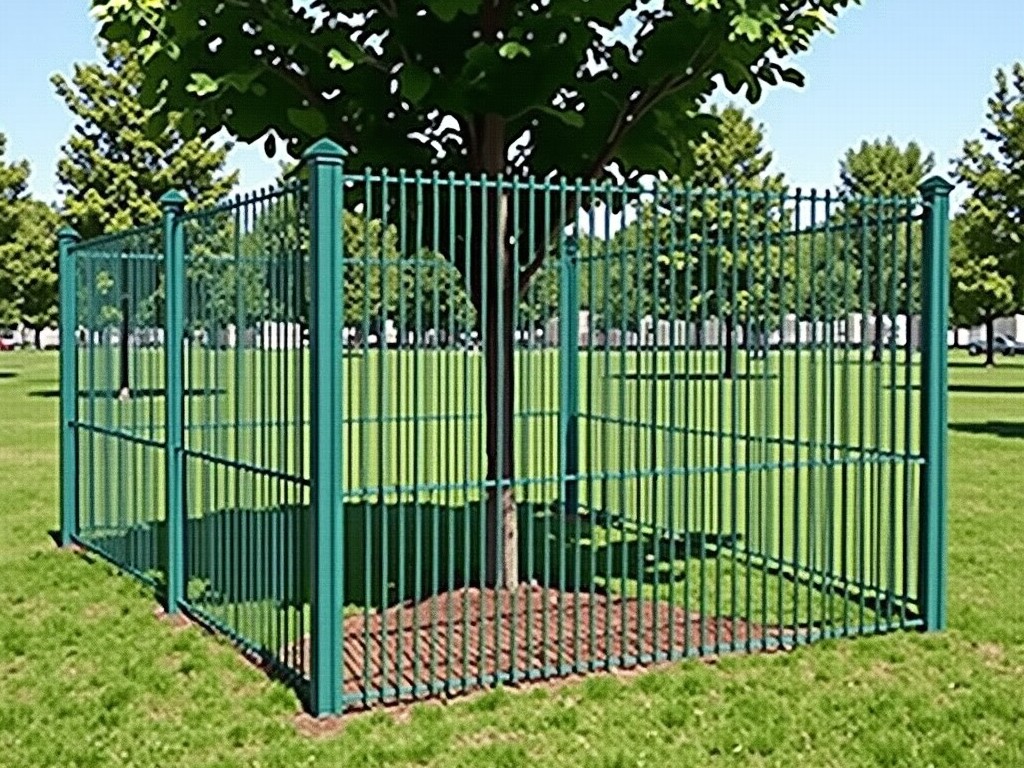
Temporary tree protection fencing is a purpose-built barrier system designed to shield tree root zones, trunks, and canopies from mechanical damage during construction, landscaping, or utility work.
Temporary Tree Protection Fencing
Temporary tree protection fencing is a purpose-built barrier system designed to shield tree root zones, trunks, and canopies from mechanical damage during construction, landscaping, or utility work. Unlike permanent fencing or generic construction barriers, it is engineered for rapid deployment, minimal ground disturbance, and precise spatial alignment with arboricultural protection zones. The system prioritizes non-invasive installation methods that avoid soil compaction or root severance while maintaining structural integrity under anticipated site loads such as equipment traffic, material storage, or accidental impacts.
Its effectiveness depends on three interdependent factors: barrier height to deter vehicle encroachment, mesh openness to allow airflow and light penetration while blocking debris, and anchorage stability to resist lateral forces without penetrating critical root areas. Material selection, post spacing, and connection details are derived from ISA (International Society of Arboriculture) guidelines and site-specific risk assessments, ensuring compliance with municipal tree preservation ordinances and reducing liability for project stakeholders.
Material Composition and Structural Properties
The primary structural components consist of high-density polyethylene (HDPE) mesh panels with UV stabilizers, providing tensile strength typically ranging from 15 to 25 kN/m depending on filament density and weave pattern. This material resists degradation from prolonged sun exposure, moisture, and common construction-site chemicals such as concrete washout or fuel spills, maintaining physical integrity for 6–12 months under standard outdoor conditions. Panels are manufactured with uniform aperture sizes—commonly 50 mm × 50 mm or 75 mm × 75 mm—to balance visibility, debris retention, and wind permeability.
Support posts are fabricated from galvanized steel or reinforced polypropylene, selected based on expected load duration and soil conditions. Galvanized steel posts (typically 1.8–2.5 m length, 25–32 mm diameter) offer higher buckling resistance for wind-exposed sites or areas with potential vehicle overrun, while polypropylene posts reduce installation time and eliminate corrosion concerns in environmentally sensitive zones. Post spacing is generally set at 2.0–2.5 m intervals, calculated to limit panel deflection under a 150 N lateral load per ISA BMP standards.
Installation Methodology and Site Adaptability
Installation avoids ground penetration within the tree’s critical root radius (typically defined as 1.5× the trunk diameter in meters) by using surface-mounted or weighted base systems. Options include sandbag-weighted brackets, rubber-filled collars, or adjustable tripod stands that transfer loads through friction and ballast rather than soil displacement. This method preserves soil structure and mycorrhizal networks, which are essential for long-term tree health but easily compromised by trenching or driving stakes.
For uneven terrain or sloped sites, telescoping post extensions and articulated bracket joints allow the fence to follow contour changes while maintaining consistent height and tension. Connection systems use UV-resistant nylon ties or reusable cam buckles, enabling rapid reconfiguration if protection zones shift during project phases. All components are designed for tool-free assembly, reducing labor time and minimizing the risk of improper installation due to user error.
Performance Validation and Design Considerations
System performance is evaluated against ANSI A300 (Part 5) management practices, focusing on three validation criteria: impact resistance, stability under sustained load, and minimal microclimate disruption. Impact testing typically involves simulating a 200 kg payload dropped from 0.5 m height onto the barrier mid-span, with acceptable deflection limited to less than 50 mm to prevent direct trunk contact. Wind load calculations follow ASCE 7 guidelines, adjusted for the porous nature of HDPE mesh, which reduces drag coefficients by 40–60% compared to solid barriers.
Thermal and humidity effects are accounted for in material selection; HDPE exhibits a coefficient of thermal expansion of approximately 1.8×10⁻⁴ /°C, requiring slack allowance in long runs to prevent buckling or over-tensioning. The open mesh design ensures photosynthetically active radiation (PAR) transmission remains above 70%, preventing chlorophyll degradation in shaded understory vegetation—a critical factor often overlooked in solid-barrier alternatives.
Comparison of Common Configuration Options
| Attribute | Standard Duty | Heavy Duty | Extended Duration |
|---|---|---|---|
| Mesh Material | HDPE, 150 g/m² | HDPE, 220 g/m², reinforced weave | HDPE, 220 g/m², +UV stabilizer pack |
| Post Type | Polypropylene, 2.0 m | Galvanized steel, 2.4 m | Galvanized steel, 2.5 m, with base plate |
| Max Post Spacing | 2.0 m | 2.5 m | 2.5 m |
| Expected Service Life | 3–6 months | 6–12 months | 9–15 months |
| Typical Use Case | Short-term landscaping, utility trenching | Commercial development, roadworks | Infrastructure projects, municipal contracts |
Applications in Urban and Rural Development
In urban infill projects, temporary tree protection fencing prevents root zone compaction from concrete pumps, material staging, and foot traffic—common causes of delayed decline in street trees that manifest 2–5 years post-construction. By maintaining a protected radius around the trunk, the system preserves feeder roots within the top 300 mm of soil, where 80% of water and nutrient uptake occurs, thereby reducing transplant shock and increasing survival rates in retained canopy.
For utility corridors or pipeline installations, the fencing delineates exclusion zones around specimen trees or heritage groves, allowing directional boring or hydrovac excavation to proceed without risking accidental gouging or bark removal. Its visibility—enhanced by optional high-visibility yellow or orange tinting—serves as a constant visual cue to equipment operators, reducing reliance on spotters or temporary signage that may be overlooked during high-activity phases.
In rural land development or agricultural expansion, the system protects riparian buffer trees during access road construction, preventing sediment runoff into waterways by stabilizing disturbed soil at the edge of the protected zone. Unlike silt fences, which target sediment control, tree protection fencing addresses the biomechanical stability of the tree itself, making it a complementary but distinct control measure in erosion and sediment control (ESC) plans.
Customization and Project-Specific Adaptation
Beyond standard configurations, the system accommodates site-specific constraints through modular adaptation. Panel widths can be adjusted from 1.0 m to 2.5 m to match irregular boundaries or navigate around existing infrastructure, while post heights are scalable from 1.2 m for shrub protection to 3.0 m for tall canopy trees in high-wind corridors. Connection hardware includes quick-release pins for frequent reconfiguration or tamper-resistant bolts for public-access sites where unauthorized removal is a concern.
Additional features include integrated flagging slots for high-visibility tape, biodegradable twine options for ecologically sensitive areas, and stackable nesting designs that reduce return-trip freight volume by up to 60%. Custom color matching to municipal standards or project branding is available upon request, though functional performance remains unchanged regardless of pigment additives, as long as UV stabilization levels are maintained.
Quality Assurance and Lifecycle Management
Manufacturing tolerances are controlled to ±5% for mesh aperture size and ±10% for tensile strength, verified through random sampling per batch using ASTM D5034 for grab tension and ASTM D624 for tear resistance. Post straightness and galvanization thickness (where applicable) are inspected per ASTM A123/A123M, with coating weight typically exceeding 610 g/m² for hot-dipped galvanized steel to ensure multi-season durability in corrosive environments.
Prior to shipment, panels undergo UV exposure testing in accelerated weathering chambers (ASTM G154) to confirm retention of at least 80% tensile strength after 1,000 hours of UV-B exposure. End-of-life considerations include recyclability of HDPE components (resin ID code 2) and reusability of galvanized posts, which can be redeployed across multiple projects if stored dry and inspected for deformation. Packaging uses UV-stabilized polyethylene film and corner protectors to prevent damage during transit, with standard palletization enabling forklift handling without manual lifting.
Inquiry and Technical Support
For project-specific requirements, technical documentation including installation guides, material safety data sheets (MSDS), and compliance templates for municipal tree protection plans are available upon request. Our engineering team can assist with load calculations, layout optimization, or specification development to align with local arboricultural standards or developer obligations.

Product Categories


Send Inquiry
If you are interested in our products, leave your information here and we will be in touch shortly.