Wholesale Plastic Ranch Style Fencing
Plastic ranch style fencing provides a durable, low-maintenance alternative to traditional wood or vinyl systems for agricultural, equestrian, and rural residential applications. Manufactured from
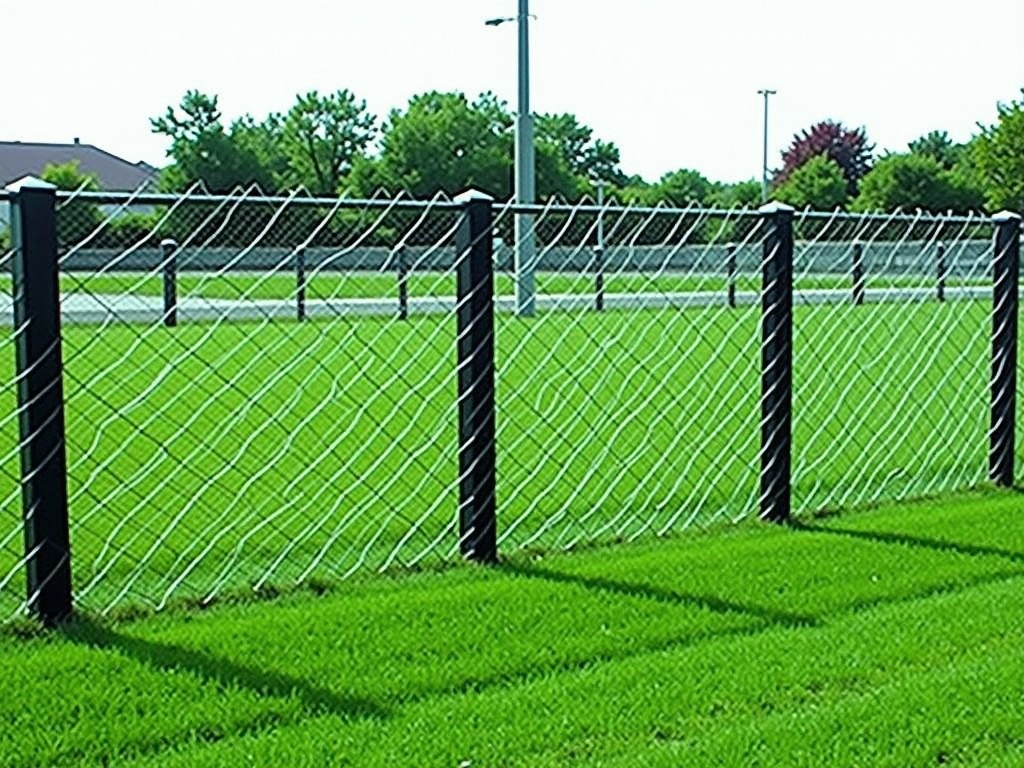
Wholesale Plastic Ranch Style Fencing
Plastic ranch style fencing provides a durable, low-maintenance alternative to traditional wood or vinyl systems for agricultural, equestrian, and rural residential applications. Manufactured from high-density polyethylene (HDPE) or polypropylene (PP) resins with UV stabilizers, these systems resist rot, insect damage, and weathering while maintaining structural integrity under prolonged sun exposure. Unlike wood, plastic ranch fencing does not require staining, sealing, or periodic replacement due to warping or splitting, reducing long-term ownership costs.
Material Composition and Performance Characteristics
The base resin selection directly impacts mechanical performance and environmental resistance. HDPE offers higher impact strength and flexibility, making it suitable for areas with frequent livestock contact or ground movement, while PP provides greater stiffness and heat resistance for warmer climates. Both materials are compounded with 0.5–2.0% UV stabilizers (typically hindered amine light stabilizers) and antioxidants to prevent chain scission and discoloration over 20+ years of outdoor exposure. Typical tensile strength ranges from 20–35 MPa, with elongation at break exceeding 300% for HDPE grades, allowing the fencing to absorb impact without cracking.
Color is integrated throughout the material during extrusion, eliminating surface coating failures. Common colors include white, black, brown, and gray, with custom color matching available upon request for large-volume orders. The material density ranges from 0.94–0.96 g/cm³ for HDPE and 0.90–0.91 g/cm³ for PP, contributing to buoyancy in wet environments and ease of handling during installation. Additives such as lubricants and processing aids are included in minimal quantities (<1%) to ensure consistent extrusion without compromising long-term stability.
Design Specifications and Dimensional Standards
Ranch style fencing typically features two or three horizontal rails connected to vertical posts via mortise-and-tenon or snap-lock joints, replicating the aesthetic of traditional wood rail systems. Standard rail dimensions are 3.5 inches wide by 1.5 inches thick, with lengths available in 8-foot or 16-foot sections to minimize joints. Posts are usually 5 inches square or 5.5 inches in diameter, with lengths of 6, 7, or 8 feet to accommodate burial depth and terrain variations. Rail-to-post connections are engineered to withstand lateral loads of up to 150 lbs per rail without joint separation, tested according to ASTM F1667 guidelines for simulated animal impact.
Height options range from 3 to 5 feet, with 4 feet being the most common for cattle and horse containment. Ground clearance is typically set at 2–3 inches to prevent moisture wicking and allow for vegetation growth underneath. All components feature drain holes or vent channels to prevent water accumulation inside hollow sections, reducing the risk of internal freezing damage in colder climates. Thermal expansion coefficients are approximately 10–12 × 10⁻⁵ /°C, requiring expansion gaps of 1/4 inch per 10 feet of length during installation to prevent buckling.
Manufacturing Process and Quality Control
Extrusion is the primary manufacturing method, where molten resin is forced through a die to create continuous profiles with consistent cross-sections. Post-extrusion, profiles are cooled in water baths, cut to length, and subjected to inline inspection for dimensional accuracy, surface defects, and color uniformity. Tolerances are maintained within ±0.03 inches for width and thickness, and ±0.125 inches for length, ensuring proper fit during assembly. Impact resistance is verified through notched Izod testing (ASTM D256), with target values exceeding 18 ft-lb/in for HDPE and 10 ft-lb/in for PP grades.
UV stability is validated using accelerated weathering equipment (ASTM G154, Cycle 1) simulating 1,000 hours of sunlight exposure, equivalent to approximately 3–4 years of real-world conditions. Samples are inspected for chalking, cracking, and color change (ΔE < 5 units) post-testing. Each production lot undergoes melt flow index (MFI) verification to ensure resin consistency, with typical MFI values between 0.3–0.8 g/10min for extrusion grades. Documentation of material certifications and test reports is available upon request for bulk orders.
Applications in Agricultural and Rural Settings
Plastic ranch fencing is widely used in pasture management where livestock containment and visual deterrence are required without the maintenance burden of wood. Horses benefit from the smooth, splinter-free surface, reducing injury risk compared to rough-sawn timber. Cattle operations utilize the system for perimeter and cross-fencing due to its resistance to rubbing and chewing behaviors. In vineyards and orchards, the fencing serves as a barrier against wildlife while allowing air circulation and light penetration, unlike solid panels that create microclimates conducive to mold.
Equestrian facilities often install plastic ranch fencing around arenas and turnout pens because it withstands repeated contact from horses without degrading, and its light color improves visibility in low-light conditions. Rural homeowners adopt the product for property boundaries where aesthetic continuity with traditional ranch styles is desired, but long-term upkeep is impractical. The non-conductive nature of the material also makes it suitable for proximity to electric fencing systems, as it does not interfere with grounding or signal transmission.
Installation Considerations and Field Performance
Installation follows standard post-and-rail procedures, with posts set in concrete-filled holes to a depth of 1/3 to 1/2 of their above-ground height, depending on soil conditions. In sandy or loose soils, deeper embedment or wider footings may be required to prevent lateral movement. Rails are inserted into pre-molded mortises on posts or secured with stainless steel fasteners designed for plastic compatibility—avoiding galvanized or zinc-coated metals that can cause galvanic corrosion in moist environments. No special tools are required beyond standard post hole diggers, levels, and rubber mallets for seating joints.
Field performance data from installations in diverse climates shows minimal degradation after 10–15 years, with color retention exceeding 80% of original vibrancy in shaded installations and 60–70% in full-sun exposure. Repair is infrequent but straightforward: damaged sections can be cut out and replaced with new segments using the same joint system, without needing to dismantle adjacent units. The fencing does not support mold or mildew growth on its surface, and cleaning with water and mild detergent is sufficient for routine maintenance.
Comparison with Alternative Fencing Materials
Compared to wood ranch fencing, plastic systems eliminate the need for chemical preservatives (e.g., ACQ, CCA) and avoid the environmental concerns associated with treated lumber disposal. While wood may have a lower initial material cost, its lifecycle cost over 20 years is typically higher due to replacement, labor, and maintenance expenses. Plastic fencing also outperforms wood in resistance to twisting, splitting, and insect infestation, particularly in humid or subtropical regions where decay accelerates.
When contrasted with traditional vinyl (PVC) ranch fencing, HDPE/PP-based systems offer superior impact resistance at low temperatures, where PVC becomes brittle and prone to cracking. Vinyl may exhibit greater stiffness, but this can translate to poor energy absorption during impact. Both plastic and vinyl fencing share similar UV stabilization techniques, but polyolefin-based plastics generally demonstrate better long-term stress crack resistance under constant load. Aluminum ranch fencing, while durable, lacks the visual mass and traditional appearance of wood-equivalent profiles and conducts heat and electricity, limiting its use in certain applications.
| Property | Plastic Ranch Fencing (HDPE/PP) | Wood Ranch Fencing (Pressure-Treated) | Vinyl Ranch Fencing (PVC) |
|---|---|---|---|
| Typical Lifespan (Years) | 20–30 | 7–12 | 15–25 |
| Maintenance Required | None (cleaning only) | Staining/sealing every 2–3 years | None (cleaning only) |
| Impact Resistance (ft-lb/in) | 10–18 | 5–10 (varies by species) | 8–15 |
| Thermal Expansion (×10⁻⁵/°C) | 10–12 | 3–5 | 12–16 |
| Recyclable | Yes (HDPE/PP) | Limited (treated wood) | Yes (PVC) |
Customization Options for Wholesale Orders
Wholesale buyers can specify rail and post dimensions, hole patterns for fasteners, and joint types to match existing infrastructure or regional preferences. Color customization is achievable through masterbatch blending, with minimum order quantities typically starting at 5,000 linear feet for non-standard shades. Surface textures can be modified to simulate wood grain or provide a smooth finish, depending on mold design. Hole spacing for rail-to-post connections is adjustable to accommodate different post center distances, ranging from 6 to 12 feet.
Packaging options include bulk palletizing with stretch wrap or individual sleeving for scratch protection during transit. Labeling with barcodes, SKUs, or customer-specific identifiers is available upon request. For international shipments, materials are treated to meet ISPM 15 requirements if wood pallets are used, or alternative plastic/metal pallets can be specified. Lead times depend on resin availability and tooling readiness, generally ranging from 4 to 8 weeks for confirmed orders, with samples provided for approval prior to production.
Quality Assurance and Testing Protocols
Quality control begins with resin supplier verification, including certificate of analysis (CoA) review for melt flow, density, and additive content. Incoming material is sampled and tested before extrusion to ensure consistency with approved grades. During production, inline monitors track temperature, pressure, and line speed to maintain dimensional stability. Finished goods undergo random sampling for impact resistance, tensile strength, and UV stability, with results retained for traceability.
Each batch is assigned a unique lot number linking to resin suppliers, extrusion parameters, and test results. Visual inspections are conducted under standardized lighting to detect surface imperfections, color variation, or deformation. For customers requiring third-party validation, test reports from accredited laboratories can be provided for properties such as ASTM D638 (tensile), D256 (impact), and G154 (weathering). Documentation supports compliance with project specifications and facilitates warranty claims if needed.
To initiate a wholesale inquiry, provide project details including required length, height, color preferences, and installation environment. Our team will review specifications, confirm material suitability, and deliver a formal quotation with lead time and packaging options. Contact us via the inquiry form to begin the evaluation process.
Product Categories


Send Inquiry
If you are interested in our products, leave your information here and we will be in touch shortly.