4 Ft X 8 Ft Welded Steel Wire Mesh Source Factory
Welded steel wire mesh in 4 ft x 8 ft panel dimensions is a standardized industrial product used across construction, infrastructure, and manufacturing sectors. The nominal size refers to the overall
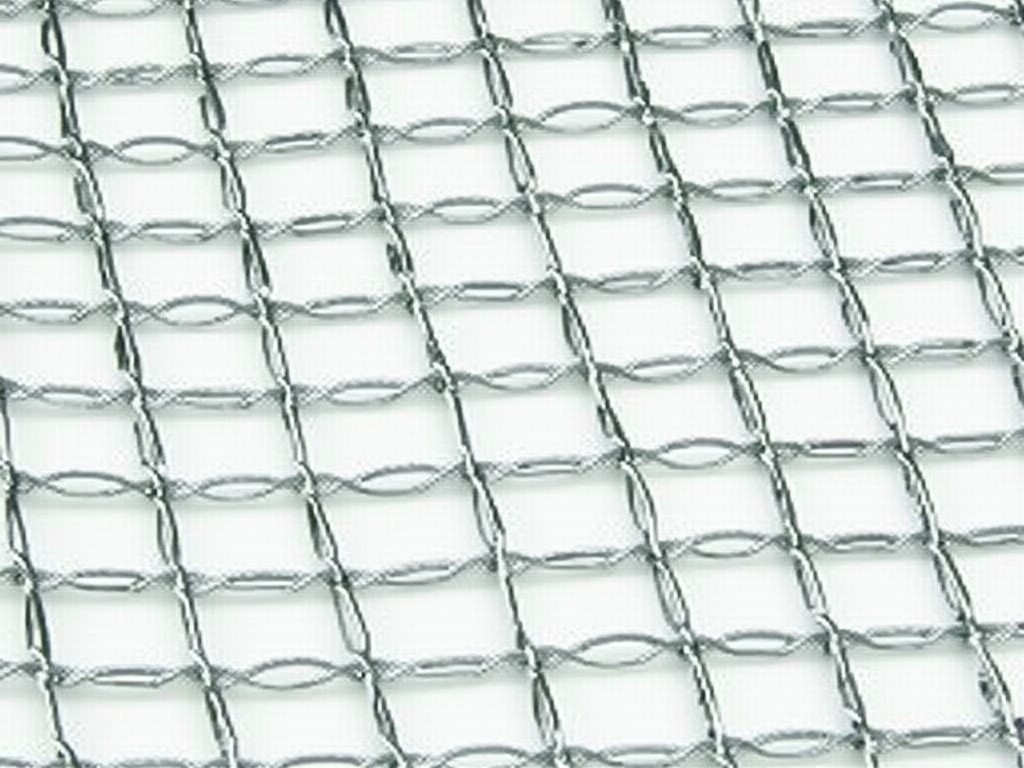
4 ft x 8 ft Welded Steel Wire Mesh Source Factory
Welded steel wire mesh in 4 ft x 8 ft panel dimensions is a standardized industrial product used across construction, infrastructure, and manufacturing sectors. The nominal size refers to the overall panel width and length, not the aperture or wire diameter, which vary based on application requirements. This dimension aligns with common building module sizes, facilitating efficient handling, transportation, and installation without requiring field cutting in many standard applications.
Manufacturing begins with cold-drawn steel wire, typically compliant with ASTM A82 or equivalent standards, which is straightened and fed into automated welding machines. The wires are arranged in a orthogonal grid pattern—longitudinal (shuttle) wires running the 8 ft length and transverse (line) wires spaced at intervals across the 4 ft width—then joined at each intersection through electric resistance welding. This process creates a monolithic panel where the weld points fuse the wires, providing structural integrity without relying on mechanical interlock alone.
Panel flatness and dimensional accuracy are critical quality attributes. Tolerances are typically maintained within ±1/8 inch for both length and width under controlled factory conditions, verified using calibrated gauges and laser measurement systems. Deviations beyond this range can complicate stacking, palletizing, and integration into framing systems, particularly in prefabricated concrete or modular panel applications where precise fit is essential.
Material Specifications and Mechanical Properties
The base wire is produced from low-carbon steel grades such as C1008 or C1010, selected for their weldability and ductility. Wire diameter options commonly range from 0.105 inches (No. 8 AWG) to 0.250 inches (1/4 inch), with tensile strengths between 60,000 and 80,000 psi depending on cold work level. The welding process introduces localized heat-affected zones, but the short cycle time and low heat input minimize annealing effects, preserving approximately 85–90% of the parent wire’s tensile strength at the weld nugget.
Corrosion protection is applied post-welding to ensure uniform coverage. Hot-dip galvanizing per ASTM A123 is the most prevalent method, delivering a minimum zinc coating weight of 1.2 oz/ft² (approximately 60 µm thickness) for outdoor exposure. Alternative finishes include epoxy coating for chemical resistance in wastewater environments or pre-galvanized wire (ASTM A641) for less demanding indoor applications where cost sensitivity outweighs long-term corrosion performance.
Mechanical performance is defined by the mesh’s ability to resist deformation under load. For reinforcement applications, the panel’s moment of inertia and section modulus are calculated based on wire diameter and spacing, enabling engineers to predict crack control behavior in concrete. Typical aperture sizes range from 2x2 inches to 6x6 inches, with smaller openings providing higher tensile capacity per unit area but increased material cost and weight—approximately 1.1 to 3.8 lbs/ft² depending on specification.
Manufacturing Process and Quality Control
Production occurs on high-speed CNC-controlled welding lines capable of outputting one 4x8 panel every 15–30 seconds, depending on wire density and weld frequency. The process begins with decoiling and straightening of longitudinal and transverse wire spools, followed by precise feeding into the weld zone where electrodes apply pressure and current to form each fusion point. Weld parameters—current, time, and pressure—are monitored in real time via closed-loop systems to ensure consistent nugget formation, typically targeting a diameter of 1.5 to 2.5 times the wire thickness.
In-line inspection includes optical sensors to verify wire alignment and spacing, electromagnetic sensors to detect missing or weak welds, and laser profilers to assess panel flatness. Statistical process control (SPC) charts track key variables such as weld strength (via periodic destructive testing), dimensional variance, and coating thickness. Acceptance criteria follow internal standards derived from ASTM A185/A497, with lot sampling typically set at Level II per ANSI/ASQ Z1.4 for visual and dimensional checks.
Post-welding, panels undergo cleaning to remove welding residue and oxide layers before coating. For galvanized mesh, this involves pickling, fluxing, and immersion in molten zinc at approximately 830°F (443°C). Coating weight is verified using magnetic induction or gravimetric methods on test coupons cut from panel corners or edges. Final inspection includes visual review for rust, drips, or uneven coverage, followed by banding or shrink-wrapping for palletization.
Applications Across Industries
In concrete reinforcement, 4x8 welded wire mesh serves as primary shrinkage and temperature control in slabs-on-grade, walls, and precast elements. The uniform grid distribution provides isotropic crack resistance, outperforming discontinuous fiber or bar-only systems in controlling plastic shrinkage cracks. Engineers specify mesh based on slab thickness and exposure conditions—for example, 6x6 x W1.4xW1.4 (6x6 aperture, 0.105" wire) is common for 4-inch interior slabs, while heavier gauges like 4x4 x W2.9xW2.9 are used in industrial floors subject to forklift traffic.
In perimeter security, the same panel dimensions are adapted for fencing and barrier systems. Here, aperture size is reduced (e.g., 2x2 or 1.5x1.5 inches) and wire diameter increased to resist climbing and cutting attempts. The 4x8 format allows for rapid erection between posts spaced at 8 ft centers, minimizing post count and labor. When coated with PVC over galvanized steel, the mesh achieves both corrosion resistance and a non-reflective surface suitable for high-security zones like substations or correctional facilities.
Industrial uses include machine guarding, conveyor belt supports, and shelving substrates. The rigid panel structure provides a consistent mounting surface for sensors, guards, or lightweight fixtures. In material handling, mesh decks on pallet racks allow sprinkler water penetration (meeting NFPA 13 requirements) while supporting loads—typically rated for uniform distributed loads of 2,000–3,000 lbs per panel when properly supported at edges and mid-span. The open design also reduces dust accumulation compared to solid decking.
Customization Options and Ordering Considerations
While 4x8 ft is the standard panel size, manufacturers accommodate variations in length and width upon request, subject to coil handling and welding machine limits. Common alternatives include 2x8 ft for narrow applications, 5x10 ft for larger modules, or custom lengths up to 20 ft for continuous rolling and cutting to length. Aperture size and wire diameter are independently selectable—engineers can specify, for example, a 3x3 inch grid with 0.192" wire (W2.1) for balanced strength and openness, or a 1x4 inch rectangular mesh for directional reinforcement in long-span slabs.
Coating selection depends on environmental exposure and service life expectations. Hot-dip galvanizing offers 20–50 years of protection in rural/suburban atmospheres but may require duplex systems (galvanized plus paint) in marine or industrial zones. Stainless steel wire (Types 304 or 316) is available for permanent installations in corrosive environments, though at 3–5 times the cost of carbon steel. Pre-galvanized wire reduces upfront cost but risks exposing bare steel at weld points unless supplemented with post-weld coating.
Edge treatment is another customizable feature. Standard panels have squared edges with protruding welds, but options include flattened edges for safety, bent-over lips for easy handling, or welded-on steel strips for improved pull-out resistance in anchoring applications. Packaging is typically in bundles of 10–50 panels secured with steel or plastic strapping, with corner protectors and waterproof covers available for export or outdoor storage. Lead times vary from stock availability (1–3 days) to 2–4 weeks for custom specifications, depending on raw material lead times and production scheduling.
Technical Data Reference
| Parameter | Typical Range | Notes |
|---|---|---|
| Wire Diameter | 0.105" – 0.250" (W1.4 – W2.9) | Cold-drawn steel; ASTM A82 equivalent |
| Aperture Size | 1"x1" – 6"x6" | Square or rectangular; custom spacing available |
| Panel Weight | 1.1 – 3.8 lbs/ft² | Depends on wire diameter and aperture |
| Coating (Galvanized) | ASTM A123; ≥1.2 oz/ft² Zn | Hot-dip; alternatives: epoxy, pre-galv |
| Tensile Strength (Wire) | 60,000 – 80,000 psi | Min. 85% retained at weld nugget |
| Flatness Tolerance | ±1/8" over 4x8 ft | Measured corner-to-corner; critical for stacking |
*Values represent typical industrial ranges. Actual specifications are confirmed per project requirements and validated through in-house testing.
For technical inquiries, custom specifications, or quotation requests regarding 4 ft x 8 ft welded steel wire mesh panels, contact our engineering team. Provide details on intended application, required wire diameter, aperture size, coating preference, and quantity to receive a accurate response with lead time and pricing.
Request Technical Specification or Quote
Product Categories


Send Inquiry
If you are interested in our products, leave your information here and we will be in touch shortly.