316 Stainless Steel Welded Wire Mesh
316 stainless steel welded wire mesh is engineered for environments where corrosion resistance and structural integrity are critical. The alloy contains 16-18% chromium, 10-14% nickel, and 2-3%
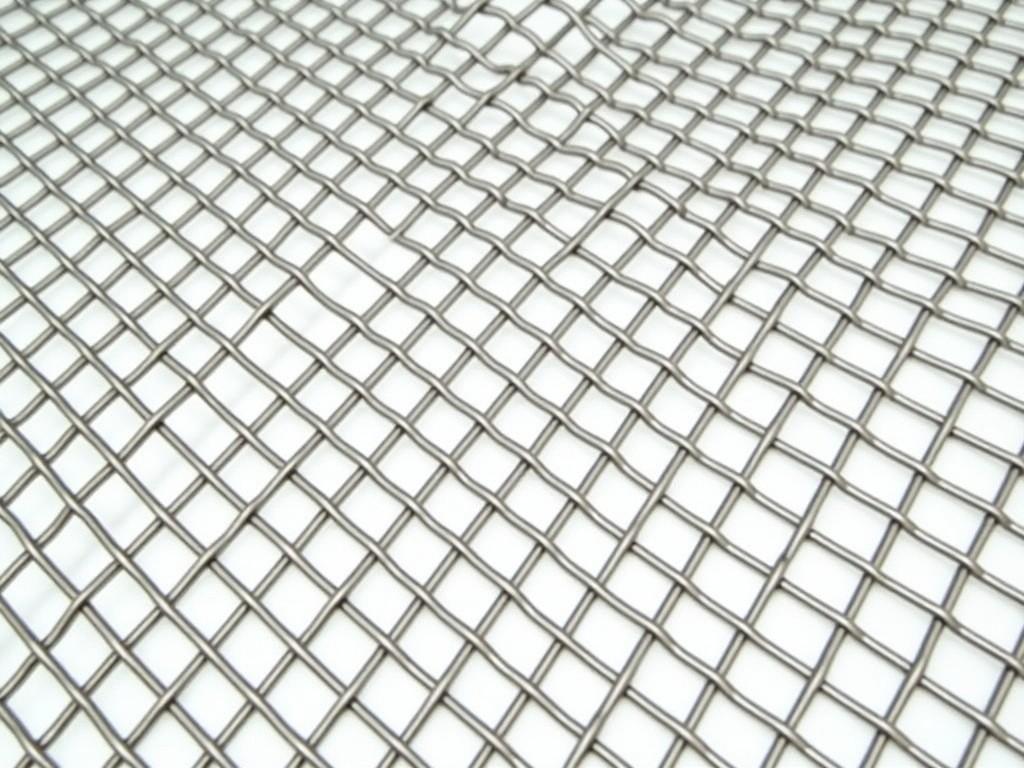
316 Stainless Steel Welded Wire Mesh
316 stainless steel welded wire mesh is engineered for environments where corrosion resistance and structural integrity are critical. The alloy contains 16-18% chromium, 10-14% nickel, and 2-3% molybdenum, which significantly improves resistance to chlorides and acidic conditions compared to 304 grade. This makes it suitable for marine, chemical processing, and food production applications where exposure to salt, moisture, or cleaning agents is frequent.
Material Composition and Corrosion Performance
The molybdenum content in 316 stainless steel forms a passive oxide layer that resists pitting and crevice corrosion in saline environments. Unlike carbon steel or lower-grade stainless alloys, it maintains mechanical properties after prolonged exposure to seawater, steam, or cleaning solutions containing chlorides. This reduces maintenance frequency and extends service life in harsh industrial settings.
Wire diameter options range from 0.8mm to 6.0mm, allowing engineers to balance open area, load-bearing capacity, and flow characteristics. Tensile strength of the welded joints typically exceeds 480 MPa, ensuring the mesh retains structural integrity under tension or impact loads. The welding process uses resistance welding to fuse wires at intersections without adding filler material, preserving the corrosion-resistant properties of the base alloy.
Mesh Configuration and Dimensional Options
Opening sizes are defined by center-to-center wire spacing, ranging from 6mm for fine filtration to 100mm for structural reinforcement or animal containment. Common configurations include square and rectangular patterns, with rectangular meshes offering directional strength advantages in conveyor or screening applications. The percentage of open area can be calculated based on wire diameter and spacing to determine airflow, liquid passage, or light transmission requirements.
| Wire Diameter (mm) | Opening Size (mm) | Open Area (%) | Typical Use Case |
|---|---|---|---|
| 0.8 | 6 | 64 | Fine filtration, insect screening |
| 1.2 | 12 | 68 | Food processing screens, ventilation |
| 2.0 | 25 | 72 | Machine guards, animal enclosures |
| 3.0 | 50 | 76 | Security fencing, structural reinforcement |
| 4.0 | 75 | 78 | Conveyor belts, industrial partitions |
| 6.0 | 100 | 80 | Heavy-duty barriers, slope protection |
Custom opening sizes and wire diameters are available upon request to meet specific process requirements. Non-standard dimensions may affect roll width and length due to manufacturing constraints, but panels can be fabricated to exact dimensions for installation purposes.
Industrial Applications and Functional Benefits
In chemical processing plants, 316 stainless steel welded wire mesh is used as a support medium for catalyst beds in reactors, where it must withstand elevated temperatures and corrosive gases without degrading. The smooth weld joints prevent particle entrapment and facilitate cleaning during maintenance cycles.
Marine environments benefit from its resistance to saltwater splash and humidity, making it ideal for aquaculture cages, boat hull protection, and offshore platform walkways. Unlike galvanized steel, it does not require periodic recoating, reducing lifecycle costs in remote installations.
Food and pharmaceutical manufacturers select this mesh for conveyor belts and drying trays because it meets hygiene standards, resists bacterial growth, and can be sanitized with steam or chemical agents without corrosion. The non-toxic nature of the alloy ensures no contamination risk during product contact.
Manufacturing Quality and Consistency
Each batch of wire is tested for chemical composition to verify compliance with ASTM A240/A240M for 316 stainless steel. Tensile strength and elongation are validated to ensure ductility and resistance to fatigue under cyclic loading. Weld integrity is assessed through visual and tensile testing to confirm fusion without cracking or porosity.
Rolls are tension-leveled during production to minimize memory and ensure flat deployment. Edge wires are often doubled or reinforced to prevent unraveling during handling and installation. Surface finish is typically annealed and pickled to remove oxides and enhance corrosion resistance, though other finishes like brushed or polished are available for architectural uses.
Customization and Ordering Considerations
Custom specifications include mesh dimensions, wire diameter, opening size, roll width, length, and edge treatment. Panels can be cut to size, framed, or bent to shape for specific installations. For applications requiring electrical conductivity or grounding, the mesh can be supplied with grounding lugs or connected to bonding systems.
Lead time depends on complexity and volume, with standard configurations typically available faster than custom orders. Technical drawings or application details help accelerate quoting and reduce miscommunication. Samples are available upon request to validate material and dimensional accuracy before full-scale procurement.
Packaging and Logistics
Mesh is rolled onto corrosion-resistant cores and wrapped in polyethylene film to protect against moisture and surface damage during transit. Rolls are secured with straps and placed on pallets for forklift handling. Custom packaging, such as wooden crates or vapor-barrier wrapping, is available for export or long-term storage.
Labeling includes material grade, dimensions, weight, and batch number for traceability. This supports quality control processes and facilitates inventory management in industrial facilities.
For technical consultation, custom specifications, or sample requests, contact our engineering team.
Request Quote or Sample
Product Categories


Send Inquiry
If you are interested in our products, leave your information here and we will be in touch shortly.