B2B Flattened Expanded Metal Mesh Lath
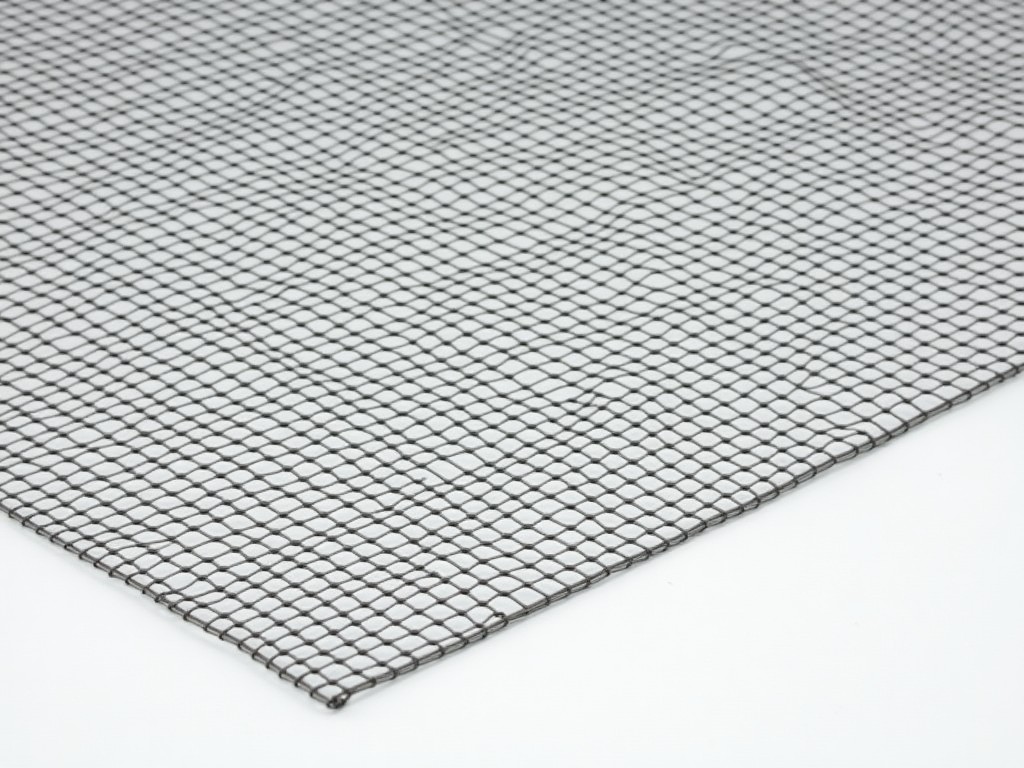
Flattened expanded metal mesh lath is produced by slitting and stretching a metal sheet, then passing it through a rolling process to create a smooth, planar surface while maintaining the integral
B2B Flattened Expanded Metal Mesh Lath
Flattened expanded metal mesh lath is produced by slitting and stretching a metal sheet, then passing it through a rolling process to create a smooth, planar surface while maintaining the integral diamond-shaped openings. This manufacturing method eliminates sharp edges and protrusions common in standard expanded metal, resulting in a material suitable for applications requiring a uniform substrate without compromising the inherent strength and open area of expanded metal. The flattening process alters the nominal thickness and opening dimensions slightly compared to standard expanded metal, but the longitudinal and transverse strands remain fused at their junctions, ensuring structural continuity.
The primary advantage of flattened expanded metal lath lies in its dual functionality as both a reinforcement medium and a mechanical key. The flattened surface provides consistent contact area for adhesives, mortars, or coatings, while the underlying strand geometry delivers tensile resistance and crack control. Unlike woven wire mesh or perforated sheet, expanded metal lath has no welds or joints that can fail under stress; the material is a single piece, reducing potential points of delamination or separation in composite assemblies. This characteristic is particularly valuable in applications subjected to thermal cycling, impact, or sustained loading.
Material Selection and Mechanical Properties
Carbon steel is the most common base material for flattened expanded metal lath due to its favorable strength-to-cost ratio and ease of forming during the expansion and flattening processes. Typical grades include low-carbon steels such as AISI 1008 or 1010, which offer sufficient ductility for the stretching operation without cracking. For environments requiring enhanced corrosion resistance, galvanized carbon steel (hot-dipped or electrogalvanized) or stainless steel alloys (e.g., 304, 316) are used. The choice of material directly affects the lath’s yield strength, elongation, and long-term performance in specific exposure conditions.
Mechanical properties vary with material type, strand thickness, and opening size. For carbon steel flattened lath, typical tensile strength ranges from 300 to 500 MPa, with yield strength between 200 and 350 MPa, depending on the grade and degree of cold work induced during processing. Elongation at break generally falls between 10% and 25%, reflecting a balance between strength and formability. Stainless steel variants exhibit higher tensile strength (500–700 MPa) and superior corrosion resistance but reduced elongation compared to carbon steel. These values are influenced by the flattening roll pressure, which can induce additional work hardening.
| Property | Typical Range (Carbon Steel) | Typical Range (Stainless Steel 304) |
|---|---|---|
| Tensile Strength | 300–500 MPa | 500–700 MPa |
| Yield Strength | 200–350 MPa | 200–300 MPa |
| Elongation at Break | 10–25% | 40–60% |
| Thickness (Nominal) | 0.5–2.0 mm | 0.5–2.0 mm |
| Opening Size (SWD x LWD) | 10x20 mm to 50x100 mm | 10x20 mm to 50x100 mm |
Nominal thickness and opening dimensions are specified after flattening, meaning the original expanded metal profile is altered during rolling. The Short Way of the Diamond (SWD) and Long Way of the Diamond (LWD) are measured center-to-center across the openings in the flattened state. Strand width and thickness are critical parameters affecting open area percentage and load-bearing capacity. Custom dimensions are achievable by adjusting the initial metal gauge, expander knife pattern, and flattening roll pressure, allowing engineers to tailor the lath for specific reinforcement or filtration requirements.
Applications in Industrial and Construction Sectors
In construction, flattened expanded metal lath is widely used as a substrate for plaster and stucco systems, particularly in exterior insulation and finish systems (EIFS) and traditional three-coat applications. The flattened surface ensures consistent embedment of the lath into the base coat, minimizing telegraphing of the diamond pattern through the finish layer. Its open area allows mechanical keying between coats, improving interlayer shear resistance and reducing the likelihood of delamination compared to solid substrates. The material’s rigidity also helps maintain flatness over large spans, reducing sagging in ceilings and walls.
Beyond plaster reinforcement, flattened lath serves as a concrete repair membrane where controlled bonding and crack isolation are required. When embedded in polymer-modified mortars or epoxy overlays, the lath distributes stress and limits propagation of shrinkage or thermal cracks. The flattened profile ensures close contact with the substrate, reducing the risk of debonding at the interface. In industrial flooring, it is used as a reinforcement layer in toppings and repair mortars subjected to heavy traffic or impact, where its high tensile strength and dimensional stability contribute to extended service life.
In manufacturing, flattened expanded metal lath functions as a support medium for catalysts, filters, and battery electrodes. The uniform surface facilitates even coating deposition, while the open structure promotes fluid or gas flow and thermal dissipation. For example, in solid oxide fuel cells, flattened metal lath provides structural support for ceramic electrolytes while allowing gas permeability. In filtration applications, the lath acts as a pre-filter or diffuser, distributing flow evenly across a finer media downstream. Its integral structure eliminates the risk of fiber shedding associated with fibrous meshes, making it suitable for cleanroom or pharmaceutical environments.
Customization and Manufacturing Considerations
Customization of flattened expanded metal lath begins with the selection of base material specification, including alloy type, temper, and surface finish (e.g., mill, galvanized, passivated). The expander tool design determines the strand geometry and opening pattern, which can be modified to achieve specific open area percentages, typically ranging from 30% to 70% depending on the application. Flattening roll pressure and speed are adjusted to control the final thickness and surface smoothness without inducing excessive work hardening or cracking. Post-processing options include cutting to size, edge bending, or forming into specific shapes.
Tolerances are influenced by the inherent variability in the expansion and flattening processes. Typical dimensional tolerances for width and length are ±3 mm or ±0.5%, whichever is greater. Thickness tolerance after flattening is generally ±0.1 mm for carbon steel and ±0.08 mm for stainless steel, reflecting the precision of the rolling equipment. Opening dimensions (SWD/LWD) may vary by ±10% due to material springback and roll wear. These tolerances are sufficient for most structural and reinforcement applications but should be verified for precision-dependent uses such as tight-tolerance filtration or electrode substrates.
Surface treatments are applied post-flattening to enhance performance in specific environments. Galvanization (hot-dip or electrogalvanized) provides sacrificial corrosion protection for carbon steel lath in outdoor or humid conditions. Passivation treatments for stainless steel remove free iron and enhance the chromium oxide layer, improving resistance to pitting and crevice corrosion. Painting or powder coating may be applied for aesthetic or additional barrier protection, though adhesion promoters are often required due to the smooth, non-porous nature of the flattened surface. All treatments are selected based on the expected service life and exposure conditions.
Quality Assurance and Testing Protocols
Quality control for flattened expanded metal lath focuses on verifying dimensional accuracy, mechanical integrity, and surface consistency. Incoming raw material is inspected for gauge, width, and surface defects before processing. During production, strand width, thickness, and opening dimensions are monitored at regular intervals using calibrated gauges and optical comparators. The flattening process is checked for uniformity by measuring thickness across the width and length of the sheet to detect rolling inconsistencies or edge effects.
Mechanical properties are validated through tensile testing of specimens cut from the flattened lath, following standards such as ASTM E8 or ISO 6892. Elongation, yield strength, and tensile strength are compared against material specifications. Bend tests may be performed to assess ductility and resistance to cracking during forming. For coated or galvanized products, coating thickness and adhesion are verified using magnetic gauges and tape or scratch tests, respectively. Visual inspection ensures absence of sharp edges, burrs, or delamination that could compromise safety or performance.
Packaging is designed to prevent deformation and corrosion during transit and storage. Sheets are typically stacked flat on pallets with interleaving paper or plastic film to prevent abrasion. Edge protectors are applied to mitigate damage from handling. For outdoor storage or long-term retention, moisture-barrier wraps and desiccants are used, particularly for uncoated carbon steel. Labels include material grade, dimensions, heat number, and any applicable certifications. These measures ensure the product arrives at the point of use in a condition suitable for immediate installation or further processing.
Comparison with Alternative Reinforcement Materials
Compared to woven wire mesh, flattened expanded metal lath offers superior in-plane rigidity and impact resistance due to its continuous strand structure, which lacks the potential for wire displacement or unraveling at intersections. Woven mesh relies on friction at crossover points to maintain integrity, which can degrade under vibration or cyclic loading. Perforated sheet, while providing a smooth surface, generally has lower open area and higher weight for equivalent strength, and the perforating process introduces stress concentrations around hole boundaries that can initiate cracking under load.
Solid metal plate provides the highest stiffness but lacks the open area necessary for mechanical keying in composite systems, often requiring surface roughening or bonding agents to achieve adequate adhesion. Its weight and material cost are significantly higher than expanded lath for equivalent coverage. Fibrous meshes (e.g., fiberglass or polymer) offer corrosion resistance and light weight but exhibit lower tensile strength and modulus, limiting their use in structural reinforcement. They are also susceptible to UV degradation and thermal expansion mismatch in certain composites.
Flattened expanded metal lath achieves a balance of strength, open area, dimensional stability, and cost-effectiveness that is difficult to match with alternatives. Its integral structure eliminates concerns about joint failure, while the flattened surface ensures compatibility with a wide range of coatings and mortars. For applications requiring both reinforcement and substrate uniformity—such as architectural finishes, industrial flooring, or electrochemical components—it provides a technically sound solution with predictable long-term behavior.
For technical consultation, custom specifications, or sample requests regarding flattened expanded metal mesh lath for your application, please contact our engineering team to discuss material selection, dimensional requirements, and performance expectations.
Product Categories


Send Inquiry
If you are interested in our products, leave your information here and we will be in touch shortly.