B2B Stainless Steel Screen Mesh Sizes
Selecting the correct stainless steel screen mesh size requires understanding how opening dimensions, wire diameter, and weave pattern interact to affect flow rates, particle retention, and
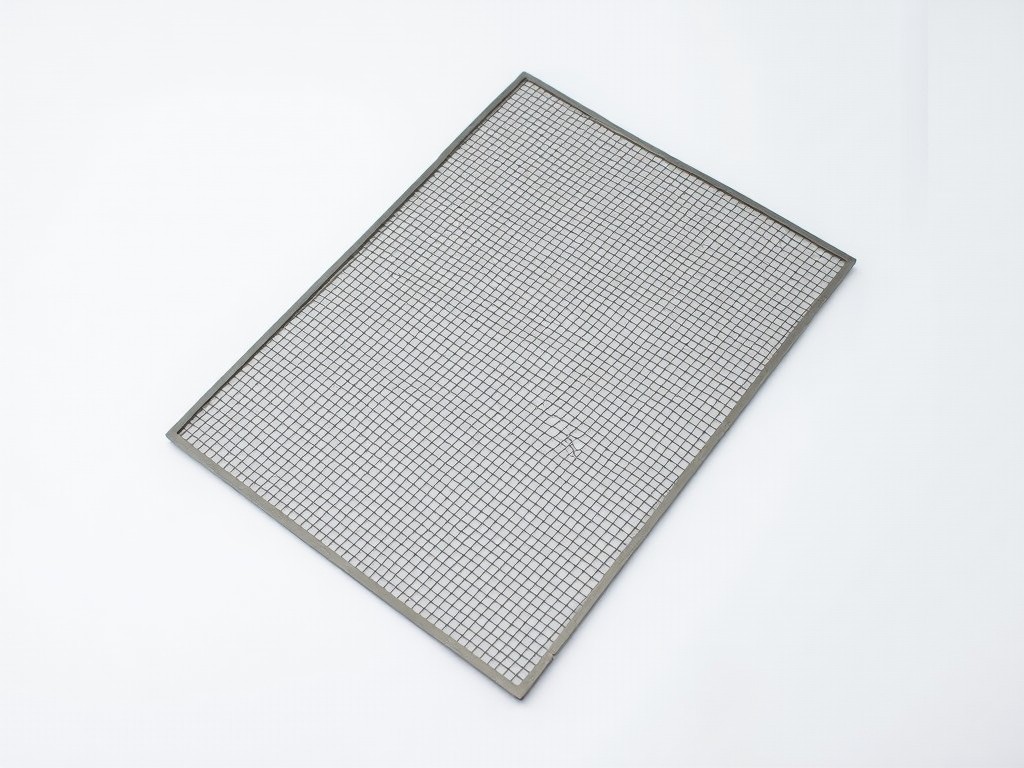
Stainless Steel Screen Mesh Sizes for Industrial Applications
Selecting the correct stainless steel screen mesh size requires understanding how opening dimensions, wire diameter, and weave pattern interact to affect flow rates, particle retention, and structural integrity. This page explains the technical factors that determine mesh performance in filtration, separation, and screening operations across process industries.
Mesh Size Definition and Measurement Standards
Mesh size refers to the number of openings per linear inch, measured from the center of one wire to the center of the next parallel wire. This count determines the nominal opening size, but actual clear opening depends on wire thickness. Industry standards such as ASTM E11 and ISO 3310-1 define testing methods and tolerance ranges for woven wire cloth used in laboratory and industrial sieving.
For example, a 10 mesh screen has 10 openings per inch. If the wire diameter is 0.010 inches, the clear opening calculates to 0.090 inches (1 inch ÷ 10 openings − wire diameter). Changing wire diameter while keeping mesh count constant alters flow characteristics and mechanical strength without changing the nominal mesh designation.
Common Stainless Steel Mesh Sizes and Their Industrial Uses
Mesh selection begins with identifying the target particle size to retain or pass. Finer meshes capture smaller particles but increase pressure drop and clogging risk. Coarser meshes allow higher flow rates but offer less filtration precision. The following table lists typical mesh sizes, their approximate clear openings, and common applications where these dimensions provide optimal balance.
| Mesh Size | Typical Wire Diameter (in) | Clear Opening (in) | Clear Opening (µm) | Typical Applications |
|---|---|---|---|---|
| 4 Mesh | 0.025 | 0.225 | 5715 | Coarse filtration of granules, pellet screening, blast media separation |
| 10 Mesh | 0.012 | 0.088 | 2235 | Foundry sand reclamation, grain cleaning, catalyst screening |
| 40 Mesh | 0.008 | 0.017 | 432 | Pharmaceutical powder sifting, pigment grading, fine chemical separation |
| 100 Mesh | 0.0045 | 0.0055 | 140 | Liquid filtration in food processing, ink filtration, polymer melt screening |
| 200 Mesh | 0.0025 | 0.0025 | 64 | Ultrafine filtration, microfluidic devices, semiconductor slurry filtering |
Clear opening values assume standard wire diameters; actual dimensions vary by alloy and manufacturing tolerance. For critical applications, request certified dimensional reports based on optical microscopy or laser measurement traceable to national standards.
Weave Patterns and Their Impact on Mesh Performance
The weave pattern determines how wires interlock, affecting open area percentage, flow directionality, and mechanical stability. Plain weave offers symmetric flow and is common in general filtration. Twill weave allows larger wire diameters for the same mesh count, increasing strength and abrasion resistance. Dutch weave uses varying wire diameters in warp and fill directions to achieve high strength with precise micron-rated retention.
For example, a 500 mesh Dutch weave may use 0.0015 inch warp wires and 0.0010 inch fill wires to create a tortuous path that retains particles down to 5 µm while maintaining structural integrity under high differential pressure. Plain weave at the same nominal mesh would be too fragile for such demands.
Material Selection: Stainless Steel Alloys for Screen Mesh
Alloy choice affects corrosion resistance, temperature tolerance, and compatibility with process media. Type 304 stainless steel provides adequate resistance to organic chemicals, water, and atmospheric exposure at temperatures up to 870°C. Type 316L adds molybdenum for enhanced resistance to chlorides and acids, making it suitable for marine environments, chemical processing, and pharmaceutical applications where sensitization must be avoided.
For high-temperature oxidizing environments above 900°C, alloys such as 310 or 330 may be required. In reducing atmospheres or sulfur-containing processes, nickel-based alloys like Hastelloy or Inconel offer superior longevity. Always consult media compatibility charts before finalizing material selection.
Customization Options for Industrial Requirements
Standard mesh rolls or cut-to-size panels may not meet specific installation constraints. Custom fabrication includes edge finishing (hemmed, welded, or framed), dimensional tolerances tighter than standard, and special surface treatments. For sanitary industries, electropolishing reduces surface roughness to minimize microbial adhesion and facilitate cleaning-in-place (CIP) procedures.
Widths can be slit to precise dimensions, and lengths can be fabricated to match equipment specifications without excess waste. For applications requiring frequent mesh replacement, quick-release clamping systems or cartridge designs reduce downtime. All customizations should be validated against ASME BPE or 3-A Sanitary Standards where applicable.
Quality Control and Testing Protocols
Reliable performance begins with verified raw material certification and continues through in-process monitoring. Each batch undergoes chemical analysis to confirm alloy composition. Wire diameter is measured using laser micrometers at multiple points per roll. Mesh count is verified via optical comparators or digital imaging systems calibrated against NIST-traceable standards.
Tensile testing ensures wire strength meets minimum requirements for the specified alloy and diameter. For filtration integrity, bubble point testing or bead challenge tests may be performed to validate retention characteristics. Final inspection includes visual defect screening under controlled lighting to identify skips, double picks, or broken wires that could compromise performance.
Application Engineering: Matching Mesh to Process Conditions
Beyond particle size, engineers must evaluate pressure drop, flow velocity, temperature cycling, and mechanical vibration. High flow rates through fine mesh can induce wire fatigue over time. Pulsating flows may require Dutch weave or multilayer laminates to resist deformation. In abrasive slurries, harder wire alloys or surface hardening treatments extend service life.
For example, in a catalyst recovery system operating at 150°C with periodic backflushing, a 316L Dutch weave 325 mesh panel with welded stainless steel frame withstands cyclic stress better than a plain weave equivalent. Consulting with application engineers during specification prevents overspecification or premature failure.
Selecting the correct stainless steel screen mesh involves balancing retention efficiency, flow capacity, mechanical durability, and chemical compatibility. Provide your process parameters—including target particle size, operating temperature, pressure differential, and media composition—for a tailored recommendation that minimizes risk and maximizes service life.
To discuss your specific screening, filtration, or separation challenge, contact our technical team. Share your application details, and we will provide mesh specifications, weave recommendations, and material options grounded in engineering principles—not generalizations.
Request Technical Consultation
Product Categories


Send Inquiry
If you are interested in our products, leave your information here and we will be in touch shortly.