Brass Wire Mesh Panels For Cabinet Doors
Brass wire mesh panels for cabinet doors provide a functional and aesthetic solution where ventilation, visibility, and corrosion resistance are required. These panels consist of woven brass wire
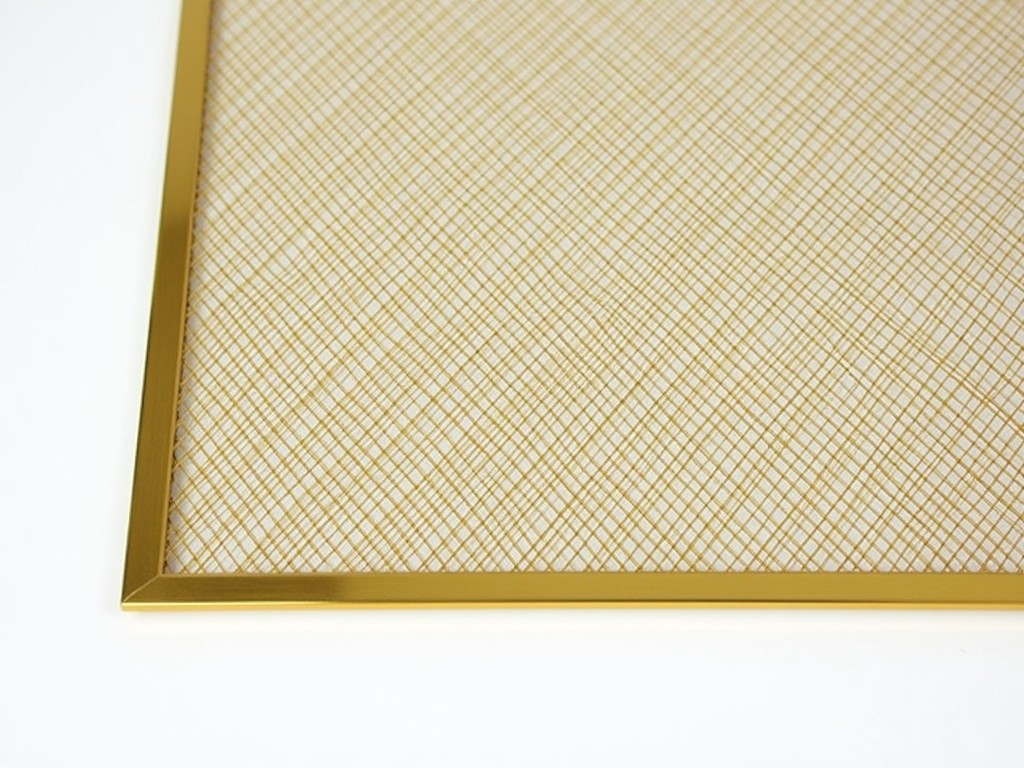
Brass Wire Mesh Panels for Cabinet Doors
Brass wire mesh panels for cabinet doors provide a functional and aesthetic solution where ventilation, visibility, and corrosion resistance are required. These panels consist of woven brass wire configured into rigid or semi-rigid sheets suitable for integration into cabinet door assemblies. The material combination offers inherent antimicrobial properties, non-sparking, and electrically conductive characteristics relevant to specific industrial environments.
Unlike solid door inserts, mesh panels allow controlled airflow while maintaining visual screening of internal components. This is particularly valuable in enclosures housing electronic controls, battery systems, or chemical storage where heat dissipation or gas venting is necessary without compromising security or containment.
The selection of brass—specifically copper-zinc alloys such as C260 (cartridge brass)—balances mechanical formability with environmental durability. Compared to stainless steel or aluminum alternatives, brass develops a stable patina over time that resists further oxidation in indoor and mildly exposed outdoor conditions, reducing maintenance frequency.
Material Composition and Wire Specifications
The base material is typically C26000 brass, containing approximately 70% copper and 30% zinc. This alloy provides tensile strength in the range of 340–480 MPa depending on temper, with elongation between 10% and 40%, allowing for forming during panel fabrication without cracking. The zinc content enhances corrosion resistance in neutral pH environments while maintaining electrical conductivity at approximately 28% IACS.
Wire diameter options commonly range from 0.2 mm to 0.8 mm, selected based on required open area, mechanical rigidity, and visibility needs. Finer wires (0.2–0.4 mm) yield higher open area and finer screening but reduced impact resistance; heavier gauges (0.6–0.8 mm) increase panel stiffness and load-bearing capacity at the cost of reduced transparency and airflow.
Mesh count (wires per inch) varies from 8×8 to 40×40, directly influencing open area percentage. For example, a 20×20 mesh with 0.3 mm wire achieves approximately 36% open area, while a 10×10 mesh with 0.5 mm wire yields around 49% open area. These values are critical when calculating ventilation efficiency or light transmission for design validation.
Weave Patterns and Structural Performance
The most common weave is plain square, where each warp wire alternates over and under each weft wire. This symmetrical structure provides uniform tensile strength in both directions and resists distortion under load. Plain weave is preferred for cabinet doors due to its flat profile, ease of framing, and consistent appearance.
Alternative weaves such as twill or Dutch weave are less common in this application but may be specified for enhanced filtration or abrasion resistance. Twill weave offers slightly greater flexibility and drapability, while Dutch weave (using heavier warp and finer weft wires) creates a tighter surface for particle retention—though these traits are rarely prioritized in door panel use.
Panel flatness and edge stability depend on post-weaving processes. Stress-relief annealing may be applied to reduce internal tension from weaving, minimizing spring-back or warping when cut to size. Edges are often folded, welded, or encapsulated in extruded profiles to prevent fraying and facilitate mechanical fastening.
Typical Dimensions and Tolerances
Standard panel dimensions for cabinet door integration range from 100 mm × 100 mm to 600 mm × 900 mm, though custom sizes are routinely produced to match specific door geometries. Thickness is determined by wire diameter and weave, typically falling between 0.3 mm and 1.0 mm for common configurations.
Dimensional tolerances are influenced by wire diameter, mesh count, and cutting method. Laser or shear cutting typically achieves edge accuracy within ±0.5 mm, while stamped or punched features may hold ±0.2 mm tolerance when tooling is maintained. Squareness (diagonal deviation) is generally held to less than 2 mm per 300 mm span for framed panels.
Flatness tolerance—critical for seamless door surface integration—is usually specified as ≤1.5 mm deviation over a 300 mm length when measured under no load. This ensures the panel sits flush within the door frame without creating gaps or stress points that could lead to vibration noise or premature wear.
Surface Finish and Aging Characteristics
As-manufactured brass wire mesh exhibits a bright, reflective yellow-gold finish due to the copper-rich surface. Over time, exposure to air and moisture leads to the formation of a zinc oxide layer, followed by copper carbonate patina—resulting in the characteristic dull brown or gray-green surface seen on aged brass.
This patina is adherent and protective, significantly slowing further corrosion. In indoor cabinet applications with controlled humidity, the color change stabilizes within 6–18 months and continues minimally thereafter. No protective coating is typically applied unless specific aesthetic or anti-tarnish requirements exist.
For applications requiring a consistent appearance, chemical treatments such as lacquering or passivation can be used to inhibit oxidation. However, these coatings may affect electrical conductivity, solderability, or tactile feel and are evaluated based on door function—particularly if grounding or EMI shielding is a design consideration.
Integration Methods with Cabinet Door Systems
Brass wire mesh panels are typically retained within the door frame using one of several methods: compression via a rubber or thermoplastic gasket, mechanical capture in a routed groove, or adhesion with structural tapes or adhesives. The choice depends on door material (wood, metal, composite), required serviceability, and environmental exposure.
In metal-framed doors, the mesh is often secured by folding the panel edges over a flange or inserting into a U-channel extrusion, then fastened with rivets, screws, or weld points. This method provides high retention strength and allows for panel replacement if needed. In wooden or laminated doors, a rebated recess with silicone or neoprene gasket offers vibration damping and accommodates minor expansion/contraction.
For doors requiring frequent access—such as maintenance panels on control cabinets—magnetic catches or quick-release latches may be incorporated into the frame design to allow tool-free removal of the mesh panel. Alignment features like dowel pins or registration tabs ensure consistent repositioning after service.
Functional Advantages in Specific Use Cases
In environments with explosive dust or flammable vapors—such as grain processing, paint booths, or battery charging stations—brass’s non-sparking nature reduces ignition risk during accidental impact or friction. This property, combined with its conductivity, allows the mesh to serve as part of an electrostatic discharge (ESD) or grounding path when bonded to the cabinet frame.
The material’s inherent antimicrobial properties, attributed to copper ions, inhibit bacterial growth on the surface. While not a substitute for cleaning protocols, this characteristic contributes to hygiene in food processing, pharmaceutical, or medical equipment cabinets where touch surfaces are a concern.
Comparison with Alternative Materials
| Property | Brass Wire Mesh | Stainless Steel Mesh (304) | Aluminum Mesh |
|---|---|---|---|
| Tensile Strength (MPa) | 340–480 | 500–750 | 100–300 |
| Electrical Conductivity (% IACS) | 28 | 2.5 | 61 |
| Non-Sparking | Yes | No | Yes |
| Antimicrobial (Cu Ion) | Inherent | No | No |
| Indoor Corrosion Resistance | Good (patina forms) | Excellent | Fair (oxidizes) |
| Typical Cost Factor | Medium | Medium-High | Low-Medium |
Table notes: Values are typical ranges for annealed temper unless otherwise specified. Cost factor reflects raw material and processing relative to baseline. Actual selection depends on performance priorities, environmental exposure, and lifecycle cost.
Customization Options
Customization begins with wire diameter and mesh count, selected to balance open area, mechanical strength, and visual density. Engineers typically calculate required airflow using Darcy’s law or empirical coefficients, then select mesh parameters that meet pressure drop targets without excessive material cost.
Panel shape can be rectangular, circular, or contoured to match door profiles. Features such as cutouts for handles, hinges, or indicators are programmed during CNC cutting or stamping. Edge treatments include folding, hemming, welding to frames, or encapsulation in PVC, aluminum, or rubber profiles for sealing and edge protection.
Additional options include selective plating (e.g., nickel or tin for solderability), annealing for stress relief, or lamination with transparent films for scratch resistance while maintaining ventilation. All customizations are evaluated for impact on flatness, conductivity, and long-term stability before production.
Quality Control and Inspection
Incoming wire is inspected for diameter tolerance, tensile strength, and surface defects using optical comparators and eddy current testing. Mesh uniformity is verified by counting wires over a known area and measuring open area consistency across the panel via light transmission or image analysis.
Dimensional inspection includes length, width, squareness, and flatness using calibrated gauges and coordinate measuring machines (CMM) for critical applications. Edge integrity is checked for burrs, cracks, or incomplete folding—particularly important where panels interface with gaskets or frames.
For orders requiring documentation, material test reports (MTRs) confirming alloy composition and mechanical properties are available. Visual inspection standards typically follow Class A or B criteria for appearance, allowing minor patina variation but rejecting defects such as wire breaks, discoloration from contamination, or deformation beyond tolerance.
Packaging and Handling
Panels are packaged flat to prevent bending or creasing. Individual units are separated by interleaving paper or polyethylene sheets to avoid surface abrasion. Stacks are placed in rigid cartons or crates with corner protection and labeled with part number, quantity, and handling instructions.
For larger panels or high-volume shipments, custom wooden frames or metal stillages are used to maintain flatness during transit. Humidity indicators may be included in desiccant-sealed packages for long-term storage or export to climates with high moisture exposure.
Handling recommendations include wearing clean gloves to prevent oils or salts from transferring to the brass surface, which could accelerate localized staining. Panels should be stored vertically or flat in a dry, temperature-stable environment away from direct sunlight or chemical vapors.
Applications in Industrial Cabinetry
Brass wire mesh panels are commonly specified for cabinet doors in industrial control enclosures where thermal management of variable frequency drives, power supplies, or PLC systems is required. The mesh allows convective cooling while maintaining a barrier against tools, dust, and accidental contact with live components.
In battery storage cabinets—particularly for lead-acid or lithium-ion systems—the non-sparking property reduces risk during venting of hydrogen gas, while the mesh contains electrolyte spray or particulate debris. Electrical continuity enables grounding of the cabinet frame to mitigate static buildup during charging cycles.
For technical inquiries, custom specifications, or quotation requests regarding brass wire mesh panels for cabinet doors, please contact our engineering team.
Request Information
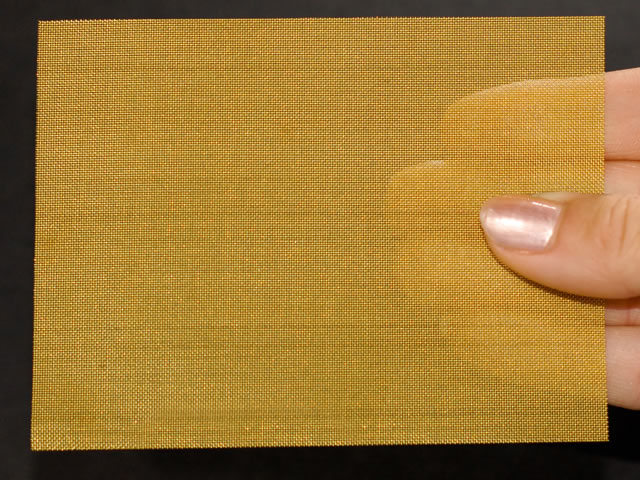
Product Categories


Send Inquiry
If you are interested in our products, leave your information here and we will be in touch shortly.