Buy Square Hole Perforated Metal Sheet
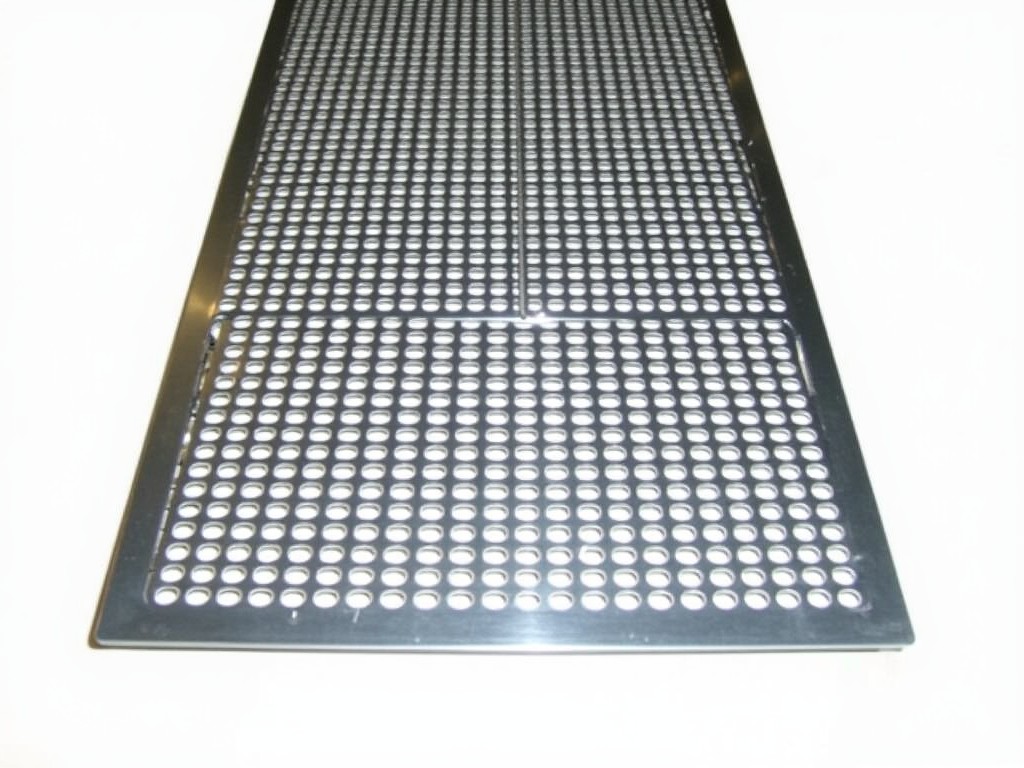
Square hole perforated metal sheets are engineered for applications requiring precise airflow control, filtration efficiency, and structural integrity. The geometric consistency of square
Buy Square Hole Perforated Metal Sheet
Square hole perforated metal sheets are engineered for applications requiring precise airflow control, filtration efficiency, and structural integrity. The geometric consistency of square perforations allows predictable open area percentages and uniform stress distribution under load. These sheets are commonly specified in industrial equipment where repeatable performance and dimensional stability are critical.
Material Selection and Mechanical Properties
The base material directly influences corrosion resistance, tensile strength, and formability. Carbon steel (ASTM A1008) offers high yield strength (~36 ksi) and is suitable for painted or powder-coated finishes in dry environments. Stainless steel grades 304 and 316 provide superior oxidation resistance, with 316 containing molybdenum for enhanced protection against chlorides in marine or chemical processing applications. Aluminum alloys (3003-H14, 5052-H32) deliver lightweight solutions with good corrosion resistance and conductivity, ideal for HVAC and electronic enclosures.
Thickness options typically range from 0.5 mm to 6.0 mm, depending on material and hole size. Thinner gauges facilitate bending and forming, while thicker sections maintain rigidity under mechanical stress. The relationship between hole size, pitch, and sheet thickness determines the open area percentage and structural limits—key parameters engineers evaluate during design validation.
Perforation Specifications and Open Area Calculation
Square hole patterns are defined by hole width (a), pitch (center-to-center distance, b), and layout orientation (straight or staggered). Open area percentage is calculated as (a² / b²) × 100 for straight layouts. For example, a 5 mm hole with a 10 mm pitch yields 25% open area. Staggered arrangements increase open area for the same hole size but require more complex tooling and may affect directional strength.
Standard hole sizes range from 1 mm to 50 mm, with pitches typically 1.5x to 3x the hole diameter to ensure material integrity. Custom patterns are available for specialized filtration or acoustic requirements. Edge margins (unperforated borders) are usually 10–20 mm unless otherwise specified, providing handling safety and frame compatibility.
Industrial Applications and Functional Advantages
In HVAC systems, square hole perforated sheets serve as diffuser plates where uniform air distribution prevents turbulence and pressure drop inefficiencies. The sharp 90° corners of square holes create predictable flow characteristics compared to round perforations, enabling engineers to model performance using computational fluid dynamics (CFD) with higher accuracy.
Industrial machinery guards use these sheets to balance visibility and protection. The geometric pattern allows clear sightlines for monitoring moving parts while meeting OSHA 1910.212 requirements for opening size limits. Acoustic panels in generator enclosures leverage the perforation geometry to tune sound absorption frequencies when backed with absorbent materials.
Food processing equipment benefits from the ease of cleaning and sanitation compliance. Square holes minimize crevices where contaminants can accumulate, supporting CIP (clean-in-place) procedures. The smooth surface finish achievable with stainless steel grades reduces bacterial adhesion risk.
Customization Options and Manufacturing Considerations
Beyond standard patterns, manufacturers can accommodate variable hole sizes, tapered perforations, or combined round/square layouts for application-specific demands. Secondary operations include laser cutting for complex profiles, CNC bending for enclosures, and welding preparation with controlled heat-affected zones. Surface treatments such as galvanizing, anodizing, or passivation are applied post-perforation to preserve coating integrity.
Tolerances adhere to industry standards: hole size ±0.1 mm, pitch ±0.15 mm, and overall flatness within 0.5% of sheet length. For critical applications, full dimensional inspection reports are available. Material test certificates (MTCs) and conformance documentation accompany each shipment upon request.
Quality Control and Testing Protocols
Quality assurance begins with raw material verification using spectrometer analysis to confirm alloy composition. During perforation, punch and die wear is monitored via statistical process control (SPC) to maintain hole dimensional consistency. Final inspection includes visual examination for burrs, deformation, or coating defects under 10x magnification.
Flatness is measured using laser profilometry across the sheet surface. Open area verification is conducted through digital image analysis of sample sections. Mechanical properties such as tensile strength and elongation are validated per ASTM E8/E8M for metal sheets. All test records are retained for traceability.
Packaging and Logistics for Industrial Delivery
Sheets are packaged to prevent surface damage and corrosion during transit. Interleaving with polyethylene film or kraft paper protects finishes. Bundles are secured with steel or polyester strapping on wooden pallets, with corner guards and edge protectors. For export shipments, moisture-barrier wrapping and desiccant packs are included based on destination climate.
Standard packaging units vary by thickness: thinner gauges (≤2 mm) are stacked in bundles of 25–50 sheets, while thicker sections (≥3 mm) are limited to 10–20 sheets per bundle to manage weight. Custom packaging—such as crating for CNC-ready panels or protective coatings for outdoor storage—is available. All packages include clearly labeled identification tags with material grade, dimensions, heat number, and quantity.
| Parameter | Typical Range / Options | Notes |
|---|---|---|
| Material | Carbon steel, 304/316 stainless steel, 3003/5052 aluminum | Grade selected per environmental exposure |
| Thickness | 0.5 mm – 6.0 mm | Dependent on material and hole size |
| Hole Size (a) | 1 mm – 50 mm | Square width; custom sizes available |
| Pitch (b) | 1.5a – 3a | Center-to-center distance |
| Open Area | 5% – 65% | Calculated as (a²/b²)×100 for straight layout |
| Sheet Size | Up to 1500 mm × 3000 mm | Larger sizes available via splicing or special order |
| Surface Finish | Mill finish, brushed, polished, painted, powder coated | Applied post-perforation |
Procurement teams should provide detailed specifications including material grade, thickness, hole size, pitch, sheet dimensions, quantity, and any required secondary operations or certifications. This enables accurate quotation and prevents production delays. For applications involving regulatory compliance (e.g., FDA, ASME, or ISO standards), explicit requirements must be communicated at quote stage.
To request a quote or discuss technical specifications for your project, provide your requirements through the inquiry form. Our engineering team will review your needs and respond with feasible options, lead times, and pricing.
Product Categories


Send Inquiry
If you are interested in our products, leave your information here and we will be in touch shortly.