Buy Stainless Steel Perforated Mesh Sheet
Stainless steel perforated mesh sheets are engineered metal panels with precisely punched hole patterns, offering controlled airflow, light transmission, filtration efficiency, and structural
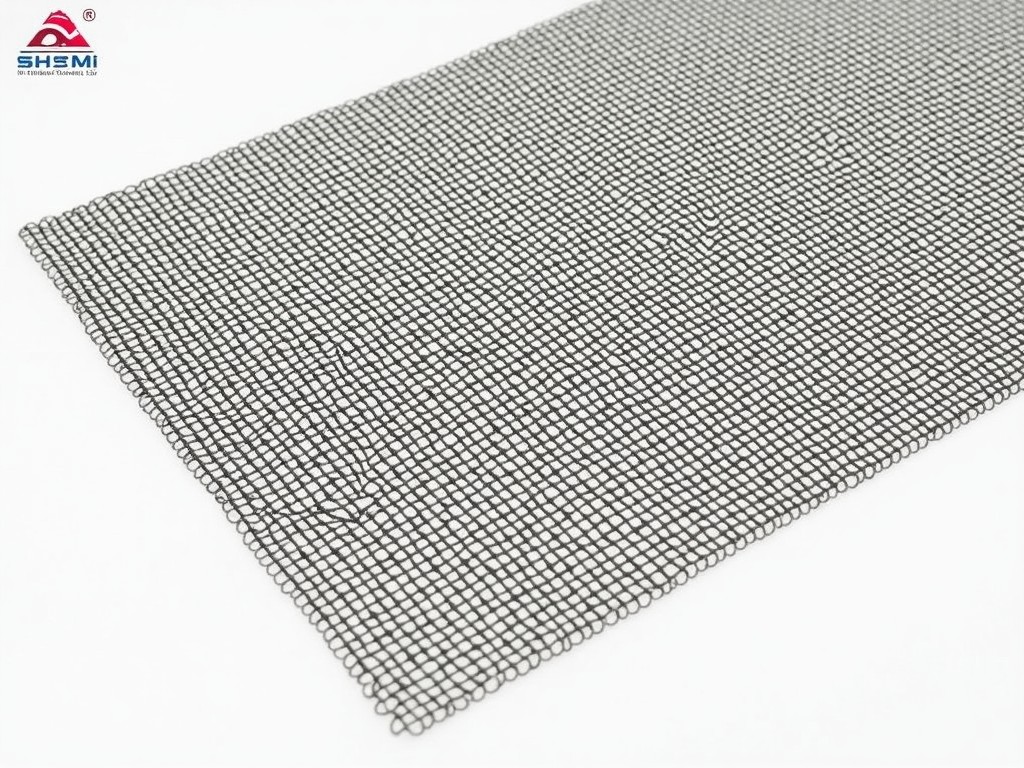
Stainless Steel Perforated Mesh Sheet
Stainless steel perforated mesh sheets are engineered metal panels with precisely punched hole patterns, offering controlled airflow, light transmission, filtration efficiency, and structural integrity. These sheets combine the corrosion resistance of stainless steel with the functional benefits of perforation, making them suitable for demanding industrial environments where both performance and longevity are critical.
Material Selection and Properties
The most commonly used grades for perforated mesh sheets are AISI 304 and 316 stainless steel. Grade 304 provides excellent resistance to atmospheric corrosion and is suitable for indoor and mildly corrosive outdoor environments. Grade 316, with added molybdenum, offers superior resistance to chlorides and acids, making it ideal for marine, chemical processing, and food-grade applications where exposure to harsh substances is expected.
Sheet thickness typically ranges from 0.5 mm to 3.0 mm, selected based on load-bearing requirements and hole size. Thinner gauges are used for decorative or filtration applications where flexibility and weight are concerns, while thicker sheets support structural loads in walkways, machine guards, or industrial flooring. The tensile strength of 304 stainless steel averages 505 MPa, and 316 averages 515 MPa, ensuring dimensional stability under stress.
Perforation Patterns and Open Area
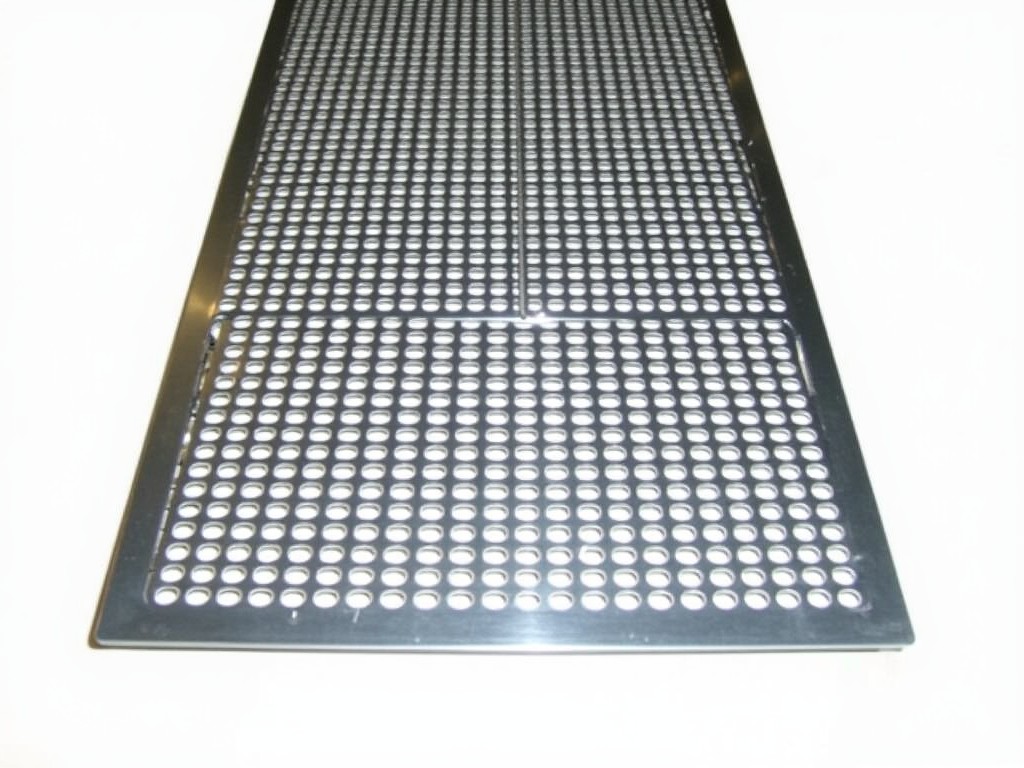
Perforation patterns are defined by hole shape, size, pitch, and arrangement. Common hole shapes include round, square, slotted, and hexagonal, each influencing flow dynamics, screening efficiency, and aesthetic appearance. Round holes are most prevalent due to ease of fabrication and predictable performance. The open area—the percentage of sheet surface occupied by holes—directly affects airflow, light passage, and liquid drainage, and is calculated based on hole diameter and center-to-center spacing.
For example, a 3 mm diameter hole on a 6 mm pitch (staggered) yields approximately 23% open area, while the same hole size on a 4 mm pitch increases open area to over 50%. Designers select patterns based on required flow rates, particle retention size, or visual transparency. Custom patterns are available to meet specific process needs, such as acoustic damping or directional flow control.
Industrial Applications
In food and beverage processing, perforated stainless steel sheets are used as drying trays, sieves, and conveyor belts where hygiene, cleanability, and resistance to washdowns are essential. The smooth surface and lack of crevices prevent bacterial buildup, and the perforations allow for efficient water drainage and air circulation during cooling or baking processes.
In automotive and machinery manufacturing, these sheets serve as heat shields, speaker grilles, and protective covers for moving parts. Their ability to dissipate heat while blocking debris makes them ideal for engine compartments and brake systems. In architectural applications, perforated panels function as sunshades, facades, and interior dividers, offering glare reduction, ventilation, and visual interest without compromising structural safety.
Environmental and water treatment facilities use perforated stainless steel in screening systems, aeration tanks, and filter supports. The material withstands constant exposure to water, chemicals, and biological agents while maintaining precise hole integrity over time. In mining and aggregate processing, perforated sheets act as vibratory screen media, separating particles by size with high durability under abrasive conditions.
Customization Options
Perforated mesh sheets can be customized in dimensions, hole pattern, material grade, thickness, and edge treatment. Standard sheet sizes range from 1000×2000 mm to 1500×3000 mm, but custom cutting to specific lengths and widths is available to minimize waste and fit exact installation requirements. Hole diameter can be specified from as small as 0.5 mm for fine filtration to over 20 mm for heavy-duty screening.
Edge options include mill edges, deburred, rounded, or flanged finishes, depending on handling safety and assembly needs. Secondary operations such as bending, forming, welding, or coating (e.g., powder coating for color coding) can be integrated into the manufacturing process. Surface finishes like 2B, BA, or mirror polish are selected based on aesthetic or hygienic requirements.
Quality Control and Manufacturing
Manufacturing begins with coil or sheet stainless steel fed into CNC-controlled punch presses or laser perforation systems. Tooling precision ensures hole dimensional accuracy within ±0.05 mm and consistent pitch alignment across the sheet. Post-perforation, sheets are flattened to relieve internal stresses introduced during punching, preventing warping or buckling in downstream use.
Quality inspection includes visual checks for burrs, deformation, or incomplete holes, dimensional verification of hole size and spacing, and material verification via mill test reports. For critical applications, additional testing such as open area verification, airflow testing, or corrosion resistance validation may be performed. All processes follow ISO 9001-aligned procedures to ensure traceability and repeatability.
Comparison of Common Perforation Parameters
| Parameter | Typical Range | Application Influence |
|---|---|---|
| Hole Diameter | 0.5 mm – 25 mm | Smaller holes increase filtration precision; larger holes improve flow capacity |
| Pitch (Center-to-Center) | 1.5 mm – 50 mm | Closer pitch increases open area and structural weakness; wider pitch reduces flow but adds strength |
| Open Area | 5% – 60% | Determines airflow, light transmission, and drainage efficiency; must balance with strength requirements |
| Sheet Thickness | 0.5 mm – 3.0 mm | Thinner sheets for weight-sensitive uses; thicker for load-bearing or high-vibration environments |
| Material Grade | 304, 316, 316L | 304 for general use; 316 for chloride resistance; 316L for weldability in corrosive settings |
Ordering and Lead Time
To request a quotation, provide the required material grade, sheet dimensions, hole shape and size, pitch, open area tolerance, edge finish, and quantity. Drawings or sketches are helpful for complex patterns or non-rectangular shapes. Standard lead time for stock materials is 2–3 weeks; custom tooling or special alloys may extend this to 4–6 weeks. Samples are available upon request to validate hole pattern and material suitability before full production.
For technical consultation or to discuss your specific perforation requirements, contact our engineering team. We provide detailed machinability data, open area calculations, and material certification to support your design and procurement decisions.

Product Categories


Send Inquiry
If you are interested in our products, leave your information here and we will be in touch shortly.