Buy Stainless Steel Rope Mesh Netting
Stainless steel rope mesh netting is a structural textile fabricated from interwoven stainless steel wire ropes, forming a flexible yet high-strength barrier system. Unlike welded or knitted meshes,

Stainless Steel Rope Mesh Netting
Stainless steel rope mesh netting is a structural textile fabricated from interwoven stainless steel wire ropes, forming a flexible yet high-strength barrier system. Unlike welded or knitted meshes, rope mesh derives its strength from the inherent tensile capacity of continuous wire ropes, which are interlaced at right angles to create open apertures. This construction method preserves the ductility and fatigue resistance of the base rope while distributing loads across multiple load paths. The result is a mesh that combines high open area with significant breaking strength, suitable for applications requiring both visibility and containment under dynamic or static loads.
Material selection is critical to performance in specific environments. The most common grades are AISI 304 and 316 stainless steel, chosen for their corrosion resistance and mechanical properties. Grade 304 offers adequate resistance to atmospheric corrosion and is suitable for indoor or mildly exposed outdoor applications. Grade 316, with added molybdenum, provides superior resistance to chlorides and acids, making it preferable for marine, coastal, or industrial environments where exposure to salt, chemicals, or pollution is expected. Wire rope diameter typically ranges from 1.5 mm to 6 mm, directly influencing the mesh’s tensile strength, stiffness, and aperture size.
The open area ratio of stainless steel rope mesh netting is a key design parameter, often exceeding 80% depending on rope diameter and mesh count. This high openness minimizes wind load, reduces visual obstruction, and allows for unobstructed sightlines—critical in architectural, safety, and animal containment applications. Aperture sizes are customizable, commonly ranging from 25 mm to 150 mm square or rectangular, determined by the center-to-center spacing of the ropes. Smaller apertures increase material usage and weight but provide finer containment; larger apertures reduce weight and cost while maintaining structural integrity for larger-scale barriers.
Technical Specifications
| Parameter | Typical Range / Options |
|---|---|
| Stainless Steel Grade | AISI 304, AISI 316, 316L (custom grades upon request) |
| Wire Rope Diameter | 1.5 mm – 6.0 mm (custom diameters available) |
| Mesh Aperture (Center-to-Center) | 25 mm – 150 mm (square or rectangular) |
| Open Area Ratio | Typically 75% – 90% (dependent on rope diameter and aperture) |
| Tensile Strength (per rope) | Based on rope diameter and grade; e.g., 3mm 316 rope ≈ 12–15 kN minimum breaking load |
| Standard Roll Width | Up to 3000 mm (wider widths via splicing or custom looms) |
| Standard Roll Length | Up to 50 linear meters (custom lengths available) |
| Edge Treatment | Selvage ropes, welded end bars, or custom end fittings (e.g., loops, shackles) |
*Values are typical; actual specifications depend on project requirements and are confirmed during quotation.
Key Applications and Functional Benefits
In architectural façades and balustrades, stainless steel rope mesh netting serves as an infill panel that meets safety codes while preserving design transparency. The high open area minimizes wind pressure on the structure, reducing the load on supporting frames compared to solid or perforated panels. Its flexibility allows it to conform to curved or irregular substrates without cracking or delamination, a common issue with rigid materials. The mesh’s ability to deform elastically under impact and return to shape provides inherent energy absorption, enhancing safety in high-traffic or public access areas.
For animal enclosures in zoos, wildlife sanctuaries, or agricultural facilities, the mesh provides a durable barrier that resists chewing, clawing, and environmental degradation. The smooth, rounded rope surfaces reduce the risk of abrasion or injury to animals compared to welded mesh with sharp protrusions. Aperture sizes are selected based on the target species’ size and behavior—smaller apertures for rodents or birds, larger for primates or ungulates—while maintaining sufficient strength to withstand dynamic loads from movement or impact. The non-reflective, matte finish of stainless steel also reduces visual stress for animals in captivity.
In fall protection and debris netting systems on construction sites or bridges, the mesh functions as a secondary safeguard to catch tools, materials, or personnel. Its high energy absorption capacity, derived from the elongation properties of wire rope, allows it to arrest falling objects without transferring excessive peak forces to the anchorage system. The mesh’s visibility aids in site monitoring, and its resistance to UV degradation and moisture ensures long-term reliability in outdoor temporary installations. Unlike synthetic nets, it does not suffer from creep or strength loss under sustained load.
Customization and Manufacturing Considerations
Customization begins with defining the mechanical and environmental demands of the application. Engineers specify rope diameter and grade based on required tensile strength, corrosion exposure, and fatigue life. Aperture size is then determined by containment needs, visibility requirements, and open area targets. The manufacturing process involves precision looms that weave longitudinal and transverse ropes in a plain weave pattern, ensuring consistent interlock and load distribution. Post-weaving, the mesh may undergo stress-relieving treatments to stabilize dimensions and reduce residual tension from the weaving process.
Edge finishing is tailored to installation methods. Selvage edges—formed by doubling the perimeter ropes—provide a reinforced border for clamping or lacing. For mechanical fastening, end bars or plates are welded or swaged to the mesh ends, creating a rigid interface for bolting to frames. In tensioned systems, loops or thimbles are spliced into the corners to facilitate connection to turnbuckles or cables. All edge treatments maintain the continuity of the stainless steel structure to avoid galvanic weaknesses or stress concentrations.
Quality control focuses on verifying rope integrity, weave consistency, and dimensional accuracy. Each rope is tested for tensile strength and elongation prior to weaving. During production, aperture dimensions are monitored at intervals to ensure uniformity. Final inspection includes visual checks for broken strands, misweaves, or contamination, and dimensional verification of roll width and length. Batch traceability is maintained for raw materials, allowing correlation of performance data to specific heat lots if required for project documentation.
Installation and Long-Term Performance
Installation methods vary based on whether the mesh is used in a tensioned or supported configuration. In tensioned applications—such as barrier nets or balustrade infills—the mesh is pulled tight using turnbuckles or tensioning rods attached to corner fittings. Proper pre-tension ensures minimal sag under load and enhances the mesh’s stiffness and load-distribution capability. Over-tensioning must be avoided to prevent exceeding the elastic limit of the ropes, which could lead to permanent deformation. Support spacing is determined by the mesh’s bending stiffness and expected load, typically ranging from 500 mm to 1500 mm for architectural uses.
In supported systems—such as ceiling panels or wall cladding—the mesh rests on a substructure and is fastened via clips, staples, or lacing cords. Here, the primary role is containment or screening rather than load-bearing, so tension is less critical. Fasteners are selected to avoid creating stress points that could lead to wire fatigue over time. Compatible materials (e.g., stainless steel fasteners) are used to prevent galvanic corrosion, especially in humid or saline environments. All fastening methods should allow for thermal expansion and contraction without inducing excessive stress.
Long-term performance is dominated by corrosion resistance and fatigue endurance. Stainless steel grades 304 and 316 form a passive chromium oxide layer that self-repairs in oxidizing environments, providing decades of service life in atmospheric conditions. In chloride-rich settings, grade 316’s molybdenum content significantly reduces pitting and crevice corrosion risk. Fatigue life is influenced by stress amplitude; dynamic applications (e.g., wind-induced vibration) require stress levels kept below the fatigue limit, typically achieved through adequate sizing and tensioning. Unlike organic materials, stainless steel mesh does not degrade from UV exposure, moisture, or temperature cycling within normal ranges.
Ordering and Project Support
To initiate a quotation, provide the following technical details: required dimensions (width and length), aperture size, wire rope diameter, stainless steel grade, edge treatment type, and any framing or mounting specifications. If the mesh is part of a larger system (e.g., balustrade, enclosure, or safety net), sharing load expectations, environmental conditions, and installation method helps optimize the design. For projects requiring certification, documentation such as material test reports (MTRs) or compliance with standards like EN 13374 (temporary edge protection) or ASTM F2924 (animal enclosure barriers) can be arranged upon request.
Lead times depend on complexity and current capacity but typically range from 2 to 4 weeks for standard configurations. Custom diameters, special weaves, or certified materials may extend this timeline. Samples of specific mesh configurations are available for evaluation—these include swatches showing aperture, edge finish, and material texture. Samples are shipped in rigid packaging to prevent deformation during transit. All export shipments are sealed in moisture-resistant wrapping and secured on pallets to withstand handling and environmental exposure during transit.
Pricing is structured per square meter and reflects material usage, processing complexity, and finishing requirements. There are no minimum order quantities for standard specifications; custom runs are evaluated case-by-case. Technical support is available throughout the project lifecycle—from initial specification review to installation guidance—to ensure the mesh performs as intended. The focus remains on delivering a solution that meets functional, safety, and longevity requirements without unnecessary complexity or cost.
For technical inquiries, specification support, or to request a quotation for your project, contact our engineering team.
Request Technical Quotation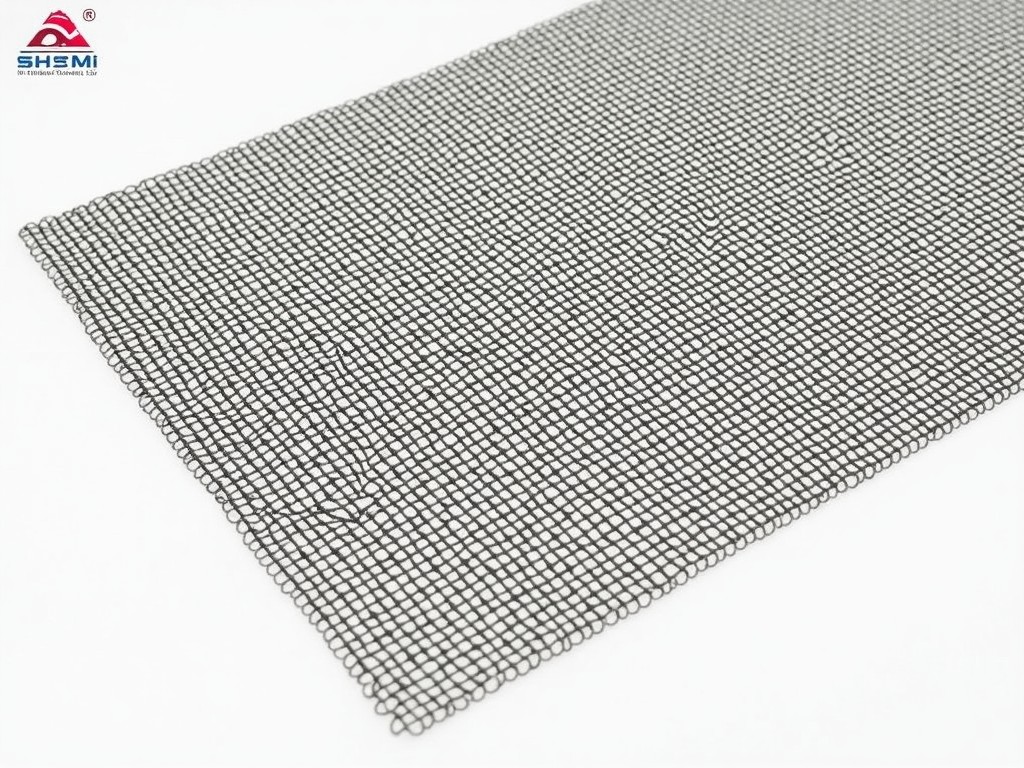
Product Categories


Send Inquiry
If you are interested in our products, leave your information here and we will be in touch shortly.