Buy Stainless Steel Welded Wire Mesh Rolls
Stainless steel welded wire mesh rolls are engineered for applications requiring consistent opening sizes, uniform wire diameter, and corrosion resistance in demanding environments. The product
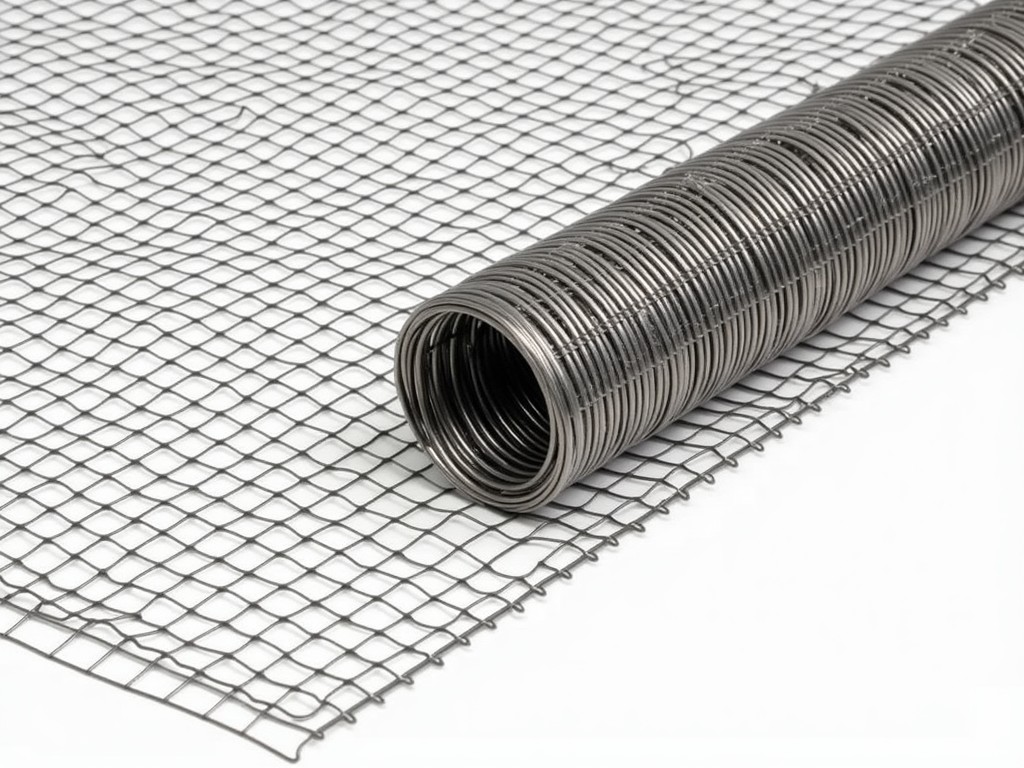
Stainless Steel Welded Wire Mesh Rolls
Stainless steel welded wire mesh rolls are engineered for applications requiring consistent opening sizes, uniform wire diameter, and corrosion resistance in demanding environments. The product consists of longitudinal and transverse wires electrically resistance-welded at each intersection, forming a rigid grid that maintains dimensional stability under load. Unlike woven mesh, welded construction prevents wire displacement and ensures repeatable aperture dimensions critical for filtration, screening, and containment systems.
Material Specifications and Wire Characteristics
The base material is typically austenitic stainless steel grades 304 or 316L, selected for their resistance to oxidation, chloride-induced pitting, and chemical exposure. Wire diameters range from 0.8 mm to 6.0 mm, with tensile strengths between 500 MPa and 800 MPa depending on grade and cold work level. Aperture sizes vary from 2 mm square to 100 mm square, with tolerances held to ±0.5 mm for precision applications. The weld zone achieves full penetration without significant loss of wire cross-section, preserving tensile integrity at joints.
Manufacturing Process and Quality Control
Production begins with precision-drawn wire fed into automated welding machines where electrodes apply controlled current and pressure to form fusion bonds at each crossover. Line speed, weld energy, and wire tension are monitored in real time to ensure consistent bond strength. Post-weld, the mesh undergoes annealing to relieve residual stress and improve ductility, followed by straightening and rolling onto cores. Each roll is inspected for weld count, aperture uniformity, edge straightness, and surface defects using calibrated gauges and visual standards per ISO 9044 or equivalent.
Standard Roll Dimensions and Handling
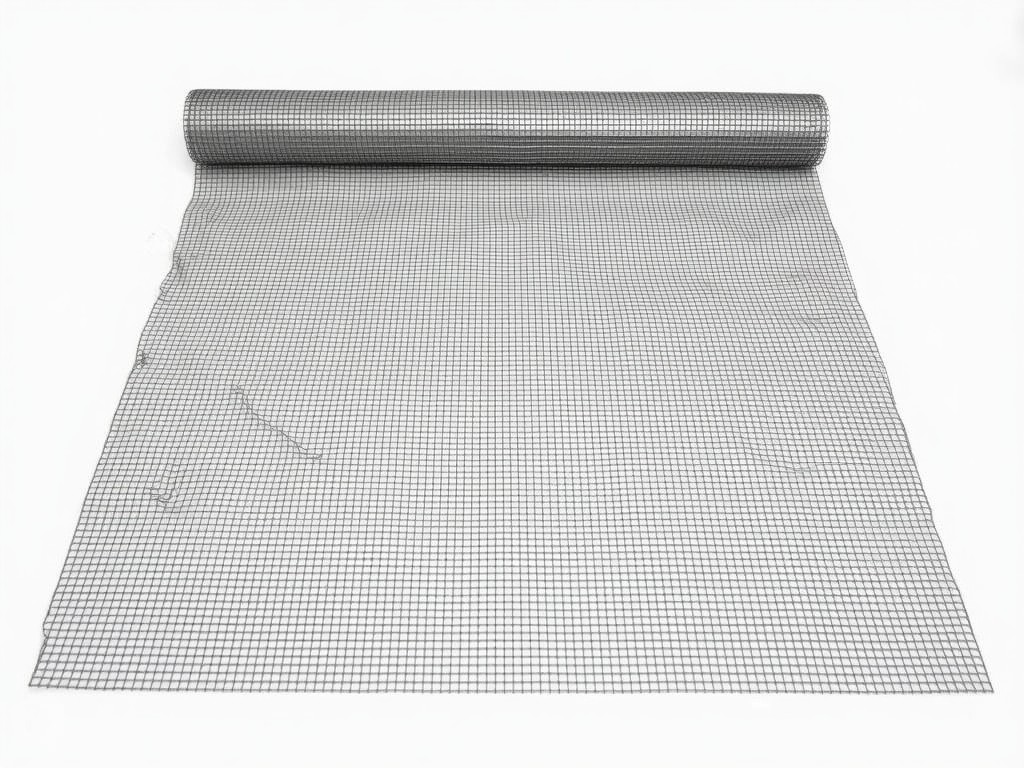
Rolls are typically wound onto cardboard, plastic, or steel cores with inner diameters of 50 mm, 76 mm, or 100 mm. Outer diameter varies with wire size and aperture but generally ranges from 200 mm to 600 mm for manual handling. Standard roll lengths are 10 m, 20 m, or 30 m, though longer lengths up to 50 m are available for industrial slitters or automated feeding systems. Weight per roll depends on mesh density; for example, a 2 mm wire, 20 mm aperture, 1 m wide roll weighs approximately 8 kg per meter.
Applications Across Industries
In food processing, 316L mesh with 1–5 mm apertures is used for belt conveyors, drying trays, and sieving systems where hygiene and corrosion resistance are mandatory. The welded structure prevents food particle entrapment and withstands frequent washdowns with alkaline cleaners. In architectural applications, mesh serves as infill for balustrades, sun screens, and facade panels where aesthetic consistency and long-term weather resistance are required. The uniform appearance and lack of wire creep maintain design integrity over decades.
Industrial filtration systems utilize finer meshes (0.8–2 mm wire, 0.5–3 mm aperture) for liquid-solid separation in chemical, pharmaceutical, and wastewater treatment plants. The rigid structure supports high differential pressures without deformation, enabling consistent flow rates and cake release. For animal confinement, heavier gauges (3–4 mm wire, 25–50 mm aperture) provide durable fencing and cage flooring that resists chewing, impact, and corrosion from urine and cleaning agents. Mining operations use coarse mesh (4–6 mm wire, 50–100 mm aperture) for rock slope stabilization and aggregate screening where abrasion resistance and structural rigidity are critical.
Comparison of Common Configurations
| Parameter | Light Duty (e.g., Filtration) | Medium Duty (e.g., Architectural) | Heavy Duty (e.g., Mining) |
|---|---|---|---|
| Wire Diameter | 0.8–1.5 mm | 1.5–2.5 mm | 3.0–6.0 mm |
| Aperture Size | 1–5 mm | 10–50 mm | 50–100 mm |
| Typical Width | 0.5–1.5 m | 1.0–2.0 m | 1.5–3.0 m |
| Roll Length | 10–30 m | 10–50 m | 20–50 m |
| Stainless Steel Grade | 304 or 316L | 304 or 316L | 304 (316L for chloride exposure) |
Customization Options
Aperture size, wire diameter, roll width, and length can be adjusted to match specific equipment or process requirements. Edge treatments include flared, folded, or welded borders to prevent unraveling and facilitate framing. Surface finishes range from standard mill finish to electropolished or passivated for enhanced corrosion resistance in sterile or marine environments. Special alloys such as 321 (for high-temperature stability) or 904L (for aggressive acids) are available upon request. Custom slitting to narrow widths or spooling onto specific cores supports integration into automated production lines.
Quality Assurance and Testing
Each batch undergoes chemical verification via spectrometer to confirm alloy composition meets ASTM A240 or EN 10088-2 standards. Mechanical testing includes tensile strength and elongation on wire samples taken from production lots. Weld shear strength is validated using pull-off tests on representative samples, with minimum values typically exceeding 70% of parent wire strength. Dimensional inspection uses laser gauges or shadow projection systems to measure aperture accuracy across the roll width and length. Surface cleanliness is assessed for particulates and oils, particularly for food-grade or medical applications.
Traceability is maintained through lot numbers linking raw material, welding parameters, and inspection results. Packaging includes protective wrapping to prevent surface damage during transit, with corner guards and stretch film securing the roll to pallets. Export shipments use moisture-barrier desiccants and sealed crates for long-term storage or humid climates. Documentation such as mill test reports, conformity declarations, and inspection certificates are provided with each order.
Purchase Considerations
When specifying welded wire mesh rolls, define the operating environment to select the appropriate stainless steel grade—304 for mild atmospheric exposure, 316L for coastal or chemical contact. Calculate required open area percentage based on flow or visibility needs, balancing aperture size with structural strength. Consider the wire diameter’s impact on weight, rigidity, and cost; finer wires increase open area but reduce load capacity. Confirm whether the mesh will be subjected to dynamic loads, vibration, or impact, as these may require heavier gauges or additional support structures.
Confirm roll dimensions match your handling equipment—core diameter, outer diameter, and weight must suit manual or mechanical unwinding. For continuous processes, ensure roll length minimizes splices and that edges are true to prevent tracking issues. Discuss lead times with suppliers, as custom alloys or non-standard widths may extend production schedules. Request samples to verify weld quality, surface finish, and dimensional accuracy before full-scale procurement.
Ready to specify your stainless steel welded wire mesh rolls?
Provide your application details, required dimensions, and quantity for a technical quotation. Our engineering team will review your specifications and respond with material recommendations, tolerances, and lead time.
Request Technical Quotation
Product Categories


Send Inquiry
If you are interested in our products, leave your information here and we will be in touch shortly.