China Mosquito Net Ss Wire Mesh
Mosquito nets made from stainless steel wire mesh provide a durable, corrosion-resistant barrier against insects while maintaining airflow and visibility. Unlike synthetic alternatives, SS wire mesh
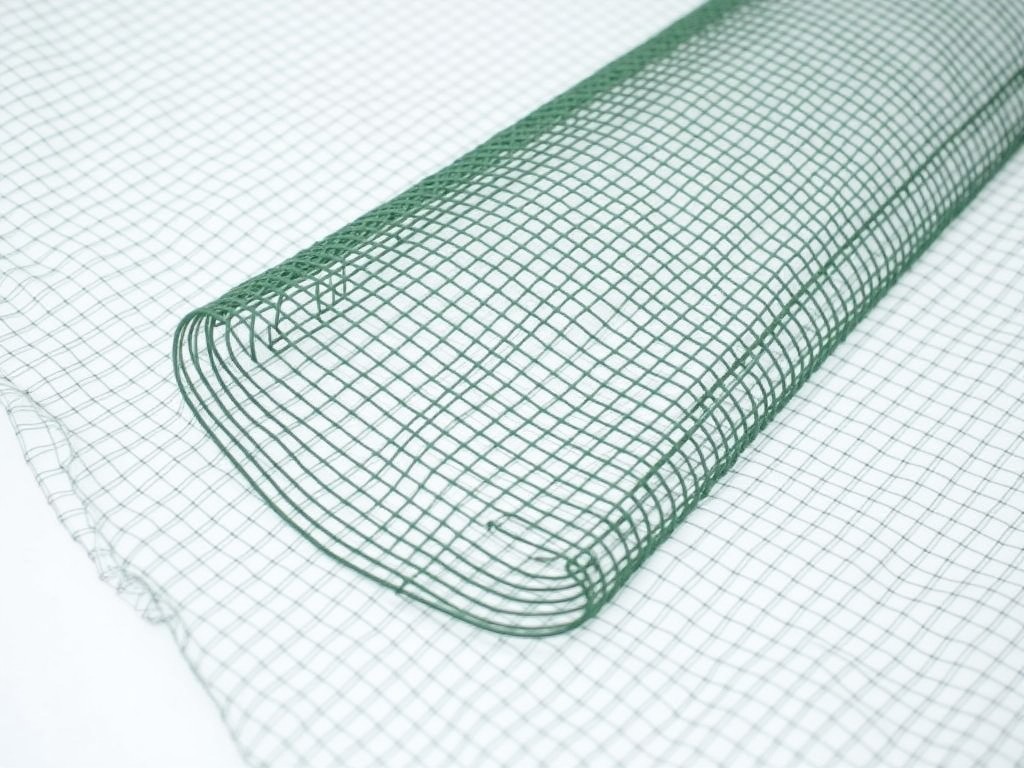
China Mosquito Net SS Wire Mesh
Mosquito nets made from stainless steel wire mesh provide a durable, corrosion-resistant barrier against insects while maintaining airflow and visibility. Unlike synthetic alternatives, SS wire mesh retains structural integrity under prolonged UV exposure, temperature fluctuations, and mechanical stress, making it suitable for permanent or semi-permanent installations in residential, agricultural, and industrial settings. The material’s inert nature ensures no chemical leaching or degradation over time, supporting long-term hygiene and safety requirements.
Material Composition and Mechanical Properties
The mesh is manufactured from austenitic stainless steel grades such as 304 or 316, selected for their balance of tensile strength, ductility, and resistance to pitting and crevice corrosion. Wire diameters typically range from 0.20 mm to 0.50 mm, with tensile strengths between 500–750 MPa depending on grade and cold work level. Elongation at break exceeds 40%, allowing the mesh to withstand deformation without cracking during installation or thermal cycling. These properties ensure the mesh maintains opening consistency over years of service, critical for effective insect exclusion.
Surface finishes include bare annealed, electropolished, or passivated treatments. Electropolishing reduces surface roughness to below 0.4 µm Ra, minimizing particle adhesion and enhancing cleanability in food processing or healthcare environments. Passivation removes free iron from the surface, forming a stable chromium oxide layer that improves resistance to salt spray and humid conditions. These finishes are not cosmetic; they directly influence service life in aggressive atmospheres.
Mesh Specifications and Opening Characteristics
Opening size is defined by the center-to-center distance between adjacent wires, known as pitch. For mosquito exclusion, standard pitches range from 1.2 mm to 1.6 mm, effectively blocking mosquitoes (typically 3–6 mm in body width) while allowing over 70% open area for airflow. Wire diameter and pitch are inversely related; finer wires allow smaller openings without excessive pressure drop. Tolerance on pitch is maintained within ±0.05 mm through precision weaving on dobby or jacquard looms, ensuring uniformity across large panels.
Mesh count, expressed as wires per inch, ranges from 16 to 20 mesh for standard mosquito netting. Higher counts (e.g., 24 mesh) are available for smaller insects like no-see-ums but increase flow resistance. Open area percentage is calculated as (1 – wire area / total area) × 100; a 0.30 mm wire at 1.4 mm pitch yields approximately 76% open area. These values are critical for HVAC integration, where pressure drop must remain below 5 Pa at 2 m/s airflow to avoid fan strain.
Weaving Patterns and Structural Integrity
Plain weave is the most common pattern, where each warp wire alternates over and under each weft wire, providing balanced bidirectional strength and ease of cutting without unraveling. Twill weave (2-over-2-under) offers slightly higher tensile strength in the warp direction and a smoother surface, useful where abrasion resistance is prioritized. Dutch weave, with finer weft wires, achieves finer filtration but is less common for mosquito nets due to reduced open area and higher cost.
Wire intersections are mechanically locked through crimping during weaving, preventing lateral movement under load. This interlocking structure maintains opening geometry even when subjected to wind pressure, impact, or thermal expansion. The mesh exhibits isotropic behavior in plain weave, with tensile strength variation under 10% between warp and weft directions, ensuring predictable performance regardless of orientation during installation.
Corrosion Resistance and Environmental Performance
In marine or high-humidity environments, 316 stainless steel is preferred due to its molybdenum content (2–3%), which significantly increases resistance to chloride-induced pitting. ASTM G48 testing shows 316SS withstands ferric chloride concentrations up to 10% at 22°C without visible pitting, whereas 304SS may show initiation at 3–5%. For inland applications with low chloride exposure, 304SS provides adequate resistance at lower cost.
Temperature resistance extends from cryogenic levels to 870°C (1600°F) for intermittent exposure in 304SS, though practical limits for mosquito net use are defined by UV stability of any coatings or framing materials, not the steel itself. The mesh does not degrade, embrittle, or lose tensile strength under prolonged solar UV exposure, unlike polyethylene or polyester nets which may lose 50% strength in 1–2 years under equivalent conditions.
Customization Options for Industrial Integration
Panels can be supplied in rolls or cut-to-size rectangles, with standard widths up to 3000 mm and lengths limited only by handling constraints. Edge treatments include hemmed borders with stainless steel wire or polymer splines to prevent fraying and facilitate fastening. For frame integration, mesh can be supplied with pre-attached retaining splines or adhesive-compatible edge tapes. Custom perforations or cutouts for hardware access are available via laser or waterjet cutting without thermal distortion to the mesh.
Surface modifications such as antimicrobial coatings (e.g., silver-ion infused) or hydrophilic treatments can be applied upon request for specialized hygiene zones. Frame materials are typically aluminum extrusions or powder-coated steel, selected to match the mesh’s corrosion profile. All customizations are subject to minimum order quantities and lead time adjustments based on material availability and process complexity.
Quality Control and Inspection Protocols
Raw material verification includes mill test certificates for stainless steel grade, chemical composition, and mechanical properties. Incoming wire is sampled for diameter tolerance and tensile strength before weaving. During production, mesh is inspected under 10x magnification for missing wires, double picks, or broken filaments. Opening size is verified using optical comparators or digital micrometers at multiple points across the width and length.
Final inspection includes tensile testing of cut strips to confirm strength retention, visual assessment for surface defects, and open area measurement via image analysis. For critical applications, salt spray testing (ASTM B117) can be performed on representative samples, with 500 hours to white rust as a common benchmark for 304SS and 1000+ hours for 316SS. All test data is retained and available for review upon request.
Applications in Industrial and Commercial Settings
In food processing facilities, SS mosquito mesh is installed over ventilation intakes and exhaust vents to prevent insect contamination while maintaining hygiene compliance with FDA and HACCP standards. Its non-shedding, cleanable surface avoids the risk of fiber shedding associated with synthetic nets, which could become foreign material in product lines. The mesh withstands frequent washdowns with alkaline or acidic cleaners without degradation.
Agricultural greenhouses use the mesh on sidewalls and roof vents to exclude pests like whiteflies and aphids while enabling passive cooling. Unlike plastic nets that degrade under prolonged UV and pesticide exposure, SS mesh maintains integrity for 5–10 years, reducing replacement frequency and labor costs. Its rigidity allows tensioning over large spans without sagging, preserving uniform opening size critical for effective pest exclusion.
Pharmaceutical and cleanroom environments utilize the mesh in air handling units and pass-through chambers where particle retention and chemical inertness are required. The mesh does not outgas or shed particulates, meeting ISO 14644-1 standards for airborne molecular contamination. In data centers, it prevents insect ingress into server racks without impeding airflow, supporting thermal management efficiency.
Comparison with Alternative Materials
Compared to polyester or nylon mosquito nets, SS wire mesh offers superior tensile strength (500–750 MPa vs. 50–100 MPa for synthetics), UV stability (no degradation vs. 50% strength loss in 6–18 months), and flame resistance (melts >1400°C vs. ignites at 300–400°C). While synthetic nets are lighter and lower initial cost, their service life is typically under 2 years in outdoor exposure, necessitating frequent replacement and increasing long-term waste and labor burden.
Aluminum mesh provides similar corrosion resistance but lower tensile strength (~150 MPa) and higher tendency to creep under tension. Copper or brass meshes offer antimicrobial properties but are prone to dezincification or oxidation in humid environments, leading to surface staining and reduced open area over time. Stainless steel provides the optimal balance of strength, durability, and inertness for permanent insect exclusion applications.
| Property | Stainless Steel Mesh | Synthetic Net (Polyester) | Aluminum Mesh |
|---|---|---|---|
| Tensile Strength | 500–750 MPa | 50–100 MPa | ~150 MPa |
| UV Stability | No degradation | 50% loss in 6–18 months | Good (surface oxidation) |
| Typical Service Life | 5–15 years | 1–2 years | 3–7 years |
| Fire Resistance | Non-combustible | Flammable | Non-combustible |
| Weight (per m²) | 1.2–2.5 kg | 0.1–0.3 kg | 0.4–0.8 kg |
Ordering and Technical Support
To receive a quotation, provide the required mesh grade (304 or 316), wire diameter, pitch or mesh count, panel dimensions, edge treatment, and quantity. Drawings or sketches are helpful for custom shapes or cutouts. Samples are available upon request, typically shipped within 3–5 business days after specification confirmation. Lead times for standard items range from 7–14 days; custom orders depend on complexity and material availability.
Technical support includes material selection guidance based on environmental exposure, pressure drop calculations for HVAC integration, and fastener compatibility advice. All inquiries are answered by engineers with direct experience in mesh manufacturing and industrial filtration applications. Contact us via the inquiry form to begin the specification process.
Product Categories


Send Inquiry
If you are interested in our products, leave your information here and we will be in touch shortly.