Crimped Stainless Steel Wire Mesh Source Factory
Crimped stainless steel wire mesh is engineered for applications requiring dimensional stability, uniform aperture control, and resistance to mechanical deformation under load. The crimping
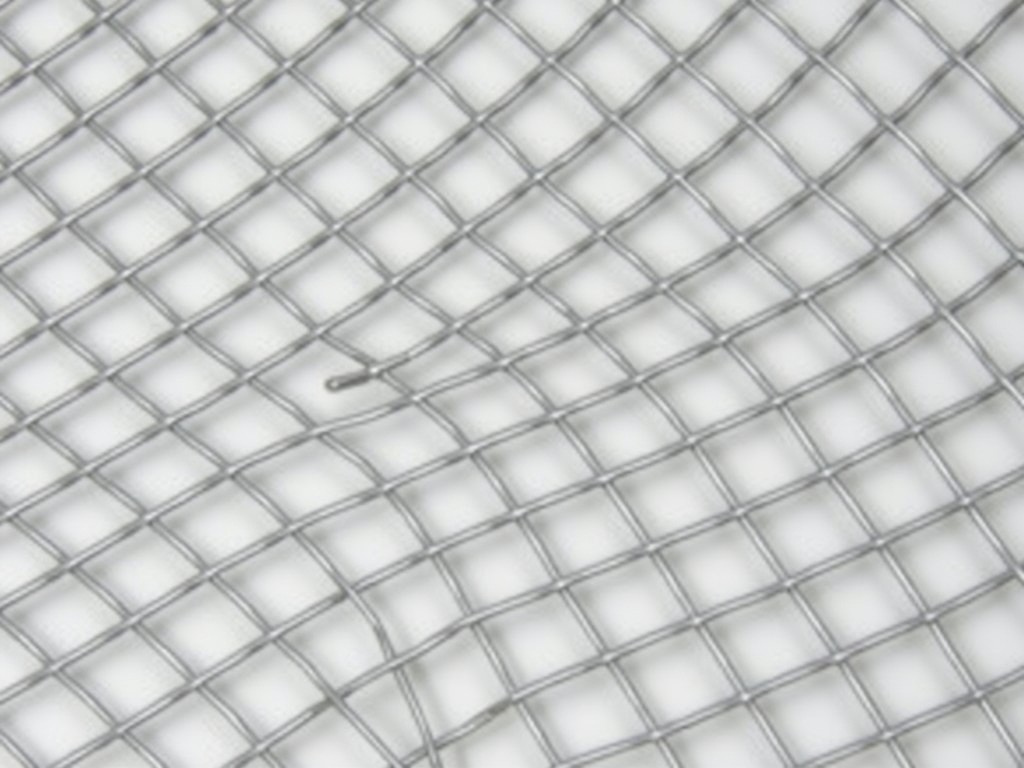
Crimped Stainless Steel Wire Mesh – Source Factory Specifications
Crimped stainless steel wire mesh is engineered for applications requiring dimensional stability, uniform aperture control, and resistance to mechanical deformation under load. The crimping process—where warp and weft wires are pre-formed with precise bends before weaving—locks the mesh structure, preventing wire shift and maintaining consistent opening sizes even under vibration or pressure differentials. This characteristic is critical in industrial screening, filtration, and barrier systems where aperture integrity directly impacts process efficiency and product quality.
Material selection begins with austenitic stainless steel grades, primarily 304 and 316L, chosen for their corrosion resistance in specific environments. Grade 304 suffices for general industrial atmospheres and mild chemical exposure, while 316L, with added molybdenum, resists pitting in chloride-rich settings such as marine environments or food processing washdowns. Wire diameter typically ranges from 0.2 mm to 6.0 mm, directly influencing both open area percentage and tensile strength; finer wires increase flow capacity but reduce mechanical robustness, necessitating application-driven trade-offs.
Manufacturing Process and Structural Integrity
The crimping operation uses precision rollers to deform wires into sinusoidal or rectangular profiles with controlled amplitude and pitch. This pre-crimping ensures that during weaving, wires interlock at fixed points without relying on tension alone to maintain position. The resulting mesh exhibits minimal creep under sustained load and resists loosening from thermal cycling—key advantages over plain weave alternatives in high-vibration screens or fluctuating temperature processes.
Weaving follows crimping on specialized looms that maintain consistent warp tension and precise weft insertion. Post-weaving, the mesh may undergo stress-relief annealing to reduce internal stresses from deformation, improving dimensional stability during subsequent fabrication or use. Edge treatments—such as selvaging with heavier wire or folding—are applied to prevent fraying and facilitate secure mounting in frames or housings.
Technical Specifications and Customization Parameters
| Parameter | Typical Range / Options | Notes |
|---|---|---|
| Stainless Steel Grade | 304, 316L, 316Ti, 321 | Selected based on corrosion environment; 316L preferred for chlorides |
| Wire Diameter | 0.2 mm – 6.0 mm | Aperture size and open area inversely related to wire diameter |
| Aperture Size | 0.5 mm – 150 mm | Customizable; determines flow rate and particle retention |
| Weave Type | Plain crimp, lock crimp, intermediate crimp | Lock crimp offers highest rigidity; intermediate balances flow and strength |
| Width | Up to 3000 mm | Limited by loom capacity; wider widths require splicing |
| Length | Rolls or cut-to-length | Standard rolls 30m; custom lengths available |
| Surface Finish | Mill finish, degreased, electropolished | Electropolishing reduces fouling in sanitary applications |
Open area percentage—a key design variable—is calculated from wire diameter and aperture size, directly affecting pressure drop in filtration or throughput in screening. For example, a 2 mm wire with 10 mm aperture yields approximately 69% open area, whereas halving the wire to 1 mm increases open area to 82%, significantly reducing flow resistance. Engineers must balance this against required mechanical strength; thinner wires increase deflection under load, potentially altering aperture geometry over time.
Crimp profile selection influences both performance and manufacturability. Plain crimp (simple sinusoidal bend) is cost-effective and suitable for moderate loads. Lock crimp, featuring interlocking notches, provides superior resistance to lateral wire movement, ideal for high-vibration screens or abrasive media. Intermediate crimp uses larger amplitude bends to increase stiffness while maintaining reasonable open area, often chosen for heavy-duty quarry or mining screens handling large aggregates.
Industrial Applications and Functional Rationale
In mineral processing, crimped mesh serves as screen media in vibratory separators where aperture consistency prevents blinding and ensures accurate particle size distribution. The lock crimp variant withstands repeated impact from coarse ore without wire displacement, maintaining cut-point accuracy over extended runs—reducing downtime for screen media replacement and improving product yield consistency.
Food and pharmaceutical industries utilize 316L crimped mesh with electropolished finish in liquid filtration and solid separation. The smooth surface minimizes product adhesion and facilitates cleaning-in-place (CIP) protocols, while the stable aperture prevents contamination risks from wire migration or fragment shedding. Mesh is commonly housed in sanitary clamps or welded frames to avoid crevices that harbor bacteria.
Architectural and safety barriers employ crimped mesh as infill panels for balustrades, machine guards, or perimeter fencing. The uniform appearance and structural rigidity provide both aesthetic consistency and impact resistance. In high-traffic areas, 304 grade with mill finish offers sufficient atmospheric corrosion resistance, while coastal installations specify 316L to resist salt-induced staining and pitting.
Industrial ovens and drying systems use crimped mesh as conveyor belts or support trays where thermal stability and open area promote uniform heat transfer. The mesh resists warping at elevated temperatures (up to 400°C for 304, higher for 316L) and allows efficient moisture vapor escape, preventing product sogginess or uneven drying. Wire diameter is selected to balance belt strength with minimal contact area to reduce product marking.
Quality Control and Testing Protocols
Dimensional verification occurs at multiple stages: wire diameter checked via micrometer before crimping, aperture dimensions measured using calibrated projection gauges or digital image analysis post-weaving. Tolerances typically hold aperture size within ±5% of nominal for standard grades; tighter tolerances (±2%) are available for precision filtration applications upon request. Wire tensile strength is validated per ASTM A370 to ensure material conformity.
Visual inspection under standardized lighting identifies weaving defects such as skipped wires, double picks, or crimp deformation. Edge integrity is assessed for fraying or incomplete selvaging. For critical applications, additional testing may include bubble point verification for filtration mesh or load-deflection testing to characterize stiffness under simulated service loads—data provided as test reports with shipment.
Material traceability is maintained through mill test certificates linking each coil to its chemical composition and mechanical properties. Batch numbers are recorded on labels and packaging, enabling full traceability from raw material to finished roll. This supports compliance with industry standards such as ISO 9001, ASME BPE, or FDA 21 CFR where applicable.
Packaging, Handling, and Logistics
Finished mesh is typically wound onto cardboard or plastic cores with inner diameter matching standard unwinding equipment. Outer wrapping uses UV-stabilized polyethylene film to prevent surface contamination during transit. For widths exceeding 1500 mm, mesh may be slit into narrower rolls to facilitate handling; custom slit widths are available based on customer equipment specifications.
Rolls are secured with biodegradable strapping and placed on pallets with edge protectors to prevent corner damage. Labeling includes product code, grade, dimensions, weight, and batch number. For export shipments, moisture-desiccant packs are included inside the wrapping to mitigate condensation risk during sea freight, particularly important for preserving electropolished finishes.
Weight calculation aids logistics planning: approximate roll weight (kg) = width (m) × length (m) × wire diameter (mm)² × material density (8000 kg/m³) × open area factor. This formula allows accurate freight cost estimation and ensures pallet load limits are not exceeded. Customers requiring specific handling instructions—such as vertical storage or cleanroom-compatible packaging—should specify these during quotation.
Ordering Information and Technical Support
To initiate a quotation, provide the following: required stainless steel grade, wire diameter, aperture size, weave type (plain, lock, intermediate), width, length, and any surface finish or edge treatment preferences. Indicate the intended application—screening, filtration, barrier, or conveyor—to allow our engineers to validate suitability and suggest optimizations. Drawings or sample parts are helpful for non-standard geometries or mounting requirements.
Samples are available upon request for validation; standard sample size is 300mm × 300mm, with larger dimensions or specific cutouts possible depending on mesh stability. Lead time for standard configurations is typically 2–3 weeks; custom alloys, non-standard widths, or specialized testing may extend this timeline. Expedited production is available for critical projects with applicable surcharges.
For technical consultation on material selection, crimp type optimization, or aperture sizing for specific process conditions, contact our engineering team. We provide application-based recommendations grounded in mechanical properties, corrosion data, and industrial case studies—not generic specifications.
Ready to discuss your crimped stainless steel wire mesh requirements?
Submit Inquiry
Product Categories


Send Inquiry
If you are interested in our products, leave your information here and we will be in touch shortly.