Decorative Brass Wire Mesh Screen Source Factory
This page provides technical details for decorative brass wire mesh screens manufactured to specification for architectural, interior design, and specialty industrial applications. The focus is on
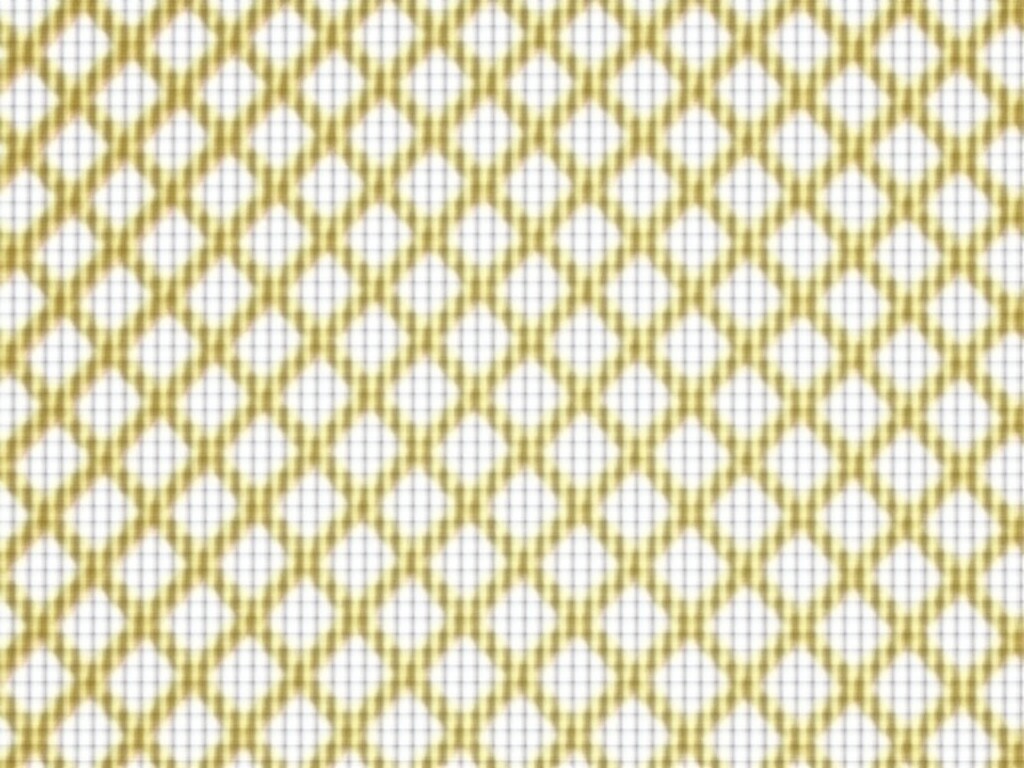
Decorative Brass Wire Mesh Screen Source Factory
This page provides technical details for decorative brass wire mesh screens manufactured to specification for architectural, interior design, and specialty industrial applications. The focus is on material properties, weaving precision, surface finish control, and dimensional tolerances that affect visual and functional performance.
Material Composition and Alloy Selection
Decorative brass wire mesh screens are typically produced from copper-zinc alloys with zinc content ranging from 5% to 40%, depending on the desired color, mechanical properties, and corrosion resistance. Common alloys include C26000 (cartridge brass, 70% Cu/30% Zn) for a bright golden-yellow finish and good formability, and C36000 (free-cutting brass) when machining of edge frames or attachments is required. Trace elements such as lead (up to 3.5% in C36000) improve machinability but may be restricted in certain architectural applications due to regulatory limits.
Alloy selection directly influences color stability under UV exposure and atmospheric conditions. Higher zinc content increases susceptibility to dezincification in moist or saline environments, which can weaken the wire and alter appearance. For interior decorative use where environmental exposure is limited, standard brass alloys provide adequate longevity. For semi-exterior or high-humidity zones, silicon bronze or nickel silver alternatives may be recommended, though these fall outside the strict definition of brass.
Wire diameter is selected based on open area requirements, structural rigidity, and visual texture. Common diameters range from 0.15 mm to 0.8 mm, with finer wires enabling higher open area percentages and smoother visual gradients, while heavier gauges provide greater resistance to deformation during handling and installation.
Weaving Patterns and Open Area Control
The visual and functional characteristics of decorative brass wire mesh are determined by the weaving pattern, wire diameter, and mesh count (threads per inch). Plain weave (1x1) offers symmetry and balanced tensile strength in both directions, making it suitable for flat panels and curved surfaces where uniform appearance is critical. Twill weave (2x2 or 3x3) allows for heavier wires at a given mesh count, increasing durability and creating a distinct diagonal texture that can diffuse light and reduce glare.
Dutch weave variations, where warp wires are heavier and closer together than weft wires, are used when high filtration precision or a pronounced directional texture is desired, though less common in purely decorative applications. Mesh count typically ranges from 6x6 to 80x80 threads per inch, with open area calculated as the percentage of open space relative to total surface area. For example, a 20x20 mesh with 0.3 mm wire has an approximate open area of 51%, while a 50x50 mesh with 0.15 mm wire exceeds 68% open area.
Open area affects light transmission, airflow, and acoustic properties—key considerations in applications such as lighting fixtures, speaker grilles, and decorative partitions. Designers specify mesh count and wire diameter based on the desired balance between visibility, structural integrity, and aesthetic texture.
Surface Finish and Post-Processing Options
As-produced brass wire mesh exhibits a mill finish that may show minor oxidation, rolling marks, or drawing lubricant residue. For decorative applications, surface consistency is critical. Common finishing processes include:
- Mechanical brushing to create a unidirectional satin texture that reduces reflectivity and hides minor surface imperfections.
- Electrochemical polishing to achieve a bright, mirror-like finish by selectively dissolving surface peaks.
- Chemical patination using ammonia-based or sulfide compounds to produce controlled antique, verdigris, or dark brown tones.
- Clear lacquer or microcrystalline wax coating to inhibit oxidation and preserve the finish over time.
Finish selection impacts both appearance and maintenance requirements. Uncoated brass will naturally develop a patina over time, which may be desirable in certain design contexts but unpredictable in others. Coated finishes offer color stability but require careful handling to avoid scratching or delamination during fabrication and installation.
All finishing processes are applied post-weaving to ensure uniformity across the entire mesh surface. Edge treatment—such as hemming, framing, or welding to substrates—is performed after finishing to prevent damage to the coated or patinated surface.
Dimensional Tolerances and Flatness Control
Decorative brass wire mesh is supplied in rolls or cut-to-size panels. Width tolerances for slit edges are typically ±0.5 mm, while length tolerances depend on the cutting method—shearing or laser cutting—and are generally ±2 mm for panels under 1 meter, increasing proportionally for larger dimensions. Squareness (deviation from 90° at corners) is maintained within ±1° for precision-cut panels.
Flatness is a critical parameter for architectural installations where the mesh is tensioned or bonded to substrates. Mesh is inspected for bow, camber, and twist. Acceptable bow deviation is typically limited to 0.5% of the panel length or width, whichever is greater. Camber (edge curve) is controlled to less than 0.3% of width. These values are achievable through proper tensioning during weaving and stress-relief annealing post-production.
For applications requiring seamless visual continuity, such as large wall panels or ceiling systems, mesh widths are selected to minimize seams, and edge alignment is verified during installation. Custom width slitting to match panel dimensions reduces waste and improves aesthetic consistency.
Typical Applications in Design and Architecture
Decorative brass wire mesh is used where a combination of visual texture, material warmth, and functional permeability is required. In lighting design, it serves as a diffuser or decorative element in pendant lights, sconces, and chandeliers, where the mesh pattern casts intricate light shadows and reduces LED glare. The material’s thermal conductivity allows it to act as a mild heat sink in enclosed fixtures.
In interior architecture, it is applied as wall cladding, ceiling baffles, room dividers, and elevator cab panels. The open area facilitates airflow and sound diffusion while maintaining visual separation. When backed with acoustic foam or fabric, it contributes to sound absorption without compromising appearance.
Retail environments use brass mesh for display fixtures, store partitions, and signage backsplashes, leveraging its premium appearance to convey quality. In hospitality, it appears in bar fronts, reception desks, and decorative screens where durability and ease of cleaning are beneficial.
Industrial applications include machinery guards where visibility and aesthetics are both considerations—such as in food processing equipment or laboratory enclosures—though mechanical strength requirements may necessitate backup framing or composite structures.
Customization and Ordering Parameters
Mesh specifications are defined by the following parameters, all of which can be adjusted to meet project requirements:
- Alloy type (e.g., C26000, C36000, or custom brass compositions)
- Wire diameter (range: 0.15 mm to 0.8 mm)
- Mesh count (threads per inch, both warp and weft)
- Weave pattern (plain, twill, Dutch, or custom)
- Width and length (slit to size or cut to panel)
- Surface finish (mill, brushed, polished, patinated, coated)
- Edge treatment (raw, hemmed, framed, welded)
Samples are typically provided in 100mm x 100mm or 150mm x 150mm sizes to allow evaluation of weave, finish, and color under project lighting conditions. Lead time for standard specifications is 2–3 weeks; custom alloys, finishes, or widths may extend this to 4–6 weeks depending on material availability and tooling requirements.
Quality Inspection and Testing
Each batch undergoes dimensional verification, visual inspection, and material validation. Width and length are measured using calibrated calipers or vision systems. Mesh count is verified optically or with a counting glass. Wire diameter is checked via micrometer at multiple points to ensure consistency.
Surface finish is assessed under standardized lighting (e.g., 5000K, CRI>90) for uniformity, gloss level (if applicable), and absence of defects such as scratches, pits, or uneven patination. For coated or plated finishes, adhesion testing (e.g., tape test) and thickness measurement (via XRF or micrometer) are performed upon request.
Material composition is confirmed via mill certificates or positive material identification (PMI) using handheld XRF analyzers. While full chemical analysis is not routinely performed on every roll, certification from the wire supplier is retained and available for review.
Flatness and bow are measured using a straight edge and feeler gauge or optical comparator. Panels that exceed specified tolerances are either re-tensioned or rejected. All inspection criteria are documented and traceable to the production lot.
Packaging and Protection
To prevent surface damage during transit, decorative brass wire mesh is packaged as follows:
- Rolls are wound onto rigid cores with inner diameter sufficient to prevent permanent deformation (typically 50mm or 75mm).
- The outer surface is wrapped in polyethylene film to protect against moisture and dust.
- Edge protectors (cardboard or plastic) are applied to both ends of the roll.
- Rolls are placed in corrugated cardboard boxes with end caps and sealed with tape.
- For cut panels, each piece is interleaved with acid-free paper or polyethylene sheets to prevent abrasion, then packed in flat cartons with corner reinforcements.
Humidity indicators and desiccant packs are included for shipments to high-moisture climates. Export packaging complies with ISPM 15 for wood components if required. Labeling includes part number, alloy, dimensions, finish, quantity, and handling instructions.
Handling precautions are communicated to avoid creasing, kinking, or contact with abrasive surfaces. Mesh should be stored vertically or supported horizontally to prevent sagging.
Technical Specification Table
| Parameter | Typical Range / Value | Notes |
|---|---|---|
| Alloy | C26000, C36000, C38500 | Other brass alloys available upon request |
| Wire Diameter | 0.15 mm – 0.8 mm | Selected based on open area and rigidity requirements |
| Mesh Count | 6x6 to 80x80 TPI | Warp and weft may differ in Dutch weave |
| Open Area | 20% – 75% | Calculated from wire diameter and mesh count |
| Width Tolerance | ±0.5 mm | For slit edges |
| Length Tolerance | ±2 mm (under 1m) | Increases proportionally for longer panels |
| Flatness (Bow) | ≤0.5% of panel dimension | Measured as deviation from flat plane |
| Surface Finish | Mill, Brushed, Polished, Patinated, Coated | Custom finishes available |
| Standard Widths | 500 mm, 610 mm, 915 mm, 1220 mm | Custom slit widths available |
| Lead Time | 2–3 weeks (standard) | 4–6 weeks for custom specifications |
Product Categories


Send Inquiry
If you are interested in our products, leave your information here and we will be in touch shortly.