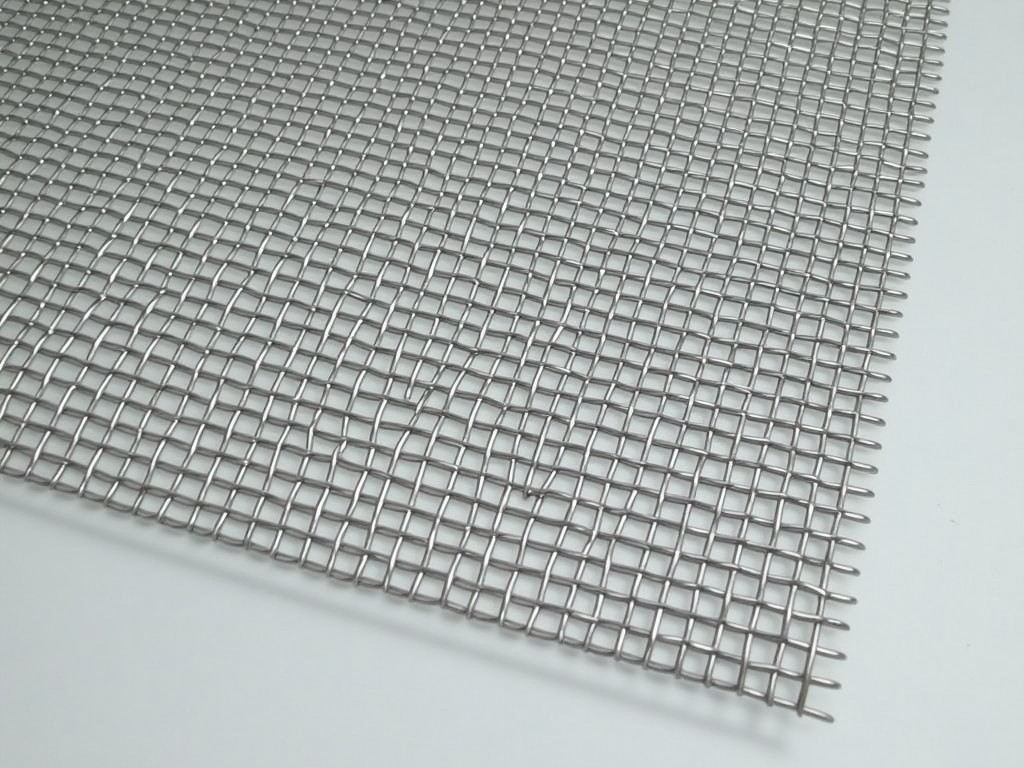
Expanded Galvanized Steel Mesh Screen Sheet
Expanded galvanized steel mesh screen sheets are manufactured by slitting and stretching a solid sheet of hot-dip galvanized steel to form a uniform pattern of diamond-shaped openings. This process
Expanded Galvanized Steel Mesh Screen Sheet
Expanded galvanized steel mesh screen sheets are manufactured by slitting and stretching a solid sheet of hot-dip galvanized steel to form a uniform pattern of diamond-shaped openings. This process increases the sheet's surface area while maintaining structural integrity, resulting in a lightweight yet rigid material suitable for applications requiring ventilation, filtration, security, or reinforcement. The galvanized coating provides corrosion resistance appropriate for indoor and outdoor environments, with performance influenced by coating thickness, mesh geometry, and base steel grade.
Manufacturing Process and Material Characteristics
The production begins with cold-rolled or hot-rolled steel coils coated via hot-dip galvanizing, typically to Z275 (275 g/m² total coating mass) or Z350 specifications, depending on environmental exposure requirements. The coated sheet is then slit in a staggered pattern and expanded using precision dies, which simultaneously cuts and stretches the material to create the open area. This cold-working process increases tensile strength through strain hardening while preserving the zinc coating's continuity over the expanded surface. Strand thickness and opening size are determined by the original sheet gauge and the expansion ratio, which typically ranges from 1.5x to 3x the original width.
The resulting mesh exhibits consistent opening dimensions, uniform strand thickness, and flatness suitable for further fabrication. Unlike woven or welded mesh, expanded mesh has no joints or weld points that could fail under stress or corrode preferentially. The material retains the formability of the base steel, allowing it to be bent, cut, or rolled without cracking, provided the bend radius respects the metal's reduced ductility after expansion. Surface appearance features a characteristic metallic luster from the zinc coating, which may dull over time due to natural oxidation but continues to provide barrier protection.
Key Technical Parameters
| Parameter | Typical Range / Value | Notes |
|---|---|---|
| Base Steel Grade | DX51D, S250GD, S350GD | According to EN 10346; affects yield strength and formability |
| Coating Mass | Z275 to Z600 (g/m²) | Higher values for corrosive environments; measured per both sides |
| Original Sheet Thickness | 0.5 mm to 3.0 mm | Pre-expansion gauge; final strand thickness varies |
| Strand Width (Width of Metal Strand) | 1.5 mm to 6.0 mm | Determined by die design and expansion ratio |
| Strand Thickness | Equal to original sheet thickness | No material loss during expansion; thickness preserved |
| Short Way of Diamond (SWD) | 6 mm to 50 mm | Distance across the narrowest point of the diamond |
| Long Way of Diamond (LWD) | 12 mm to 100 mm | Distance across the longest point of the diamond |
| Open Area Percentage | 30% to 80% | Depends on SWD, LWD, and strand width; affects flow and visibility |
| Standard Sheet Size | 1000 mm × 2000 mm, 1250 mm × 2500 mm | Custom lengths available; width limited by expansion equipment |
Performance Advantages in Industrial Applications
The expanded mesh structure provides a high strength-to-weight ratio due to the geometric efficiency of the diamond pattern, which distributes loads across interconnected strands. This makes it suitable for walkway treads, machine guards, and structural infill panels where weight reduction is beneficial without sacrificing load-bearing capacity. The open area allows for unimpeded airflow, light transmission, and liquid drainage, while the solid strands maintain a physical barrier. Compared to perforated sheet, expanded mesh generates no scrap during production, resulting in better material utilization and lower cost for equivalent open area.
In environmental applications, the mesh serves as a support medium for filter media in air and water systems, where its rigidity prevents deformation under differential pressure. The galvanized coating resists white rust formation in moderately humid conditions and provides sacrificial protection if the coating is locally damaged. For outdoor architectural uses such as façades, sunscreens, or infill balustrades, the material offers durability with minimal maintenance, and its reflective surface can contribute to thermal management by reducing solar heat gain when used as shading devices.
Security applications benefit from the mesh's resistance to cutting and intrusion; the interlocking strand geometry creates a snag-resistant surface that hinders tool grip. When used as fencing or enclosure panels, the visibility through the openings allows for surveillance while maintaining a physical barrier. The absence of sharp edges after standard processing (strands are typically blunted during expansion) improves safety during handling and installation compared to some welded or woven alternatives.
Customization Options and Fabrication Considerations
Mesh geometry can be tailored to specific functional requirements by adjusting the expansion ratio, die pattern, and base material thickness. Finer strands with smaller openings increase surface area for filtration or catalytic support, while larger openings with thicker strands enhance load capacity for flooring or shielding. The direction of the LWD relative to the sheet length affects anisotropy in strength and stiffness, which should be aligned with primary load directions in structural applications. Custom patterns such as hexagonal, rectangular, or louvered expansions are available upon request, though standard diamond geometry remains most common due to efficiency and predictability.
Post-expansion treatments include painting, powder coating, or laminating with polymeric films for additional corrosion protection or aesthetic requirements. The zinc surface accepts most organic coatings after proper cleaning and pretreatment. Edge finishing options range from mill edge (as-expanded) to rolled, welded, or framed edges for safety and ease of mounting. Sheets can be fabricated into custom shapes using CNC cutting, shearing, or laser processing, though thermal methods require care to avoid zinc vaporization and coating loss near the cut edge.
For applications requiring electrical conductivity, the metallic continuity of the expanded mesh provides a reliable path for grounding or EMI shielding, with surface resistance influenced by strand thickness and contact pressure at joints. In magnetic shielding roles, the effectiveness depends on opening size relative to wavelength; smaller apertures improve attenuation at higher frequencies. These properties are often evaluated in conjunction with the base steel's permeability and the coating's minimal impact on electromagnetic behavior.
Quality Control and Testing Protocols
Dimensional inspection verifies SWD, LWD, strand width, and sheet flatness against tolerances typically ±10% for opening dimensions and ±3mm for length and width. Flatness is measured as deviation from a horizontal plane, with acceptable limits depending on intended use—stricter for architectural panels than for industrial guards. Strand thickness and coating mass are verified through micrometer measurement and weight loss testing (e.g., ASTM A90) on representative samples. Visual inspection checks for coating continuity, absence of tears or excessive necking, and uniform expansion across the sheet.
Mechanical properties such as tensile strength and elongation are assessed on tensile specimens cut from the expanded material, noting that values differ from the base steel due to cold work. Bend testing evaluates formability without cracking, particularly important for parts requiring post-forming. For load-bearing applications, deflection testing under uniform or point loads may be performed to validate stiffness characteristics. All testing follows recognized standards where applicable, with results available upon request as part of the material documentation package.
Common Industrial Applications
- Walkway and platform treads in industrial facilities, where the open area allows drainage of liquids and debris while providing slip-resistant surface texture.
- Machine guarding and enclosure panels, offering visibility for monitoring operations while containing moving parts and preventing access to hazardous zones.
- HVAC systems as filter supports, coil guards, or intake screens, where rigidity maintains shape under airflow pressure and corrosion resistance ensures longevity in humid environments.
- Architectural elements such as sunshades, façade infill, and balcony balustrades, providing ventilation, light filtration, and aesthetic texture with long-term outdoor durability.
- Security fencing and detention facility enclosures, combining climb resistance, cut resistance, and visibility for surveillance.
- Reinforcement mesh in concrete or plaster applications, where the geometry improves keying and reduces cracking compared to flat sheet.
- Acoustic panels as a permeable facing over sound-absorbing cores, allowing sound transmission while protecting the internal material.
- Agricultural uses including animal enclosures, crop protection screens, and greenhouse ventilation panels.
Environmental and Safety Considerations
Hot-dip galvanized steel is recyclable at end-of-life, with the zinc coating recoverable during the steel remelting process. The manufacturing process generates minimal scrap, as the expansion technique converts nearly all input material into usable product. Any offcuts or edge trims can be collected and returned to the steel supply chain. The zinc coating does not contain heavy metals such as lead or cadmium in significant quantities, complies with RoHS restrictions for applicable applications, and does not off-gas volatile organic compounds under normal conditions.
During handling, the edges of expanded mesh may pose a laceration risk if not properly deburred; suppliers typically offer edge rounding or framing as a value-added service. Dust generated during cutting or grinding should be managed with local exhaust ventilation, as inhalation of fine metal particles requires standard workplace precautions. The material presents no specific fire hazard beyond that of plain steel, with a melting point consistent with low-carbon steel and no flammable components in the coating.
Ordering Information and Lead Times
Standard expanded galvanized steel mesh screen sheets are available in mill finish with dimensional tolerances suited to general industrial use. Custom specifications—including alternative coating masses, non-standard opening sizes, special edge treatments, or cut-to-size panels—require technical consultation to confirm feasibility and tooling requirements. Lead times for stock items typically range from 3 to 7 business days for domestic shipment, while made-to-order products depend on die availability and production scheduling, commonly falling between 2 and 4 weeks after final drawing approval.
To request a quotation or technical data sheet, provide the required dimensions (length × width), desired SWD and LWD or open area percentage, base steel thickness or grade, coating mass preference, and any fabrication needs such as holes, notches, or forming. For export shipments, standard packaging includes water-resistant paper wrapping and steel banding on pallets, with options for fumigated wood or plastic pallets upon request. All dimensions should be specified in millimeters to avoid conversion errors, and tolerance expectations should be discussed early in the quotation process.


Product Categories


Send Inquiry
If you are interested in our products, leave your information here and we will be in touch shortly.