Expanded Metal


Product Overview and Material Options
Expanded metal is available in a wide range of raw materials to suit diverse industrial requirements. Standard material choices include aluminum plate, thin low-carbon steel plate, stainless steel plate, aluminum‑magnesium alloy plate, copper plate, and nickel plate. Each material offers distinct advantages in terms of strength, corrosion resistance, weight, and conductivity, allowing engineers to select the optimal substrate for their specific application.
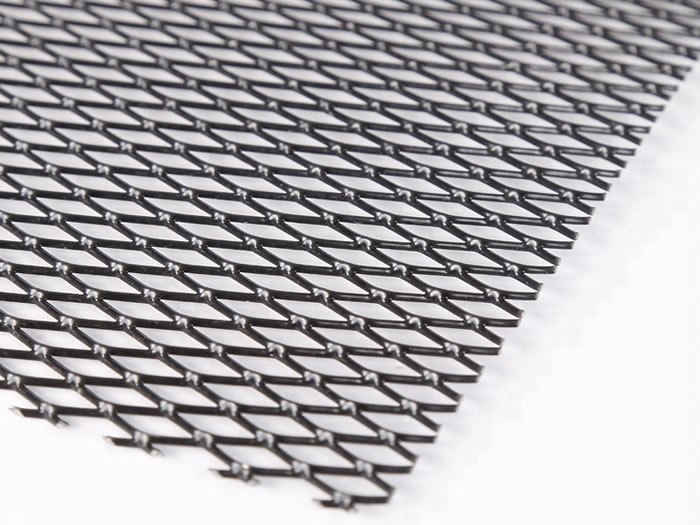
Also referred to as expanded wire mesh or expanded metal mesh, this product is a rigid, single‑piece metal sheet that has been slit and stretched in one continuous operation to form a uniform, diamond‑shaped open mesh pattern. Unlike welded or woven wire meshes, expanded metal is produced without any joints or seams, resulting in exceptional structural integrity and minimal waste during fabrication.
Key Features and Benefits
The unique manufacturing process delivers a combination of properties that set expanded metal apart from other mesh types:
The mesh is formed from a single continuous piece of metal – no wires, no welds, no joints. This monolithic structure provides superior strength‑to‑weight ratio compared to solid sheet metal, making expanded metal an excellent choice for weight‑sensitive applications such as aircraft flooring, vehicle grilles, and lightweight walkways. The process itself is highly material‑efficient, wasting virtually no metal, which contributes to cost savings and environmental sustainability.
Additional benefits include an inherent anti‑slip surface created by the diamond‑pattern edge, the ability to simultaneously exclude unwanted objects while retaining desirable ones, premium reinforcement properties when embedded in concrete or composites, practical and effective screening for security and ventilation, high electrical and thermal conductivity, and outstanding corrosion resistance – especially when manufactured from stainless steel or specially treated alloys.
Common Applications Across Industries
Expanded metal mesh is widely used in building and construction, particularly for concrete reinforcement, equipment maintenance, crafts, and decorative architectural elements. It serves as covering screens for sound‑proof enclosures, highway noise barriers, recording studios, railway underpasses, and bridge structures where both ventilation and security are required.
Heavy‑duty expanded metal grades are ideal for demanding environments such as step treads on large oil storage tanks, working platforms in industrial plants, corridor and walkway flooring for heavy machinery, and walkways in boiler rooms, petroleum refineries, mine shafts, automotive plants, and large marine vessels. The non‑slip surface and excellent load‑bearing capacity make it a preferred material for catwalks and mezzanine flooring.
In addition, expanded metal is used for machine guards, filter media, battery electrode supports, loudspeaker grilles, display racks, and security fencing. Its versatility is limited only by the imagination of the designer.
Available Varieties and Custom Surface Treatments
Expanded metal mesh is produced in numerous configurations to meet specific performance and aesthetic requirements. The main categories include small‑pattern expanded metal (for fine screening and decorative work), medium‑pattern expanded metal (general‑purpose industrial use), and heavy‑pattern expanded metal (structural and safety applications). Material‑specific variants include expanded aluminum mesh, stainless steel expanded metal mesh, expanded lead mesh (for radiation shielding), and expanded brass mesh (for decorative and marine environments).
A wide range of surface treatment options is available to enhance durability, appearance, and corrosion resistance. For all materials, color powder spraying can be applied in any RAL or custom color. Stainless steel expanded metal can be electrolytic polished for a bright, hygienic finish. Aluminum expanded metal may be anodized for increased wear resistance and decorative color options. Other treatments such as galvanizing, PVC coating, and pre‑passivation are also available on request.
Specifications and Technical Data
The following table provides standard dimensions for expanded metal mesh. Please note that custom sizes and thicknesses can be manufactured to meet unique project requirements. All measurements are nominal and may vary slightly due to material spring‑back.
| specifications | width (m) | length (m) | weight (kg/m2) | |||
| mesh thickness(mm) | distance short(mm) | distance long(mm) | strip(mm) | |||
| 0.5 | 2.5 | 4.5 | 0.5 | 0.5 | 1 | 1.8 |
| 0.5 | 10 | 25 | 0.5 | 0.6 | 2 | 0.73 |
| 0.6 | 10 | 25 | 1 | 0.6 | 2 | 1 |
| 0.8 | 10 | 25 | 1 | 0.6 | 2 | 1.25 |
| 1 | 10 | 25 | 1.1 | 0.6 | 2 | 1.77 |
| 1 | 15 | 40 | 1.5 | 2 | 4 | 1.85 |
| 1.2 | 10 | 25 | 1.1 | 2 | 4 | 2.21 |
| 1.2 | 15 | 40 | 1.5 | 2 | 4 | 2.3 |
| 1.5 | 15 | 40 | 1.5 | 1.8 | 4 | 2.77 |
| 1.5 | 23 | 60 | 2.6 | 2 | 3.6 | 2.77 |
| 2 | 18 | 50 | 2.1 | 2 | 4 | 3.69 |
| 2 | 22 | 60 | 2.6 | 2 | 4 | 3.69 |
| 3 | 40 | 80 | 3.8 | 2 | 4 | 5.00 |
| 4 | 50 | 100 | 4 | 2 | 2 | 11.15 |
| 4.5 | 50 | 100 | 5 | 2 | 2.7 | 11.15 |
| 5 | 50 | 100 | 5 | 1.4 | 2.6 | 12.39 |
| 6 | 50 | 100 | 6 | 2 | 2.5 | 17.35 |
| 8 | 50 | 100 | 8 | 2 | 2.1 | 28.26 |