Fine Stainless Steel Wire Mesh Screen
Stainless steel wire mesh screens are precision-engineered filtration and separation components manufactured from drawn wire alloys. Their performance is defined by wire diameter, opening size, weave
Fine Stainless Steel Wire Mesh Screen
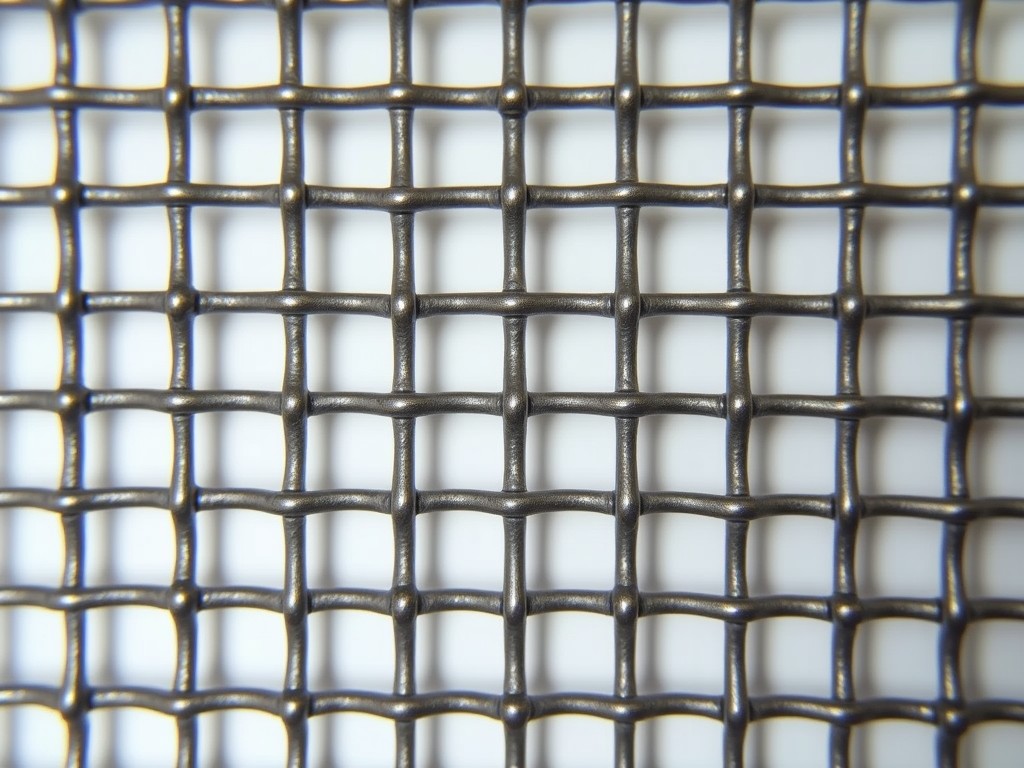
Stainless steel wire mesh screens are precision-engineered filtration and separation components manufactured from drawn wire alloys. Their performance is defined by wire diameter, opening size, weave pattern, and material grade—factors that directly influence flow resistance, particle retention, and service life in demanding industrial environments.
Material Selection and Alloy Characteristics
The most commonly used grades for fine wire mesh are 304 and 316L stainless steel. 304 offers good corrosion resistance in mildly acidic or alkaline environments and is suitable for general industrial filtration. 316L contains molybdenum, which significantly enhances resistance to chlorides and pitting, making it preferred for marine, chemical processing, and pharmaceutical applications where exposure to salts or aggressive media is expected.
Wire diameter for fine mesh typically ranges from 0.025 mm to 0.2 mm, with opening sizes from 10 µm to 500 µm. These dimensions are critical for applications such as catalyst retention, precise fluid filtration, or inline particle analysis where even micron-level deviations can affect process outcomes. Tolerance on wire diameter is usually maintained within ±0.002 mm for precision grades.
Weave Patterns and Structural Implications
Plain weave is the most common pattern for fine mesh, where each warp wire passes alternately over and under each weft wire. This symmetrical structure provides uniform opening size in both directions and good mechanical stability under low to moderate pressure differentials. For applications requiring higher flow rates or reduced clogging, twill weave may be specified, where wires pass over two and under two, creating a more open structure with increased tensile strength.
Dutch weave variants—including plain Dutch and twill Dutch—are used when extreme filtration precision is needed. In these patterns, the warp wires are thicker and closer together than the weft wires, creating a tortuous path that captures fine particles while maintaining structural integrity. Dutch weave meshes can achieve nominal filtration ratings below 5 µm with controlled permeability.
Key Performance Parameters
| Parameter | Typical Range | Relevance to Application |
|---|---|---|
| Wire Diameter | 0.025 – 0.2 mm | Determines opening size and mechanical strength |
| Opening Size (Micron) | 10 – 500 µm | Defines particle retention capability |
| Open Area (%) | 10 – 60% | Influences flow rate and pressure drop |
| Tensile Strength (MPa) | 500 – 2000 (depends on grade and temper) | Resists deformation under pressure differential |
| Operating Temperature | Up to 400°C (304), up to 450°C (316L) | Limits use in high-heat processes |
Industrial Applications and Functional Rationale
In pharmaceutical manufacturing, fine stainless steel mesh is used in fluid bed dryers and granulators to contain active powder formulations during processing. The mesh must retain particles as small as 10 µm while allowing efficient airflow; any deformation or blinding can disrupt drying uniformity and lead to batch failure. 316L is often selected here due to its resistance to cleaning agents and sanitization steam.
Chemical processors use these screens in catalyst recovery systems where precious metal catalysts must be retained while reaction byproducts are filtered out. Mesh integrity under cyclic thermal loading and resistance to chemical attack are critical—failure can result in catalyst loss, contamination, or unplanned downtime. Mesh is frequently sintered to improve mechanical stability in high-vibration environments.
In food and beverage processing, fine mesh screens serve as inline filters for liquids such as syrups, juices, or dairy products, removing particulates that could affect product clarity, texture, or shelf life. Compliance with FDA 21 CFR §177.1520 and EU 1935/2004 is required, which is met by using passivated 304 or 316L wire with smooth surface finishes to minimize bacterial harborage.
Environmental and water treatment applications include membrane pre-filtration and sludge dewatering, where the mesh protects delicate membranes from large debris while allowing high flow rates. Here, resistance to biofouling and ease of cleaning (via backwash or chemical immersion) are key selection criteria, often favoring smoother weaves and electropolished finishes.
Customization and Fabrication Options
Mesh can be supplied in flat rolls, cut-to-size pieces, or fabricated into specific shapes such as discs, cylinders, or conical filters. Edge treatments include hemming, welding, or framing with stainless steel strips to prevent fraying and facilitate installation. For cylindrical elements, longitudinal seams are typically TIG-welded to maintain leak-proof integrity under pressure.
Surface finishes such as passivation, electropolishing, or ultrasonic cleaning are available to enhance corrosion resistance and reduce surface roughness. Electropolishing, in particular, reduces microscopic peaks that can trap contaminants, improving cleanability in sanitary applications. These treatments are often specified in industries where validation documentation is required.
Custom specifications require detailed input: wire diameter, opening size, weave pattern, alloy grade, dimensions, tolerance requirements, and any post-processing needs. Engineers should provide schematics or application conditions (temperature, pressure, media, flow rate) to ensure the mesh is fit for purpose. Prototyping or sample testing is recommended before full-scale procurement.
Quality Assurance and Inspection
Quality control begins with raw material verification—mill test certificates are reviewed to confirm chemical composition and mechanical properties of the wire. During production, wire diameter and pitch are monitored using optical micrometers or laser scanning systems to ensure conformity to specification. Opening size is validated through bubble point testing or glass bead challenge methods for critical filtration applications.
Visual inspection under 10x magnification checks for defects such as broken wires, misweaves, or inclusions. For sanitary grades, surface roughness is measured using profilometers to ensure Ra values meet hygienic standards (typically <0.8 µm). Final inspection includes dimensional verification of cut pieces and validation of edge treatments or welds.
Documentation such as material certifications, inspection reports, and compliance statements (e.g., FDA, EC 1935/2004) are provided upon request. Traceability is maintained through batch numbers linked to production and test records. These practices support regulatory compliance and reduce risk in validated processes.
Packaging and Logistics
Flat mesh rolls are wound onto corrosion-resistant cores and wrapped in polyethylene film to prevent contamination during transit. Cut pieces are placed in rigid trays or sealed pouches with interleaving sheets to avoid abrasion. For export shipments, moisture-desiccant packs are included, and cartons are marked with handling instructions to avoid bending or crushing.
Lead times depend on complexity: standard rolls from stock may ship in 3–5 business days, while custom-fabricated items typically require 2–4 weeks. Expedited options are available for critical projects. All shipments include packing lists and documentation to facilitate customs clearance and receiving inspection.
To discuss your specific requirements for fine stainless steel wire mesh screen—including material grade, weave pattern, dimensions, or certification needs—please contact our technical team. Provide your application details, and we will recommend a configuration optimized for performance, durability, and compliance.

Product Categories


Send Inquiry
If you are interested in our products, leave your information here and we will be in touch shortly.