Flexible Stainless Steel Cable Mesh Netting
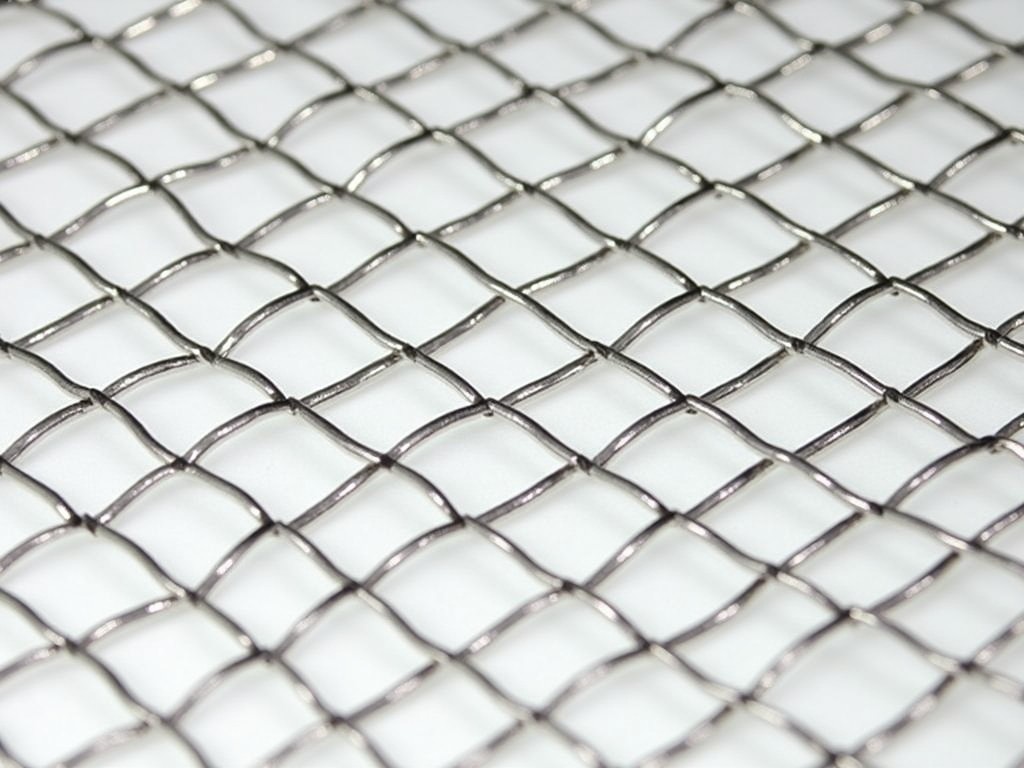
Flexible stainless steel cable mesh netting is a structural fabric formed by interlacing stainless steel wire ropes in a diamond or square pattern, creating a lightweight yet strong barrier system.
Flexible Stainless Steel Cable Mesh Netting
Flexible stainless steel cable mesh netting is a structural fabric formed by interlacing stainless steel wire ropes in a diamond or square pattern, creating a lightweight yet strong barrier system. Unlike solid panels or welded meshes, this construction relies on tensioned cables that maintain flexibility while resisting deformation under load. The mesh opens and closes slightly under stress, distributing forces across multiple strands rather than concentrating them at weld points. This characteristic makes it suitable for dynamic environments where impact, vibration, or thermal cycling occurs. The base material—typically austenitic stainless steel grades like 304 or 316—provides inherent corrosion resistance without coatings that could degrade over time. Engineers select this product when a balance of strength, visibility, and adaptability is required in harsh or exposed conditions.
Material Composition and Mechanical Properties
The performance of flexible cable mesh begins with the wire rope construction. Each strand typically consists of 7x7 or 7x19 galvanized or stainless steel wires, chosen based on required fatigue resistance and flexibility. A 7x19 construction offers greater flexibility for tight bending radii, while 7x7 provides higher stiffness and abrasion resistance. The stainless steel used—most commonly AISI 304 for general environments or 316 for chloride-rich settings like coastal or chemical processing areas—contains chromium and nickel to form a passive oxide layer that prevents rust. Wire diameters range from 1.5 mm to 5.0 mm, directly influencing tensile strength per strand, which typically falls between 1.8 kN and 18.0 kN depending on grade and construction. The mesh aperture size, defined as the clear opening between cables, varies from 20 mm to 200 mm, affecting both structural behavior and visibility.
Structural Behavior Under Load
Unlike rigid barriers, flexible cable mesh functions as a tensile membrane where load is carried primarily through axial stress in the cables rather than bending resistance. When impacted, the mesh deforms locally, allowing adjacent strands to share the load through friction at crossover points and elastic stretching of the cables. This energy dissipation mechanism reduces peak forces transmitted to supporting structures. Testing shows that under uniform pressure, the mesh exhibits a nonlinear load-deflection curve—initial stiffness is low due to cable realignment, followed by a steep increase as cables tension and engage fully. The system’s effective stiffness depends on pretension level, aperture size, and cable diameter. Proper pretension—usually set between 10% and 25% of the cable’s minimum breaking strength—is critical to limit sag and ensure consistent load distribution. Without adequate pretension, wind or vibration can induce harmful flutter or resonance.
Comparison with Alternative Barrier Systems
| Property | Flexible Cable Mesh | Welded Steel Mesh | Perforated Metal Sheet |
|---|---|---|---|
| Weight (kg/m²) | 2.5–8.0 | 8.0–15.0 | 3.0–12.0 |
| Open Area (%) | 60–90 | 40–70 | 20–60 |
| Impact Energy Absorption | High (deforms elastically) | Low (transfers force locally) | Medium (depends on thickness) |
| Maintenance Access | Full visibility and access | Limited by welds | Restricted by solid zones |
| Corrosion Resistance | Inherent (no coating) | Dependent on weld integrity | Inherent if stainless |
This comparison highlights why flexible cable mesh is selected in applications requiring high transparency, low weight, and dynamic load tolerance—such as animal enclosures in zoos, rockfall protection on slopes, or fall arrest systems in industrial facilities. Welded mesh may suffer from stress cracking at joints over time, while perforated sheet offers less open area and higher wind resistance. The absence of welds in cable mesh eliminates a common failure point, enhancing long-term reliability in cyclic loading environments.
Key Applications and Functional Rationale
In wildlife containment, flexible stainless steel cable mesh provides a secure barrier that minimizes visual obstruction while preventing animal escape or intrusion. The large aperture sizes—often 50 mm to 100 mm—allow clear sightlines for visitors and adequate airflow, reducing stress on animals compared to solid fencing. The mesh’s flexibility prevents injury if an animal pushes against it, as it yields slightly rather than presenting a rigid surface. For rockfall mitigation, the mesh is installed on slopes to catch falling debris; its ability to deform and absorb kinetic energy reduces the force transmitted to anchor cables and support structures. Unlike rigid barriers, it does not require precise impact angle tolerance—debris can strike at various angles and still be contained. In architectural applications, such as balustrades or facade screens, the mesh meets safety codes for fall prevention while maintaining design transparency. The stainless steel construction ensures no staining or rust streaks that could compromise aesthetics over time, even in humid or polluted urban environments.
Customization Parameters and Engineering Considerations
Every aspect of flexible cable mesh can be tailored to match specific load cases, environmental conditions, and installation constraints. Aperture size is selected based on the smallest object that must be contained—e.g., 25 mm for small rodents, 75 mm for medium mammals, or 150 mm for rockfall where fist-sized stones are the primary concern. Cable diameter and construction (7x7 vs 7x19) are chosen after calculating expected impact energy and fatigue cycles; higher cyclic loads favor 7x19 for better flex life. Pretension is specified during installation using calibrated tension gauges to ensure uniform performance across the panel. Edge treatments include looped cables for clamping, end fittings with shackles for cable suspension, or bordered frames for panelized systems. For coastal or industrial exhaust environments, AISI 316L is recommended due to its lower carbon content and improved resistance to pitting and crevice corrosion. Custom shapes—such as tapered panels for slope conformity or curved sections for architectural features—are fabricated by varying cable lengths during assembly.
Quality Assurance and Testing Protocols
Manufacturing quality begins with wire rope certification—each batch must come with mill test reports confirming chemical composition, tensile strength, and elongation properties. During assembly, crossover points are checked for proper interlock; loose or over-twisted joints indicate incorrect weaving tension, which can lead to slippage under load. Finished panels undergo pretension verification using load cells or torque wrenches on tensioning devices, with acceptance criteria typically set at ±10% of the specified value. For structural applications, sample sections may be subjected to static load tests to validate deflection characteristics or impact drop tests using weighted pendulums to measure energy absorption. Visual inspection checks for broken wires, kinks, or corrosion—especially critical in stainless steel where surface defects can initiate pitting. Packaging involves rolling mesh on corrosion-protected cores or folding into crates with breathable covers to prevent moisture retention during transit. All documentation, including material traceability and test records, is retained for the project lifecycle to support maintenance and audit requirements.
To discuss your specific requirements for flexible stainless steel cable mesh netting—including aperture size, material grade, pretension levels, or edge configuration—provide your project details via our technical inquiry form. Our engineering team will review load conditions, environmental exposure, and installation constraints to deliver a customized solution with full documentation and support.
Submit Technical Inquiry

Product Categories


Send Inquiry
If you are interested in our products, leave your information here and we will be in touch shortly.