Metal Wire Mesh Supplier China
Selecting a wire mesh supplier involves evaluating material properties, manufacturing tolerances, and application-specific performance. This page details the technical considerations for sourcing

Metal Wire Mesh Supplier China
Selecting a wire mesh supplier involves evaluating material properties, manufacturing tolerances, and application-specific performance. This page details the technical considerations for sourcing metal wire mesh from Chinese manufacturers, focusing on specifications that impact functionality in industrial environments.
Material Composition and Mechanical Properties
The base material determines corrosion resistance, tensile strength, and suitability for operating conditions. Common options include low-carbon steel (Q195/Q235) for general purpose, stainless steel grades 304 and 316 for corrosive environments, and galvanized steel for intermediate protection. Tensile strength varies from 300–550 MPa for carbon steel to 520–750 MPa for austenitic stainless steel, directly influencing load-bearing capacity and deformation resistance.
Wire diameter typically ranges from 0.5 mm to 8.0 mm, affecting open area percentage and pressure drop in filtration applications. Aperture size, defined as the clear opening between wires, can be precisely controlled from 0.8 mm to 150 mm, with tolerance adherence to ISO 9044 standards. These parameters are critical in processes such as screening, where incorrect aperture dimensions lead to product contamination or equipment damage.
Weave Patterns and Structural Integrity
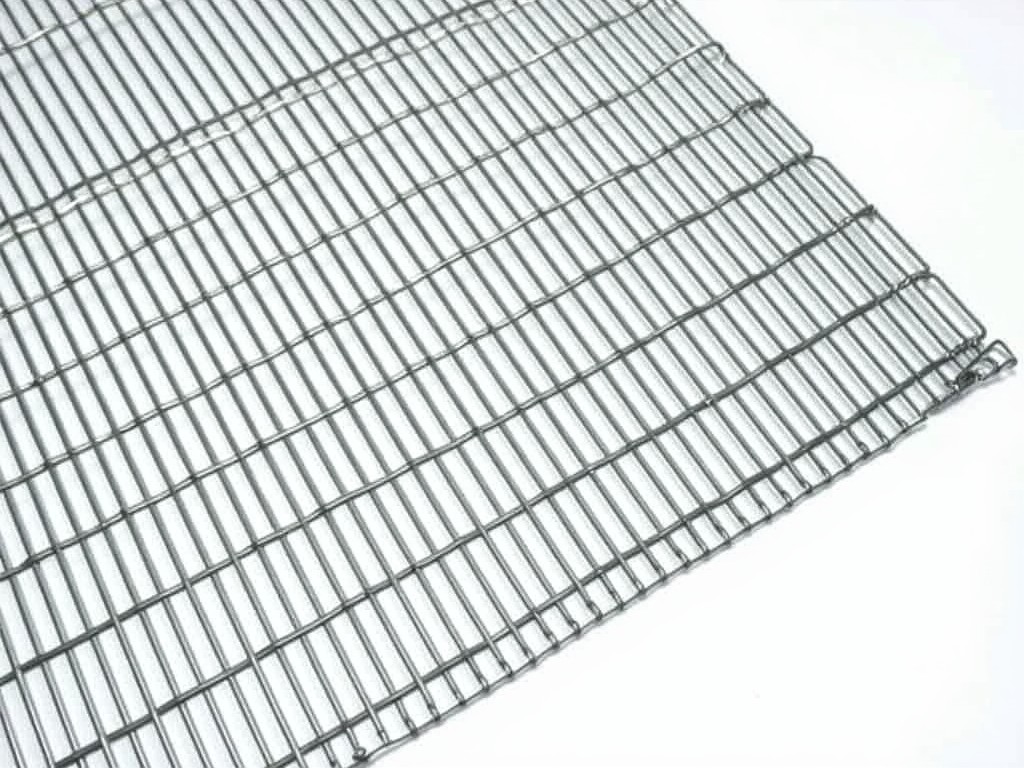
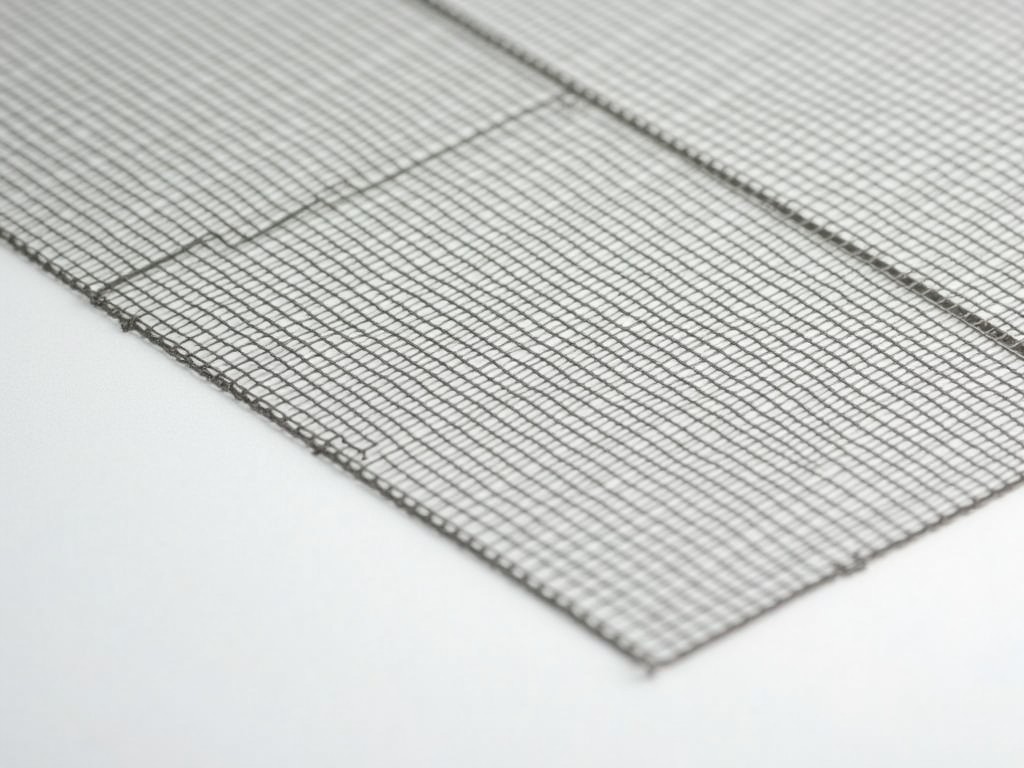
The weave pattern governs mesh stability, flow dynamics, and ease of cleaning. Plain weave offers symmetrical strength and is standard for sieving and guarding. Twill weave provides greater flexibility and higher load capacity, suitable for vibratory screens. Dutch weave, with finer warp wires and coarser shute wires, achieves superior filtration efficiency for sub-micron particle retention in liquid processing.
Welded mesh, where wires are fused at intersections, eliminates slippage under load and is preferred in structural reinforcement and security barriers. Crimped mesh, featuring pre-formed waves in wires, enhances rigidity and prevents aperture deformation in high-vibration environments. Each pattern requires specific welding tension or crimping depth to maintain dimensional stability during operation.
Surface Treatments and Longevity Factors
Surface treatments extend service life by mitigating environmental degradation. Hot-dip galvanizing applies a zinc coating typically 50–100 μm thick, providing sacrificial protection in outdoor or humid conditions. Electrogalvanizing offers thinner, more uniform coatings (5–15 μm) for aesthetic or precision-fit applications. Passivation of stainless steel removes free iron particles, enhancing chromium oxide layer formation and resistance to pitting in chloride-rich environments.
PVC or PE coating adds a polymer layer 0.2–0.5 mm thick, improving abrasion resistance and reducing noise in handling systems. These coatings must be compatible with operating temperatures; PVC degrades above 60°C, while PE maintains integrity to 80°C. Anodizing aluminum mesh increases surface hardness and allows color coding for identification in complex assemblies.
Customization and Dimensional Control
Industrial applications often require non-standard dimensions or edge treatments. Custom widths up to 3000 mm are achievable through side-by-side weaving with seamless splicing. Lengths are typically supplied in rolls up to 50 m or cut-to-length panels with tolerances of ±2 mm. Edge options include folded, welded, or framed edges using aluminum or steel profiles to prevent fraying and facilitate mounting.
Secondary operations such as laser cutting, bending, or forming enable integration into machine guards, conveyor systems, or architectural facades. Hole patterns for fasteners or service access can be precision-punched post-weaving. All customizations must maintain wire tension balance to avoid skew or bowing during installation.
Quality Assurance and Testing Protocols
Reliable suppliers implement traceable quality control from raw material intake to final packaging. Wire diameter is verified via micrometer sampling at 1 m intervals, with statistical process control ensuring conformance to ±0.02 mm tolerances. Aperture uniformity is assessed using optical comparators or image analysis systems, rejecting meshes with >5% deviation from nominal opening size.
Tensile testing of wire samples confirms yield strength and elongation properties. Coating thickness is measured via magnetic induction or X-ray fluorescence for galvanized layers. Visual inspection under 10x magnification identifies welding defects, wire breaks, or coating adhesion failures. Suppliers should provide mill test reports and batch-specific conformity documentation upon request.
Applications Across Industrial Sectors
In mining and aggregate processing, woven stainless steel mesh with 6–25 mm apertures withstands abrasive material flow while maintaining screening efficiency at vibration frequencies of 15–30 Hz. The open area percentage (typically 40–60%) directly impacts throughput capacity, making precise aperture control essential for product grading.
Architectural applications utilize woven or expanded metal mesh for facade cladding, where wind load calculations dictate wire diameter and support spacing. Stainless steel 316 is commonly specified for coastal installations due to its resistance to salt-induced pitting. Anodized aluminum mesh offers lightweight alternatives for interior partitions, with reflectivity values exceeding 85% for daylighting enhancement.
Food and pharmaceutical industries require mesh with electropolished surfaces to meet Ra <0.8 μm roughness standards, preventing bacterial harborage. Dutch weave configurations achieve 99.9% retention of particles down to 5 μm, critical for sterile filtration. All materials must comply with FDA 21 CFR 177.1520 or EU 10/2011 for food contact.
Packaging and Logistics Considerations
Proper packaging prevents deformation and corrosion during transit. Rolls are wrapped in waterproof polyethylene film, then secured with steel or polyester strapping on wooden pallets or steel stillages. Interleaving with corrosion-inhibiting paper protects galvanized or stainless steel surfaces. Cut panels are stacked flat with edge protectors and enclosed in crush-resistant crates.
Export shipments require fumigated wood packaging to comply with ISPM 15 regulations. Desiccant packs control humidity within containers, reducing the risk of white rust on galvanized coatings. Labeling includes material grade, dimensions, heat number, and handling instructions. Lead times typically range from 2–4 weeks for standard specifications, extending to 6–8 weeks for customized alloys or surface treatments.
| Parameter | Typical Range | Notes |
|---|---|---|
| Wire Diameter | 0.5 – 8.0 mm | Affects tensile strength and open area |
| Aperture Size | 0.8 – 150 mm | Critical for filtration and screening precision |
| Tensile Strength (Steel) | 300 – 550 MPa | Varies by grade and cold work |
| Tensile Strength (Stainless Steel) | 520 – 750 MPa | Grades 304/316 typical |
| Coating Thickness (Galvanized) | 50 – 100 μm | Hot-dip process |
| Roll Width | Up to 3000 mm | Seamless splicing available |
| Standard Tolerance | ±0.02 mm (wire), ±2 mm (length) | ISO 9044 compliant |
Product Categories


Send Inquiry
If you are interested in our products, leave your information here and we will be in touch shortly.