Mild Steel Expanded Metal Mesh
Mild steel expanded metal mesh is produced by simultaneously slitting and stretching a low-carbon steel sheet to form a uniform pattern of diamond-shaped openings. This process creates a single-piece
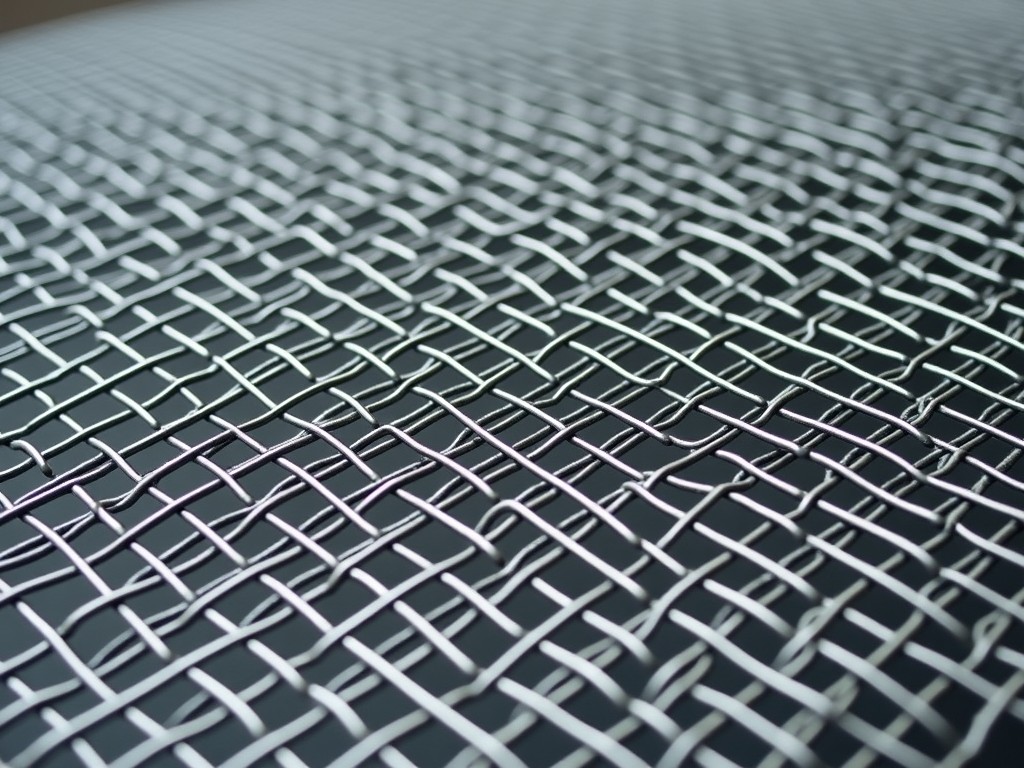
Mild Steel Expanded Metal Mesh
Mild steel expanded metal mesh is produced by simultaneously slitting and stretching a low-carbon steel sheet to form a uniform pattern of diamond-shaped openings. This process creates a single-piece structure with no welds or joints, resulting in high strength-to-weight ratio and inherent rigidity. The material retains the ductility and weldability of mild steel while gaining enhanced mechanical properties from the expanding operation. Common applications include safety guarding, architectural facades, filtration systems, and structural reinforcement where load distribution and impact resistance are critical.
Manufacturing Process and Material Characteristics
The expansion process begins with a cold-rolled mild steel coil, typically grade Q195 or equivalent, with thickness ranging from 0.5mm to 3.0mm. Sheets are fed into a press where staggered blades slit the material while the die stretches it longitudinally, forming the open area. The resulting strand width and bond angle are determined by the die geometry and feed rate, allowing precise control over open area percentage (typically 30% to 70%) and nominal aperture size. Unlike welded or woven meshes, expanded metal has no weak points at intersections, maintaining uniform load distribution across the entire sheet.
Mild steel’s low carbon content (typically <0.25%) ensures good formability during expansion and compatibility with standard welding techniques such as MIG, TIG, or spot welding. The material exhibits a yield strength of approximately 200–250 MPa and tensile strength of 350–450 MPa after processing, depending on the degree of expansion. Surface finish options include mill finish, hot-dip galvanized (Z275 or higher), pre-galvanized, or powder-coated for corrosion resistance in humid or outdoor environments. The non-raveling nature of the strands prevents unraveling even when cut, simplifying installation and reducing edge treatment requirements.
Technical Specifications and Performance Data
| Parameter | Typical Range | Notes |
|---|---|---|
| Sheet Thickness | 0.5 – 3.0 mm | Base material before expansion |
| Strand Width | 1.5 – 6.0 mm | Determined by die and feed rate |
| Nominal Aperture (LWD x SWD) | 10mm x 5mm to 75mm x 30mm | Long Way of Diamond x Short Way of Diamond |
| Open Area Percentage | 30% – 70% | Adjustable via expansion ratio |
| Weight per Square Meter | 1.8 – 8.5 kg/m² | Depends on thickness and open area |
| Standard Sheet Size | 1000mm x 2000mm | Custom lengths available upon request |
| Surface Treatment | Mill finish, Galvanized, Powder-coated | Custom finishes available |
Structural and Functional Advantages
The integral strand-and-bond structure of expanded metal provides superior impact resistance compared to perforated or woven alternatives. When subjected to localized force, the load transfers through the interconnected strands and bonds, preventing tear propagation. This makes it ideal for machine guarding, security barriers, and walkway treads where sudden impacts or abrasive wear are expected. The open area allows for airflow, light transmission, and fluid drainage while maintaining a physical barrier — a combination difficult to achieve with solid materials or meshes requiring additional support frames.
Due to its monolithic construction, expanded metal does not suffer from joint failure under cyclic loading or vibration, a common issue in welded mesh assemblies. The diamond pattern also provides inherent slip resistance when used as flooring or stair treads, especially when coated with abrasive aggregates. In architectural applications, the directional nature of the strands creates visual depth and shadow variation, enabling designers to achieve both functional screening and aesthetic facade elements with a single material. The product is fully recyclable at end-of-life, supporting sustainable manufacturing practices.
Common Industrial Applications
- Machine guards and safety enclosures where OSHA or ISO 13857 compliance requires resistance to penetration and ejection of fragments.
- Walkway platforms, stair treads, and ramp surfaces in industrial facilities requiring slip resistance, drainage, and load-bearing capacity without solid decking.
- Architectural cladding, sunscreens, and privacy screens where controlled light transmission, ventilation, and visual screening are needed alongside structural integrity.
- Filtration and separation systems in chemical processing or wastewater treatment where uniform open area and corrosion resistance (when coated) support consistent flow dynamics.
- Conveyor belt supports and equipment platforms where open area prevents debris accumulation and allows for cleaning or inspection from below.
- Reinforcement in concrete or composite panels where the mesh provides mechanical keying and crack control without adding significant weight.
Customization Options and Ordering Considerations
Mild steel expanded metal mesh can be customized in sheet size, strand dimensions, open area percentage, and surface treatment to meet specific project requirements. Non-standard aperture shapes (such as hexagonal or scale patterns) are achievable with specialized dies, though lead times and tooling costs may apply. Edge treatment options include no edge (raw cut), flattened edges for safety, or framed edges with steel angles for added rigidity. For applications requiring tight tolerances, laser cutting or shearing to precise dimensions is available, maintaining strand integrity at the cut edge due to the material’s non-raveling characteristic.
When requesting a quotation, provide the base material thickness, desired strand width and aperture size (LWD x SWD), open area percentage or percentage of material retained, sheet dimensions, quantity, and required surface finish. Specify if the mesh will be used in load-bearing, decorative, or filtration roles to assist in recommending appropriate specifications. Samples are typically available for evaluation, allowing verification of open area, stiffness, and surface texture before full production. Standard lead times range from 2–4 weeks for stock configurations and 4–6 weeks for custom dies or finishes, depending on material availability and production scheduling.

Product Categories


Send Inquiry
If you are interested in our products, leave your information here and we will be in touch shortly.