Monofilament Polyester Screen Fabric
Monofilament polyester screen fabric is engineered from single continuous filaments of polyethylene terephthalate (PET) extruded into uniform strands, then woven into precise mesh structures. Unlike

Monofilament Polyester Screen Fabric
Monofilament polyester screen fabric is engineered from single continuous filaments of polyethylene terephthalate (PET) extruded into uniform strands, then woven into precise mesh structures. Unlike multifilament alternatives, this construction eliminates fiber-to-fiber abrasion within the yarn, resulting in consistent opening dimensions and reduced particulate entrapment during operation. The inherent dimensional stability of PET resists creep under sustained tension, maintaining screen integrity over extended production cycles.
Material Properties and Performance Characteristics
The monofilament structure provides predictable flow dynamics due to smooth, round filament profiles that minimize turbulence and pressure drop across the screen surface. PET exhibits a melting point of approximately 255°C and retains >80% tensile strength at 150°C, making it suitable for hot liquid filtration and drying processes. Chemical resistance spans a pH range of 2 to 11, withstanding exposure to aliphatic hydrocarbons, weak acids, and alkalis commonly found in industrial wash streams.
UV stabilization additives are incorporated during extrusion to mitigate degradation from prolonged sunlight exposure in outdoor applications such as agricultural drying or solar pre-filtration. The low moisture regain of PET (<0.5% at 20°C/65% RH) ensures minimal dimensional change in humid environments, critical for maintaining registration in precision printing or coating operations. Electrical resistivity remains high (>10¹⁴ Ω·cm), reducing static charge buildup in pneumatic conveying systems.
Mesh Specifications and Tolerance Control
Screen performance is defined by three interdependent parameters: mesh count (openings per linear inch), filament diameter, and open area percentage. Standard monofilament polyester screens range from 20 to 400 mesh count, with filament diameters between 20 and 150 micrometers. Open area varies inversely with mesh count and filament thickness—for example, a 100 mesh screen with 80µm filaments typically achieves 36% open area, while a 200 mesh with 50µm filaments yields approximately 30%.
Tolerance control is critical for consistent filtration ratings. Advanced weaving technology maintains opening width variations within ±5% of nominal across the full roll width, preventing localized blinding or bypass. Heat-setting during finishing stabilizes the weave structure, reducing dimensional drift to less than 0.5% after 100 hours of continuous operation at 80°C. Caliper thickness uniformity is held to ±3µm for high-precision applications like inkjet pre-coating or microfluidic mask production.
Weave Patterns and Structural Variants
Plain weave remains the dominant configuration, offering balanced tensile strength in both warp and fill directions with symmetrical flow characteristics. Twill weaves (2/1 or 3/1) provide increased filament diameter capacity for higher flow rates at equivalent mesh counts, though with slightly reduced tensile strength in the fill direction due to increased crimp. Dutch weaves employ finer warp filaments with heavier fill shots to create a graded density structure—ideal for retaining fine particles while supporting coarse pre-filtration layers.
Specialized variants include anti-static monofilament with conductive carbon filaments woven at 1% concentration, achieving surface resistivity below 10⁹ Ω/sq without compromising chemical resistance. Hydrophilic treatments modify surface energy to reduce contact angle with aqueous solutions below 30°, improving wetting in dip-coating or membrane casting processes. Flame-retardant grades meet UL 94 V-0 standards through phosphorus-nitrogen additives, limiting afterflame time to <2 seconds in vertical burn tests.
Industrial Applications and Functional Rationale
In liquid filtration systems, monofilament polyester screens serve as reliable pre-filters for reverse osmosis membranes, protecting against colloidal fouling by retaining particles down to 10µm with >95% efficiency in challenge tests using ISO 12103-1 A2 fine dust. The smooth filament surface facilitates cake release during backwashing, extending membrane life in wastewater reclamation and food processing rinse streams.
Rotary screen printing relies on precise ink transfer through consistent opening geometry; monofilament construction prevents ink wicking along multifilament cores, ensuring sharp edge definition in high-resolution textile and ceramic decal printing. Screens maintain dimensional stability under 500+ meter/minute web speeds, with tension variation under 2% during prolonged production runs.
Vibratory screening of dry powders benefits from the low friction coefficient of PET (0.25–0.35 against stainless steel), reducing blinding in hygroscopic materials like pharmaceutical intermediates or powdered detergents. The fabric’s resistance to abrasion from angular particles (e.g., silica, alumina) ensures service life exceeding 6 months in continuous operation at 2G vibrational amplitude.
In architectural applications, monofilament screens function as insect barriers in HVAC intake louvers, achieving >99% exclusion of particles >0.8mm while maintaining airflow reduction below 15% at 2.5 m/s face velocity. The material’s weather resistance supports 5+ year outdoor exposure without significant embrittlement, verified through ASTM G154 cyclic UV testing.
Customization Options and Ordering Considerations
Width availability spans from 25mm for laboratory filter holders to 3200mm for wide-format printing presses, with edge options including selvedge, heat-cut, or ultrasonic sealing to prevent fraying. Roll lengths are typically 50–100 linear meters for standard grades, though continuous lengths up to 500m can be produced upon request for seamless installation in large drum screens.
Custom mesh counts and filament diameters are achievable through adjusted extrusion dies and warp/fallow beam settings, with minimum order quantities starting at 10 linear meters for non-standard specifications. Color options include natural (off-white), black (UV-stabilized), and custom Pantone matches via dope dyeing, though pigment loading may slightly affect open area and tensile properties—consult technical data sheets for derating factors.
Value-added services encompass precision die-cutting to custom shapes, perforation for enhanced flow distribution, and lamination with support layers such as PET film or polypropylene nonwovens for composite structures. All customizations undergo preliminary flow testing using ISO 12103-1 test dust to verify performance equivalence to standard constructions.
Quality Assurance and Testing Protocols
Each production lot undergoes incoming filament verification for diameter consistency (±2µm) and tensile strength (>4.5 cN/dtex) before weaving. In-process monitoring includes pick count validation via optical sensors and tension uniformity checks across the loom width. Finished goods are inspected under 10x magnification for defects such as missing picks, double ends, or filament breaks, with acceptance criteria aligned to ISO 9072:2020 grading standards.
Performance validation involves bubble point testing to determine the largest unimpeded pore size, correlating to retention efficiency for spherical particles. Air permeability is measured per ASTM D737 at 125 Pa pressure drop, providing a basis for comparing flow resistance across different mesh constructions. Hydrostatic pressure resistance is evaluated for filtration applications, with standard grades withstanding >1.5 bar without yarn displacement or seam failure.
Dimensional stability is assessed through accelerated aging: specimens exposed to 80°C/85% RH for 168 hours show <1% change in mesh count and <0.8mm/m width distortion. Chemical immersion testing follows ASTM D543 protocols, with samples retained in representative fluids (e.g., 10% NaOH, IPA, mineral oil) for 72 hours before mechanical property re-evaluation. All test reports are available upon request with full traceability to batch numbers.
Packaging, Handling, and Storage Guidelines
Screens are wound onto corrosion-resistant cores (PP or PVC) with inner diameter of 76mm, wrapped in polyethylene film to prevent moisture ingress and particulate contamination during transit. Outer packaging consists of single-wall corrugated cartons with edge protectors, designed to withstand 1.5m drop tests per ISTA 3A standards. Each roll is labeled with batch number, specifications, and QC inspection date for traceability.
Recommended storage conditions are 15–25°C with relative humidity below 60% to prevent hydrolysis acceleration, though PET’s low hygroscopicity allows tolerance to short-term excursions. Rolls should be stored vertically to avoid permanent set from uneven weight distribution; if horizontal storage is necessary, support must be provided every 300mm to prevent sagging. Avoid direct UV exposure during storage—even UV-stabilized grades benefit from dark warehouse conditions to maximize shelf life.
Handling best practices include using clean, dry gloves to prevent oil transfer from skin, which can attract particulates or affect surface energy in coating applications. When unrolling, maintain tension below 5% of breaking strength to prevent permanent elongation. For installation in tension-sensitive systems, allow 24 hours of acclimatization to ambient conditions before final stretching to account for residual moisture equilibration.
| Parameter | Typical Range | Notes |
|---|---|---|
| Mesh Count | 20–400 openings/inch | Custom counts available upon request |
| Filament Diameter | 20–150 µm | Affects open area and flow rate |
| Open Area | 15–45% | Dependent on mesh and diameter |
| Tensile Strength (Warp) | 45–65 N/mm | Measured at 20°C, 65% RH |
| Max Operating Temp | 150°C continuous | Short-term up to 180°C |
| Chemical Resistance | pH 2–11 | Consult chart for specific solvents |
| Moisture Regain | <0.5% | At 20°C/65% RH |
For technical consultation, sample requests, or to discuss specific application requirements, contact our engineering team. Provide details on operating temperature, fluid chemistry, particle size distribution, and required flow rate to receive a tailored recommendation.
Request Technical Specification or Sample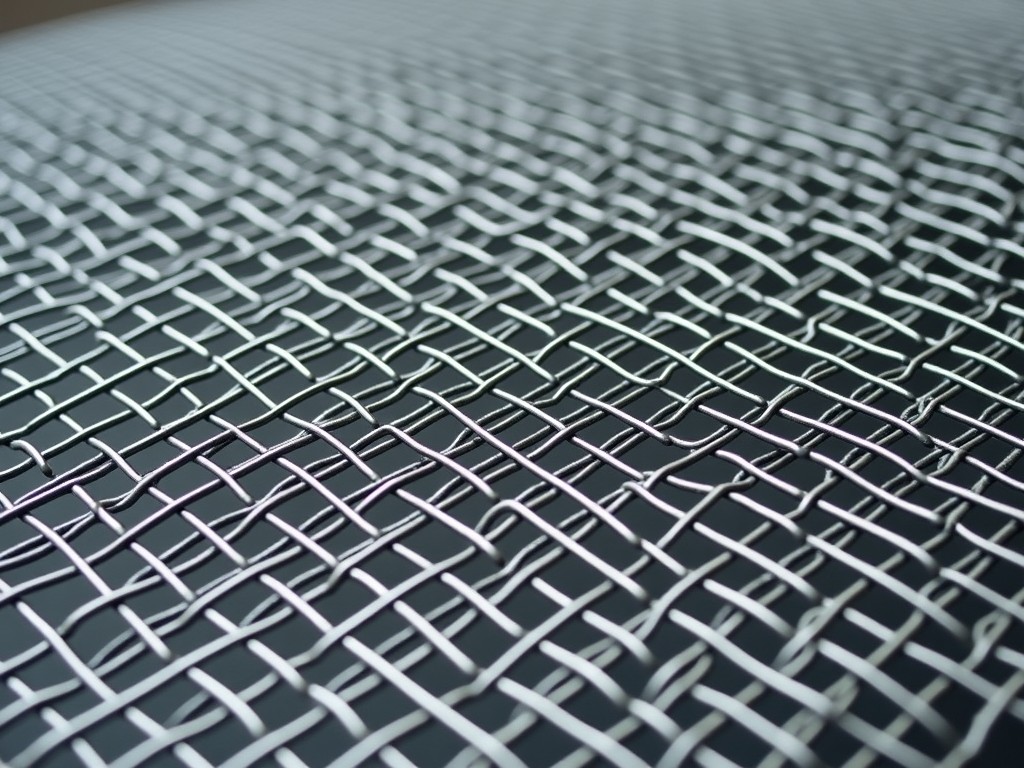
Product Categories


Send Inquiry
If you are interested in our products, leave your information here and we will be in touch shortly.